


Listen to the article
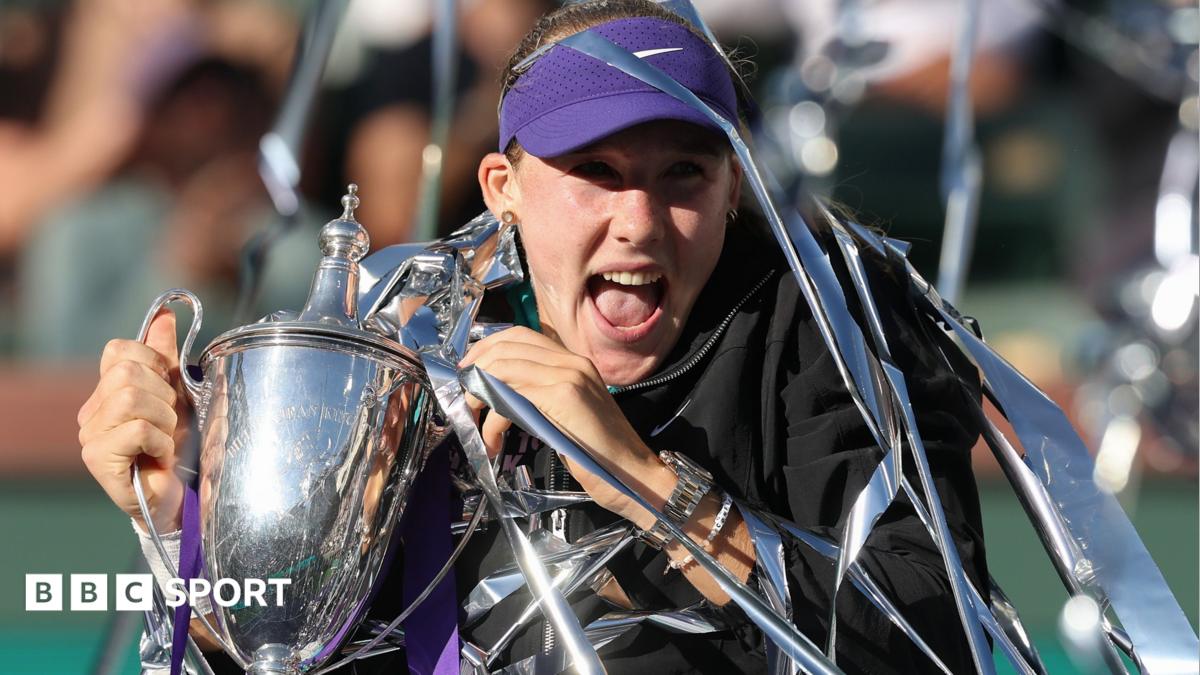
Mirra Andreeva arrived at Indian Wells so anxious about her first WTA Finals campaign that she suffered what she described as “a little breakdown” in practice before the tournament began. She left California on Sunday as champion, having not dropped a single set across five matches.
The 19-year-old Russian defeated Ukraine’s Elina Svitolina 7-5 6-3 in the final to become the youngest WTA Finals champion since Maria Sharapova won the title at 17 in 2004. The victory also lifted Andreeva to second in the world rankings, leaving her 293 points behind top-ranked Elena Rybakina heading into the 2027 season.
Andreeva lost only 26 games across the week and beat three top-ten players on her way to the title, including a demolition of four-time major champion Aryna Sabalenka in the group stage on Wednesday. Coming into the tournament she had won just one of six matches against top-ten opponents in 2026.
A final of breaks and recoveries
Against Svitolina, one of the most tenacious baseliners on the women’s tour, Andreeva lost a break lead three times across the two sets. Each time she recovered, raising her aggression on the backhand to force errors from her opponent. The most telling moment came in the second set: after dropping serve in a nine-minute game, she returned to her chair, then broke Svitolina from 40-0 down in the very next game to stay ahead. She saved nine of the 12 break points she faced and hit 19 winners to Svitolina’s 10.
“This fighting mindset helped me to get more brave and aggressive in the important moments,” Andreeva told Sky Sports. “This is just a dream. I had a little breakdown in my practice just before Indian Wells because I was so stressed. I didn’t want to lose a match in the group. It’s amazing.”
The result was a notable display of emotional control for a player who, in March at the same Indian Wells venue, swore at the crowd after an early-round defeat in the WTA Tour event there. She showed little of that volatility during the Finals week, even after private remarks by Jessica Pegula — caught on a live stream before the tournament — in which Pegula called her a “diva.” Andreeva laughed the episode off publicly.
Prize money, a Mercedes and a Snoop Dogg quote
Along with the title, Andreeva collected £2.55 million in prize money and a custom purple Mercedes. She joked she was content to remain a “passenger princess” until she passed her driving test. Her coaching team includes 1994 Wimbledon champion Conchita Martinez.
“I am super thankful to my team for pushing me to my limits, for forcing me to do stuff when I don’t want to do anything,” Andreeva said in her on-court speech. “Thanks for fighting with me, thanks for forcing me to do everything that I have to do and not asking any questions.”
She closed, as she did after winning the French Open, by thanking herself — a line she has said she borrowed from rapper Snoop Dogg. “I want to thank myself for always doing the hard work and for never quitting,” she said. “For not taking the days off, for working every day and committing to what I have to do.”
Svitolina’s own milestone
Svitolina, 32, was tearful after the defeat but the runner-up finish completed a significant personal comeback. She returned to the tour from maternity leave in 2022 and will end the year ranked sixth in the world — her first time back inside the top ten since 2021. She had lost 6-4 6-0 to Andreeva in their group-stage meeting at the start of the week.
“She’s probably still awake and is going to ask me why I didn’t win today,” Svitolina said of her daughter Skai. “I’m really happy to be in great form and coming back after pregnancy. Hopefully it inspires some ladies and athletes around the world to believe that it’s possible. I also want to say thank you to people in Ukraine for supporting me and being on this journey with me.”