



Listen to the article
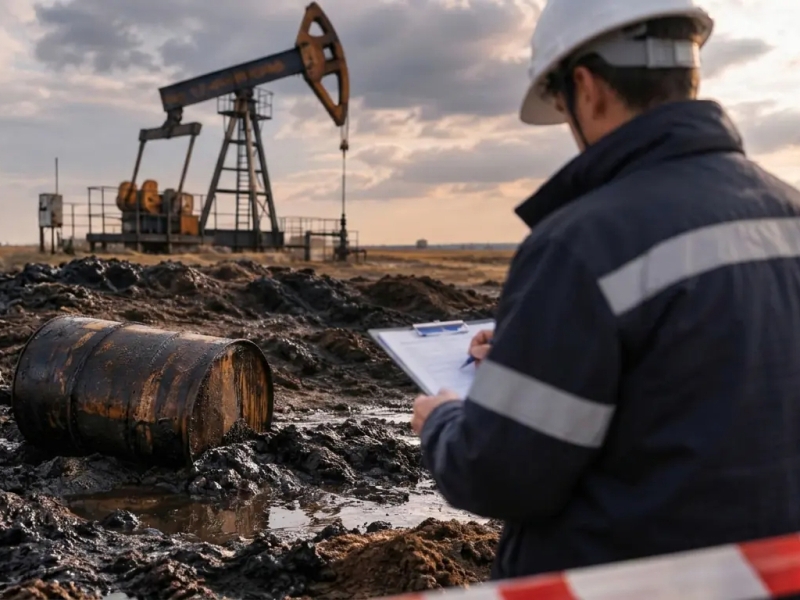
A Kazakh oil company whose board is chaired by a relative of former president Nursultan Nazarbayev is being forced to pay more than 3 billion tenge — roughly $6.5 million — in environmental penalties after courts upheld findings that it illegally stockpiled drilling waste at an Atirau region oilfield. Enforcement officers have already transferred more than 490 million tenge to the Atirau regional budget, with approximately 2.5 billion tenge still outstanding and under prosecutor supervision.
The company at the centre of the case is JAN i KS, a limited liability company that extracts oil and gas at the Pribrejnoye field in Atirau region. It forms part of the Aytei Group holding, a conglomerate active in road and hydraulic construction, building materials and mineral extraction. Seitjan Yesimov chairs the holding’s board of directors. He is the brother of Akhmetzhan Yesimov — a prominent figure in Kazakhstani public life who has served at various times as mayor of Almaty, minister of agriculture, head of the Astana EXPO-2017 national company and chairman of the Samruk-Kazyna sovereign wealth fund. Akhmetzhan Yesimov is a nephew of Nursultan Nazarbayev, Kazakhstan’s first president.
What the Inspectors Found
The violation was identified by the environmental protection prosecutor’s office, according to the Atirau regional prosecutor’s office. During drilling operations, JAN i KS accumulated drilling cuttings and spent drilling fluid without following legally required disposal procedures. Drilling cuttings are the crushed rock fragments brought to the surface during borehole drilling; drilling fluid is pumped into the well to cool the drill bit and carry rock fragments upward. Once used, both types of waste can contain petroleum products and chemical compounds, making their regulated disposal a legal obligation under Kazakhstani environmental law.
The company was charged under Part 6 of Article 328 of Kazakhstan’s Code on Administrative Offences, which sets penalties for breaching permissible anthropogenic impact standards on the environment. JAN i KS challenged the fine through the courts, but its appeals were rejected and the ruling entered legal force. Compulsory enforcement is now under way.
Enforcement and Outstanding Debt
Court enforcement officers have already remitted more than 490 million tenge to the Atirau regional budget. The remaining approximately 2.5 billion tenge is being recovered under prosecutor oversight. The Ulysmedia outlet, which first reported the case, noted that the full penalty exceeds 3 billion tenge in total.
The case is notable both for its scale — one of the larger ecological fines to reach enforcement in Kazakhstan’s oil-producing west — and for the political profile of the holding’s leadership. The Yesimov family’s prominence in Kazakhstani state institutions over many years means the outcome of the enforcement process is likely to attract continued scrutiny from anti-corruption observers and civil society groups monitoring whether large fines against connected businesses are collected in full.