


Listen to the article
Uzbekistan’s parliament has reviewed the performance scorecards of the deputy ministers of economy and finance for the first nine months of 2026, finding that all three quarters came within a fraction of full compliance — 100%, 99.4% and 99.9% respectively across dozens of individual indicators.
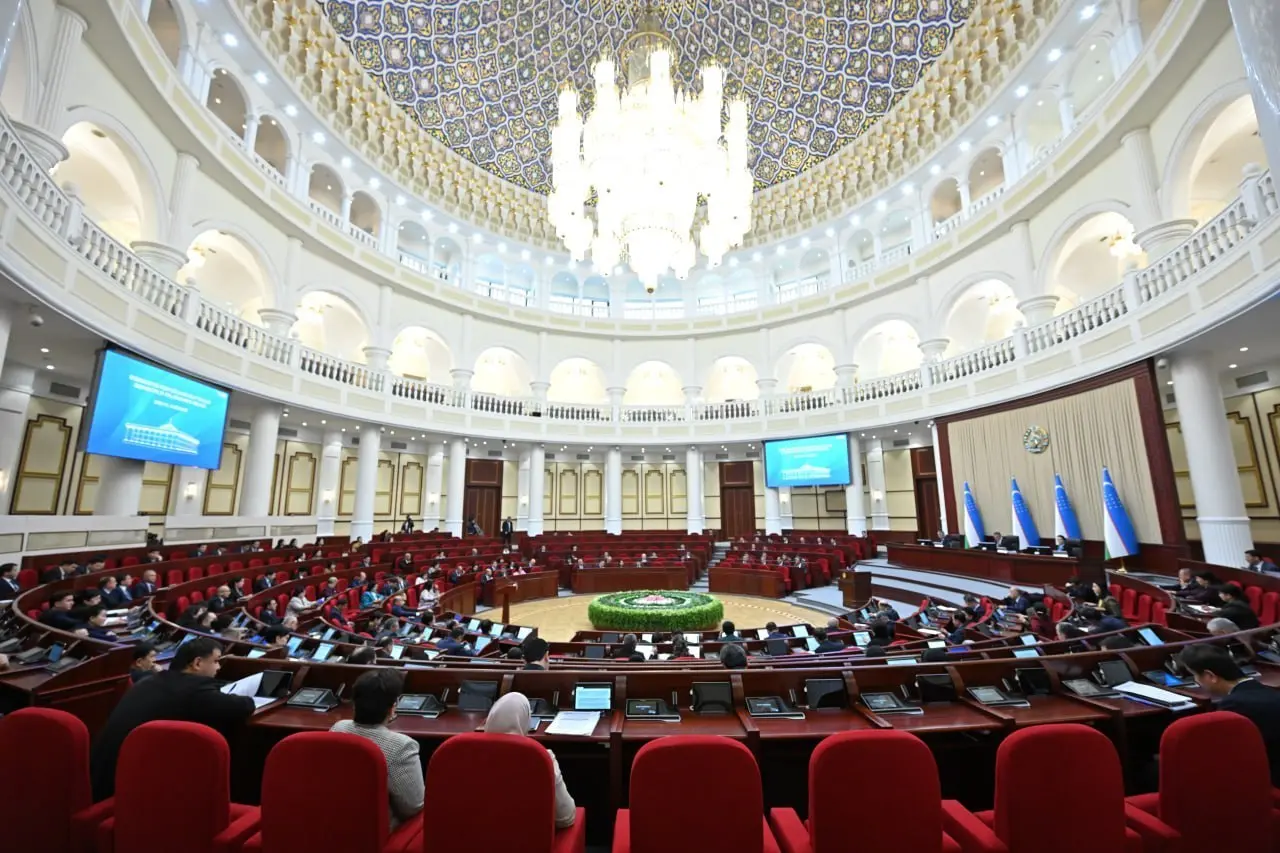
The Budget and Economic Affairs Committee of the Legislative Chamber of the Oliy Majlis held the session on 5 November, examining results across macroeconomic management, the state budget and social policy, as well as the targets that remain to be met before the year closes. The ministry’s press service confirmed the outcomes.
A Framework Built on Presidential Decree
The assessment system rests on Presidential Decree No. UP-49, signed on 13 March 2024, which established performance evaluation for heads of state bodies and economic associations. Cabinet of Ministers Resolution No. 463 of 31 July 2024 set out the detailed methodology for rating ministers and their deputies against key performance indicators. Results are published quarterly on the electronic platform samaradorlik.uz, and the list of indicators, roadmaps and regional action programmes is approved by the Cabinet each year.
The headline targets for 2026 include GDP growth of at least 6.6%, per-capita GDP of 52.3 million soums, industrial output growth of 8.3%, and state budget revenues reaching 18.7% of the annual GDP forecast.
Quarter-by-Quarter Results
In the first quarter, all 46 KPIs were met in aggregate, scoring 100%. GDP grew 8.7% against a plan of 6.1%, and per-capita GDP reached 11.7 million soums, exceeding the target of 10.1 million soums. Industrial value added came in at $10.3 billion against a plan of $8.4 billion. Cost optimisation at large state-owned enterprises reached 5,057 billion soums, above the 4,670 billion soum target.
The second quarter covered 51 indicators and returned an aggregate score of 99.4%. GDP growth reached 8.5% against a plan of 6.3%, per-capita GDP hit 28 million soums versus a target of 23.8 million soums, and industrial value added reached $22.5 billion against a target of $19.3 billion. The 8% industrial production growth target was fully achieved.
By the third quarter, 50 KPIs produced an aggregate score of 99.9%. GDP growth reached 8.3% against a plan of 6.4%, and industrial value added stood at $37.4 billion, well above the $30.5 billion target.
One figure in the published materials stands out as anomalous: subsidies, loans and grants disbursed to families in the Social Register show a plan of 50 trillion soums against reported execution of 53.6 billion soums — a gap of roughly a thousandfold that the source material itself flags as requiring clarification.
Committee members called on the deputy ministers to ensure the remaining 2026 targets are met on time and in full, in line with presidential and Cabinet directives.