



Listen to the article
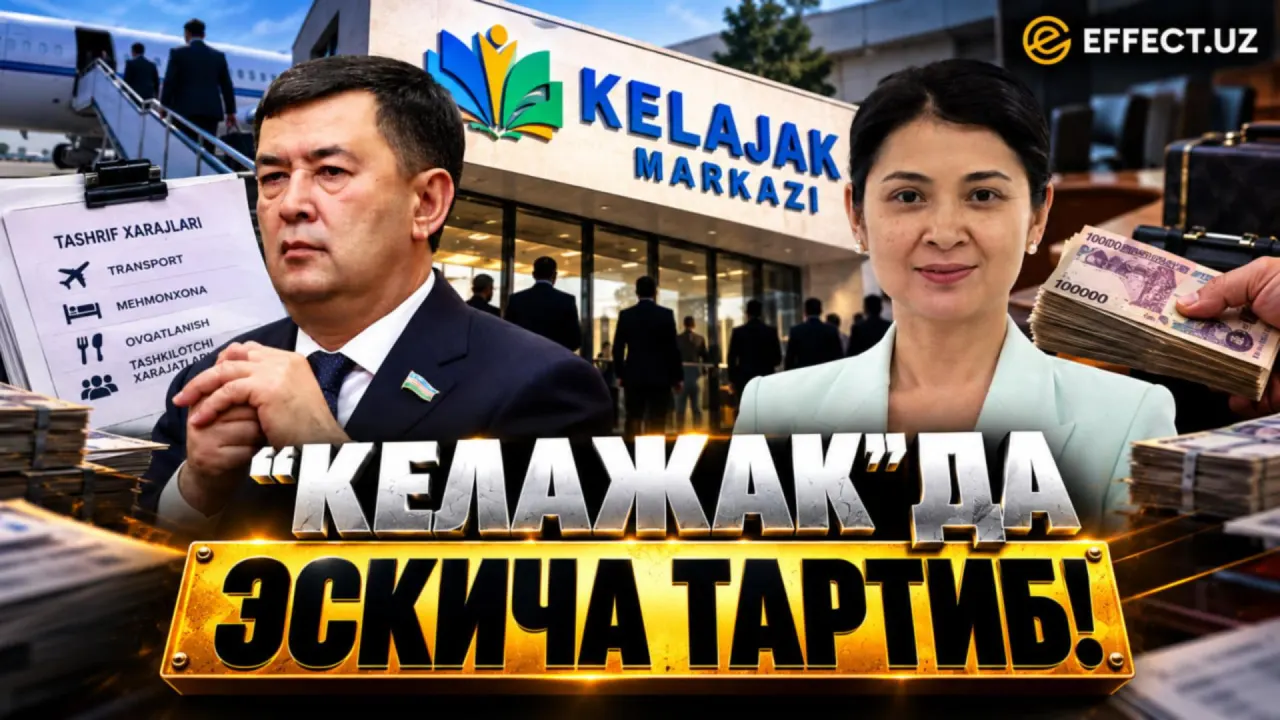
District and city directors of Uzbekistan’s state-run Kelajak youth development centres in Navoiy region were allegedly asked to contribute one million soums each to cover the travel costs of the Republican Kelajak Centre’s director ahead of an official visit to the province — an arrangement that, if confirmed, would raise serious questions about the legal basis for collecting public employees’ money to fund a superior’s business trip.
The allegation was brought to the investigative outlet Effect.uz by a source familiar with the matter. According to that source, the funds collected were intended to pay for the visiting director’s transport, hotel accommodation, meals and other organisational expenses connected with the trip. The source also indicated that similar collections had occurred previously, and that in some instances the pooled money was later distributed back to staff as a bonus added to their salaries — a practice that, if accurate, could obscure the origin and purpose of the funds.
Who Allegedly Gave the Order
Effect.uz reports that the instruction to pass the levy on to district directors came from Gholibjon Abdirakhmanov, director of the Navoiy regional Kelajak centre. The publication states it holds an audio recording of a meeting at which Abdirakhmanov raised the matter with district officials. Not all participants in that meeting were apparently informed of the collection in advance, according to the source.
The Republican Kelajak Centre itself has been led by Indira Kholdarova since 18 September 2025. Effect.uz has not yet reached a definitive conclusion on the accuracy of the allegations and says it has formally requested official comment from both the Republican Kelajak Centre and the Ministry of Education and Science. The outlet is asking the ministry to clarify whether a formal budget estimate exists for the visit, whether state funds were allocated for the purpose, and on whose authority any collection from employees was organised.
Why the Questions Matter
Under Uzbekistan’s public finance rules, the costs of an official’s business travel are ordinarily covered from the institution’s approved budget, not from contributions levied on subordinate staff. Collecting money from employees to fund a manager’s trip — regardless of whether it is later repackaged as a bonus — sits in legally ambiguous territory and could constitute an improper use of official position. Effect.uz poses the questions directly: was there a formal cost estimate for the visit, was budget funding allocated, and who authorised any collection?
The outlet notes pointedly that the appointment of a new education minister, Erkinjon Turdimov, has not visibly changed the culture of informal financial demands within the sector — a practice associated with the Soviet-era habit of subordinates bearing the costs of their superiors’ movements. Effect.uz says it will publish the institutions’ responses once received.