



Listen to the article
Nvidia’s quarterly revenue doubled year-on-year to reach $115.8 billion in the three months to October 25, the company’s first earnings report since co-founder Jensen Huang was forced out following allegations of two extramarital affairs, one involving a suspected Chinese spy. The board used the occasion to close the door on his return.
“The board does not intend to reinstate him,” chair Harvey Jones told financial analysts on a Tuesday call, hours after Huang had said publicly that he would be “honoured” to return to lead the company he co-founded. Jones had earlier indicated the call would not take questions about Huang or the investigation into his conduct, but addressed the matter directly when pressed.
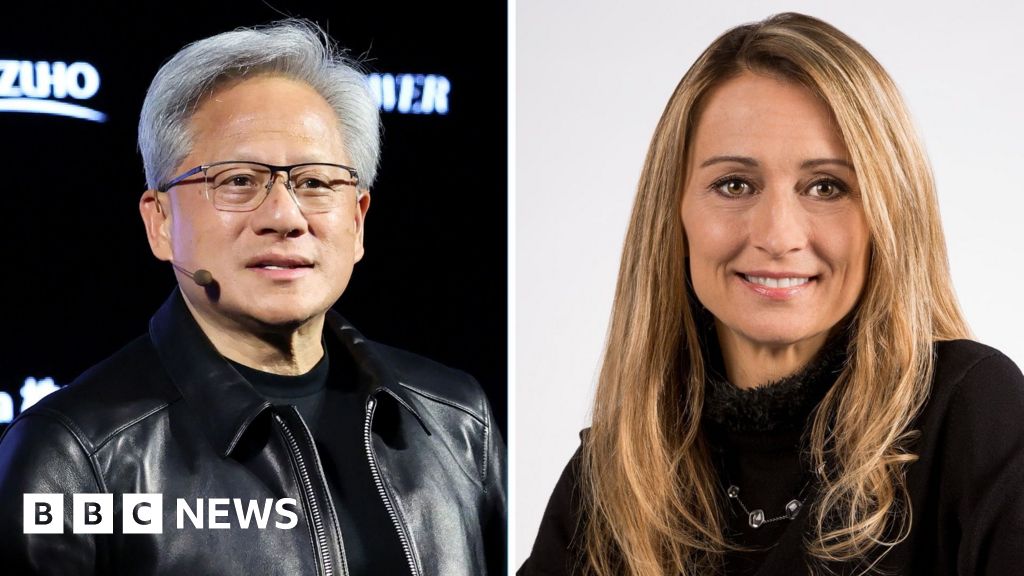
Interim chief executive Colette Kress struck a deliberately reassuring tone throughout the call. “It is business as usual,” she said of conditions inside the company. “Our partners, our suppliers, all of them are 100% behind us.” She described Nvidia’s leadership team as having “stood up very strongly over the last week, working seamlessly in all of their departments and projects,” before closing with a blunt summary: “Our momentum is real. Our demand is accelerating. Our supply is growing. Our customers and our partners are with us, and employees are committed. We’ve got this.”
The numbers behind that confidence were substantial. Quarterly profit also doubled from a year earlier, reaching $65 billion. Revenue from data centres — the engine of Nvidia’s AI-driven growth — doubled to $107 billion in the same period. Shares rose nearly 4% in after-hours trading following the release.
The company also provided forward-looking guidance that analysts had not been certain would come, given the leadership uncertainty. Nvidia said it expects revenue to grow a further 13% in the coming quarter.
Daniela Hathorn, a senior analyst at trading platform Capital.com, said the results “offer a strong answer to concerns that demand for AI infrastructure is cooling” and ease the immediate fear that Huang was irreplaceable as a manager. She added a longer-term caution, however: “The harder question is whether Nvidia can preserve the strategic advantage Huang helped build. His exit is unlikely to change orders already committed, but could matter more when Nvidia makes its next round of decisions on products, partnerships and investment.”
Jones confirmed that Nvidia has engaged an executive search firm and is weighing both internal and external candidates for a permanent chief executive. He said the process would not be rushed. “With the advanced technology and the national security dynamics in the marketplace, our new CEO will have to navigate those waters carefully,” Jones said. “The search will be thorough and we want to do it as quickly as possible, but we won’t do it before we find the exact right person.”
Not all investors are satisfied with that approach. Michael Monaghan of Founder ETFs, who holds Nvidia shares, told the BBC he wants Huang reinstated and is waiting for the outcome of a thorough investigation rather than acting on what he called “salacious allegations” in the media. Nvidia’s strong earnings, he argued, are “from the machine that Jensen built,” and companies tend to lose “their shine and vision” when an iconic founder departs.
The results mark a significant test passed for Kress and the board, which faces the dual challenge of sustaining Nvidia’s dominance in AI chips while managing a leadership transition at a moment of intense geopolitical scrutiny over semiconductor supply chains and export controls.