



Listen to the article
Uzbekistan’s Competition Committee has granted conditional approval for VEON’s acquisition of mobile operator Perfectum, attaching a series of binding obligations designed to prevent the combined entity from distorting the country’s telecoms market.
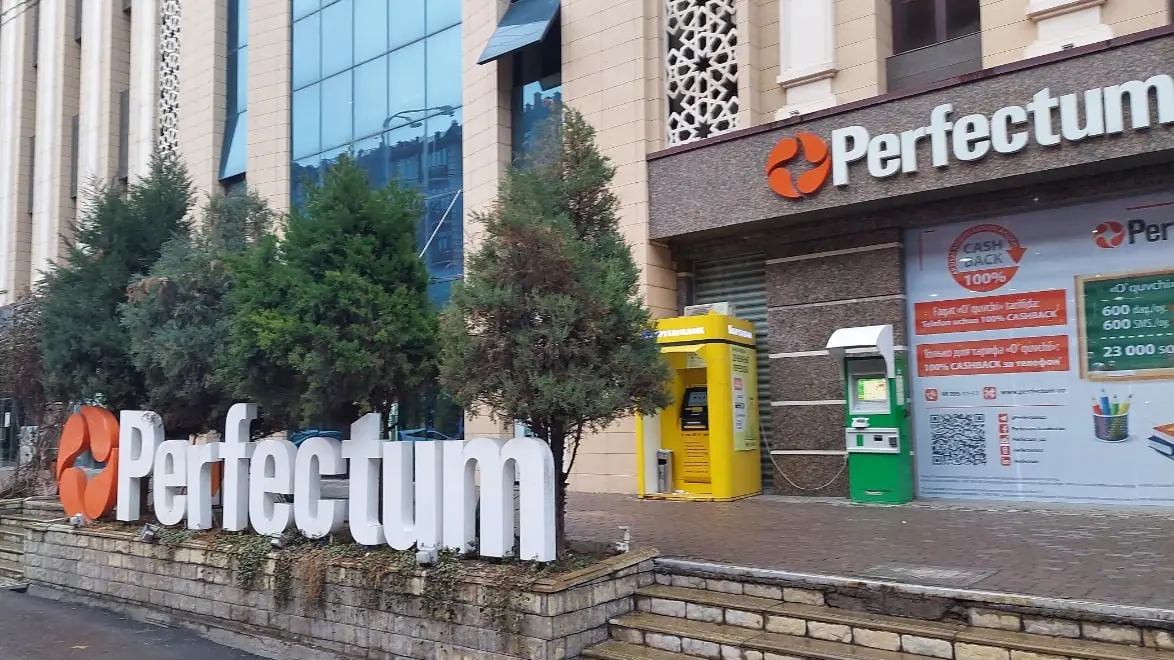
The deal, announced on 19 October, involves VEON UZB Holding Ltd — a UAE-registered subsidiary of the VEON group that already owns 100 percent of Unitel, which operates in Uzbekistan under the Beeline brand — purchasing 100 percent of Rubicon Wireless Communication JSC, the company behind the Perfectum brand. The total transaction value is approximately $207 million, a figure that includes roughly $93 million of Perfectum’s existing financial debt.
The committee’s specialist commission reviewed the application and concluded that approval could be granted only subject to conditions aimed at preserving competitive conditions. Once the deal closes — VEON has said it expects to complete the transaction by the end of October 2026 — Beeline Uzbekistan’s spectrum holdings are expected to grow by around 50 percent.
What the regulator is requiring
The most structurally significant condition is that Perfectum must continue to operate as a legally separate entity for at least three years. That requirement is intended to prevent the immediate absorption of a competitor and to give subscribers and rival operators time to adjust to the changed market structure.
On pricing and service quality, the committee has set a 12-month freeze on existing 5G Fixed Wireless Access tariffs for current Perfectum subscribers, and has stipulated that average internet speeds on those services must not fall below 300 Mbit/s. New subscribers must also be offered competitive terms. The parties are additionally required to extend 5G Standalone technology to further regions of the country.
The regulator has drawn clear lines around subscriber freedom and data use. The merged group may not impose contractual obligations on subscribers that are unrelated to the service being provided, nor may it restrict their ability to switch to other mobile operators. Subscribers cannot be compelled to use Beeline or other VEON-group digital platforms, and access to competing services must not be blocked or degraded.
The committee also addressed data governance directly: personal and commercial subscriber data must be protected, may not be used to restrict competition, and may not be transferred to foreign servers in violation of Uzbek law. More broadly, both parties to the transaction are required to comply with the Law on Competition and to maintain a healthy competitive environment in the market.
Why the deal matters
Perfectum has been one of the few operators in Uzbekistan offering 5G Fixed Wireless Access services, making its spectrum and infrastructure strategically valuable. By folding those assets into the Beeline network, VEON would consolidate a substantial share of available radio frequencies. The scale of that consolidation — a projected 50 percent increase in Beeline’s spectrum — explains why the Competition Committee chose to impose structural and behavioural remedies rather than simply approve or block the transaction outright.
The conditions mirror approaches taken by competition authorities in other markets when approving mergers that reduce the number of independent mobile network operators: mandatory operational separation for a defined period, price and quality floors for existing customers, and explicit prohibitions on leveraging the combined subscriber base to foreclose rivals.