



Listen to the article
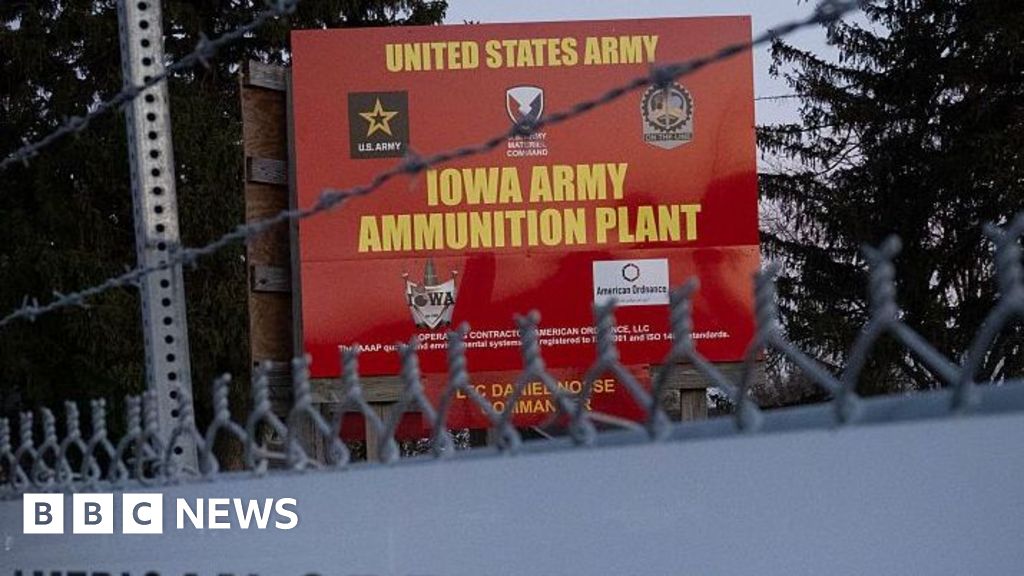
The US Army is pressing ahead with plans to detonate five tonnes of degraded explosives at the Iowa Army Ammunition Plant in Middletown, defying an indefinite court-ordered halt and filing emergency legal arguments that delay could cause a spontaneous, uncontrolled blast within days.
“To protect its personnel and the surrounding communities, the Army needs to take swift action,” the Department of Justice told the court on Saturday. “Protection of human health and the environment demand action now, not delay.”
The detonation had originally been scheduled for Friday, 20 November. After environmental groups sued to stop it, a federal court issued a pause. The Army responded by invoking an emergency exemption and notifying the court it intends to act by 24 November.
The temperature argument
At the centre of the Army’s case is a claim about the physical instability of the material. Lead azide is a highly volatile primary explosive used as a detonator. Earlier this year, inspectors at the plant found that the compound had degraded to the point where it could no longer be safely transported. The Army says 68 drums of the material are now stored in a bunker whose doors were removed in preparation for the original detonation — a step that, it argues, has left the explosives more exposed to ambient conditions.
“There is an immediate risk that the lead azide at the Iowa Army Ammunition Plant will explode as temperatures are expected to drop below 30 degrees Fahrenheit (-1°C) in the next several days,” the Army’s court filing states. The argument is that a controlled detonation now is preferable to an unplanned explosion triggered by cold weather.
The Environmental Protection Agency had already granted an emergency permit for the detonation, concluding that the explosion risk “presented an imminent and substantial threat to human health and the environment.” The Army said it was coordinating with the EPA and the Department of Health and Human Services to carry out the blast as safely as possible. No new date or time has been publicly announced.
Environmental groups push back
The Iowa Environmental Council and the Sierra Club, which filed the original lawsuit on Thursday, responded on Sunday with a new motion asking the court to pause proceedings long enough for them to submit additional evidence before any detonation takes place. Their filing includes declarations from environmental experts and local officials who dispute the Army’s urgency argument and question whether adequate public notice was given.
“There is no safe level of lead exposure, and Iowans were given just days to prepare for the November 20 detonation,” the Iowa Environmental Council said in a statement. The group argued that many residents living within the risk zone were unaware the explosion had been scheduled at all.
Under the original plan, residents near the plant had been advised to leave their homes for approximately six hours — for the duration of the blast and until dust settled. An advisory warned “all humans” to avoid being outdoors in the affected area during the demolition.
The standoff leaves a federal court weighing competing emergency claims: the Army’s assertion that waiting risks an uncontrolled explosion, and the environmental groups’ contention that proceeding without fuller public notice and consideration of alternatives would itself cause irreversible harm. The government has not disclosed the rescheduled time or any updated evacuation guidance.