


Listen to the article
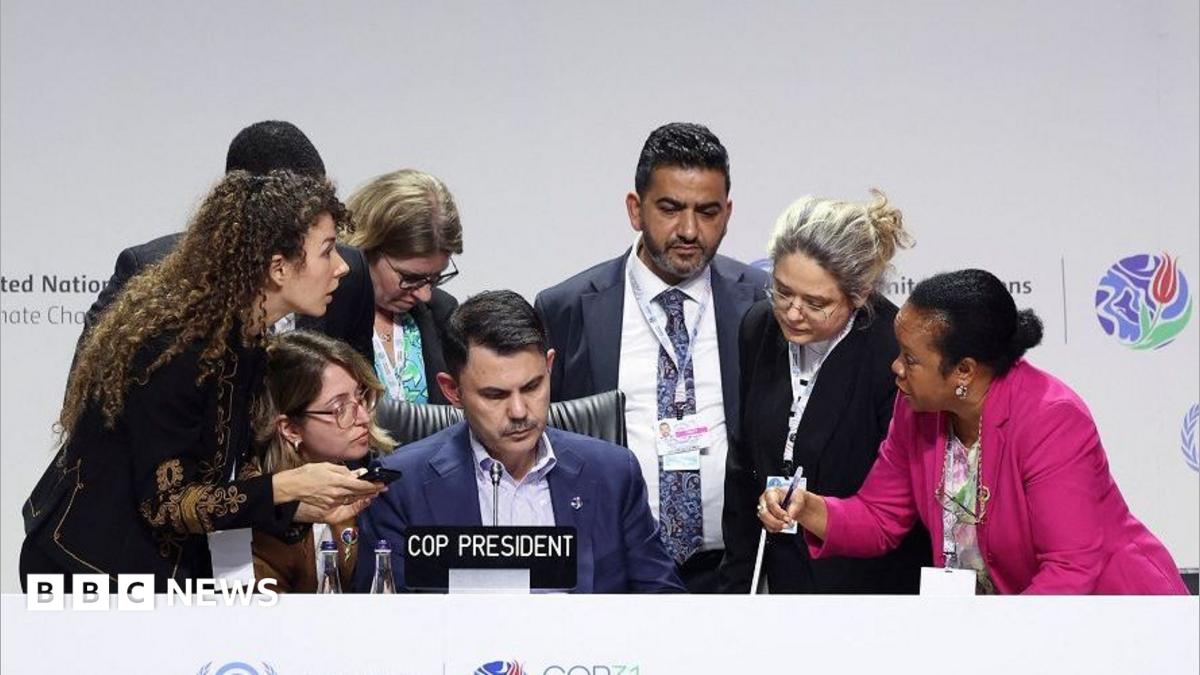
Climate negotiations at COP31 in Antalya, Turkey, stretched into a second day of overtime on Sunday as delegates gathered in the plenary hall to consider a new draft agreement that has deepened divisions rather than resolved them. If talks continue past 14:00 local time (11:00 GMT), the summit will become the longest in COP history, surpassing the two extra days and nights that COP25 in Madrid required to reach a deal in 2019.
The new draft text, formally titled the Antalya Accords and put forward in the early hours of Sunday by co-hosts Turkey and Australia, contains a significant first: an explicit acknowledgement that the goal of limiting global temperature rises to 1.5 degrees Celsius above pre-industrial levels has been missed. Scientists have warned that breaching that threshold will expose millions more people to rising sea levels and extreme heat.
On the central dispute over fossil fuels, however, the draft retreats from earlier language. It does not include a specific commitment to “transitioning away from fossil fuels” — wording that appeared in a previous version — but instead references a commitment made by countries three years ago to move away from coal, oil and gas. That formulation has not satisfied the European Union, Pacific island states or countries such as Panama, which have been pushing to restore the explicit transition language that fossil fuel producers, led by Saudi Arabia, successfully pressed to remove.
EU calls draft a backward step
The BBC understands the EU considers the latest version of the Antalya Accords a backward step. The bloc has warned publicly that there will be no deal without sufficient climate action. Panama’s environment minister was visible on the summit floor Sunday morning, pressing for fossil fuel language to be reinstated in the final text.
COP31 President Murat Kurum, Turkey’s environment minister, offered a more optimistic assessment. “We will be happy soon enough,” he said, and told the BBC he was “hopeful” as he entered the summit on Sunday, adding that negotiators were “closer than ever” to an agreement.
Developing nations have raised a separate concern: the latest draft still leaves unresolved the question of finance to help poorer countries adapt to the effects of climate change, a long-standing fault line in UN climate negotiations.
Talks move to the plenary floor
In a procedural shift that signals the talks have entered their final stage, negotiations on the cover text closed Sunday morning. Countries were told that any further changes must now be made “on the floor” — that is, in the plenary hall, in front of all delegations. That move opens the final bargaining to public view, since press are not permitted inside the negotiating rooms but are present in the plenary hall.
If countries cannot reach consensus on the Antalya Accords, the negotiations could be suspended until next year. That outcome has occurred only once before in the history of COP summits, making the stakes of the coming hours unusually high.