



Listen to the article
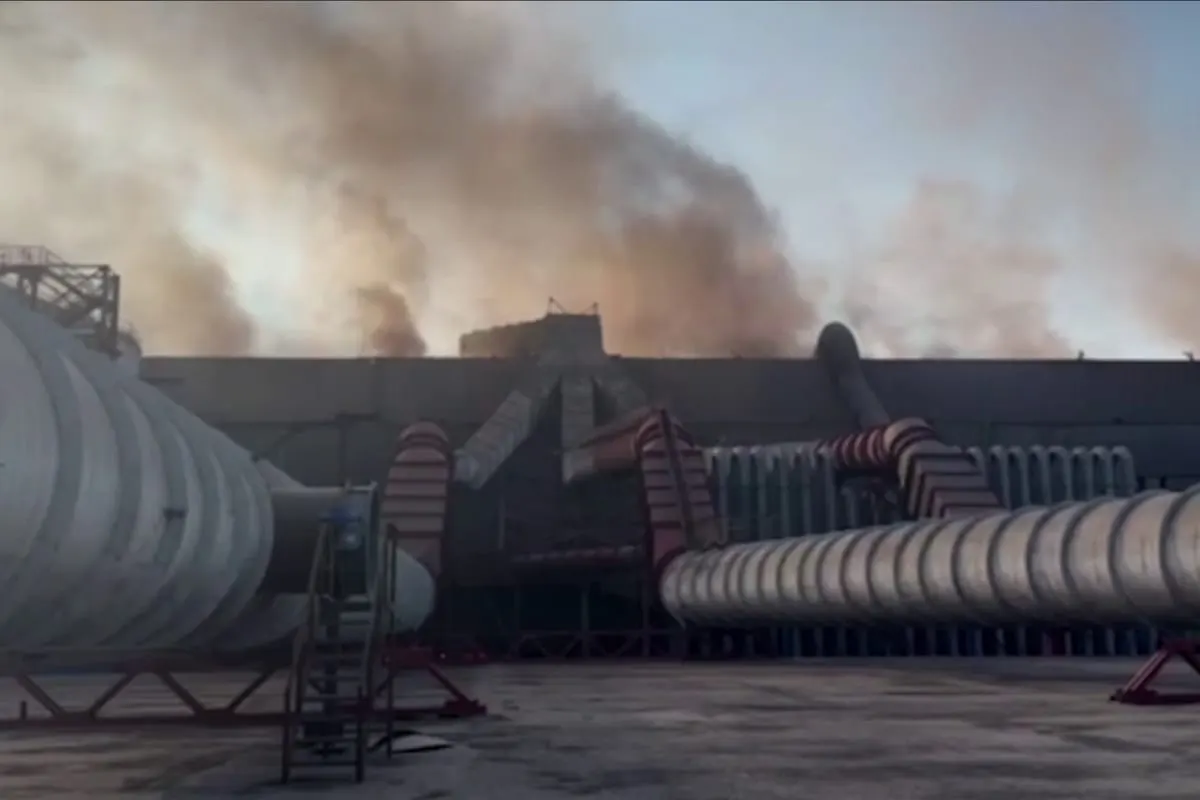
A steel and ferroalloy plant in the city of Bekobod has been fined more than 1.63 billion soums after inspectors from the National Committee on Ecology and Climate Change found it releasing pollutants into the atmosphere at levels that in one case exceeded the legal standard by more than fifteen hundred times.
The committee’s eco-police conducted the inspection at the facility, identified in official documents only as “M.K.”, and confirmed the violations through laboratory analysis of emissions from two separate production units. In the electric steel-smelting division, tests showed inorganic dust at 2.4 times the permitted level, carbon dioxide at 20 times the limit, and sulphur dioxide at a staggering 1,533 times the allowable concentration. Inspectors also found that the plant’s dust-and-gas filtration equipment was not functioning effectively, allowing a portion of the pollutants to escape directly into the open air.
The ferroalloy production unit fared no better. Laboratory results placed inorganic dust at 24.9 times the standard, carbon monoxide at 23.3 times, and nitrogen dioxide at 2.12 times the permitted threshold.
Penalty and Remediation Orders
On the basis of those findings, the committee calculated a compensation payment of 1,630,419,000 soums — just over 1.63 billion soums — for environmental pollution, imposed under existing legislative requirements.
Beyond the financial penalty, the plant has been ordered to replace the filters in its dust-and-gas cleaning equipment entirely, raise the efficiency of that equipment to at least 95 percent, strengthen laboratory monitoring, and install automatic emissions-monitoring stations at the principal pollution sources.
The scale of the sulphur dioxide exceedance in particular — more than fifteen hundred times the legal ceiling — points to a near-total failure of the filtration systems rather than a marginal operational lapse. Sulphur dioxide is a precursor to acid rain and a direct respiratory irritant; at such concentrations it poses acute risks to workers and surrounding communities. Bekobod is an industrial city in the Tashkent region, and concerns about toxic air quality in the wider Tashkent area have been raised separately by environmental monitors in recent weeks.