



Listen to the article
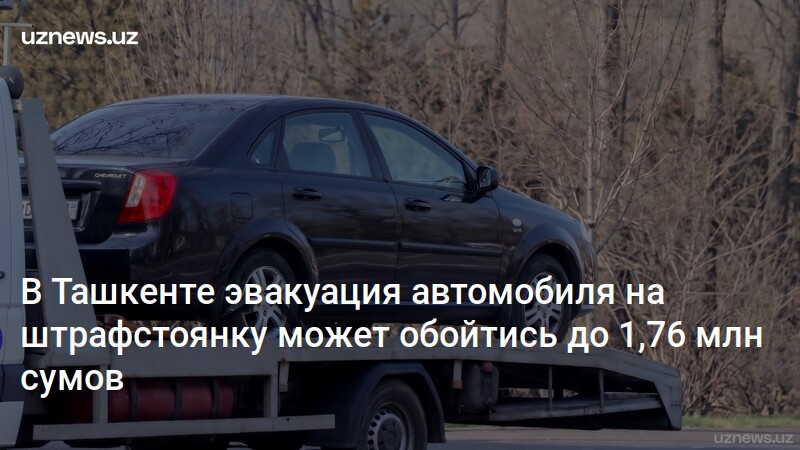
Drivers whose vehicles are towed in Tashkent from 24 December will face charges of up to 88,000 soums per kilometre for the tow itself and a further 88,000 soums for each day the car sits in an impound lot, with the total towing charge capped at 1.76 million soums, the city’s Road Traffic Organisation Centre has announced.
The per-kilometre and daily storage rates are each set at 20 percent of the base calculation unit (BRV). As a worked example provided by the centre illustrates, a three-kilometre tow followed by three days in storage would cost 528,000 soums — before any separate traffic fine for the underlying offence, which is billed independently.
When the Clock Starts — and When It Cannot Be Stopped
Storage charges begin accumulating from the moment loading onto the tow truck starts, not from arrival at the impound yard. A driver who returns to the vehicle before loading begins and corrects the violation can prevent the tow entirely. Once loading has started, however, the process cannot be halted even if the owner is present at the scene.
Retrieval of an impounded vehicle will require the owner first to remedy the reason for detention and then to obtain an electronic release permit confirmed by a QR code through the new “Shtrафploshchadka” (Impound Lot) module. Permits issued outside that system will not be accepted, and only authorised specialist vehicles may carry out tows.
Abandonment, Liability and Wrongful Tows
Owners who leave vehicles uncollected for six months face compulsory recovery of accumulated storage debt. After twelve months, a court may declare the vehicle ownerless. The centre specified that if a car is towed without legal grounds, the costs must be reimbursed by the responsible state body; damage caused during transport is the liability of the organisation that performed the tow.
The entire impoundment and release process is being moved into a unified electronic system, a shift the centre said is designed to reduce discretion and create a verifiable record of each case. “Your car is yours, but the city belongs to everyone,” the centre said in a statement accompanying the announcement. “The best way not to pay is not to violate the rules.”