



Listen to the article
Uzbekistan’s Interior Ministry, Academy of Sciences, Foreign Ministry and Ministry of Digital Technologies are to jointly overhaul the rules governing how names and personal data appear in the machine-readable zones of biometric passports and ID cards, under a draft Cabinet of Ministers decree published on the government’s regulatory portal by the Ministry of Justice.
The draft is framed as an implementing measure for Law No. ÖRQ–1184, adopted on 21 October 2026, which formally introduced four revised letters into the Uzbek Latin alphabet: Ö ö, Ğ ğ, Ş ş and Ç ç. The central question the decree addresses is how those characters — which have no direct equivalents in the international Latin script used in travel-document machine-readable zones — should be rendered in compliance with ICAO Doc 9303, the global standard for machine-readable travel documents.
A month-by-month technical roadmap
The draft lays out a phased process running from January through May 2027. In January, the four ministries are to form a specialist working group. In February, that group will audit existing transliteration rules and the software algorithms currently used to generate machine-readable zone data. Where consultations with ICAO prove necessary, the draft authorises them.
March is set aside for drafting unified transliteration rules specifically for the machine-readable zone, known by its technical abbreviation MRZ. In April, those rules are to be tested within the document-formation and personalisation systems already in use. By May, the working group is expected to produce legislative proposals — amendments and additions to existing normative acts — based on the test results.
In parallel, between January and April 2027, the same agencies are to study how the revised alphabet characters can be displayed in the visual inspection zone, or VIZ — the human-readable section of a passport or ID card that a border officer reads directly.
Which documents will carry the new alphabet
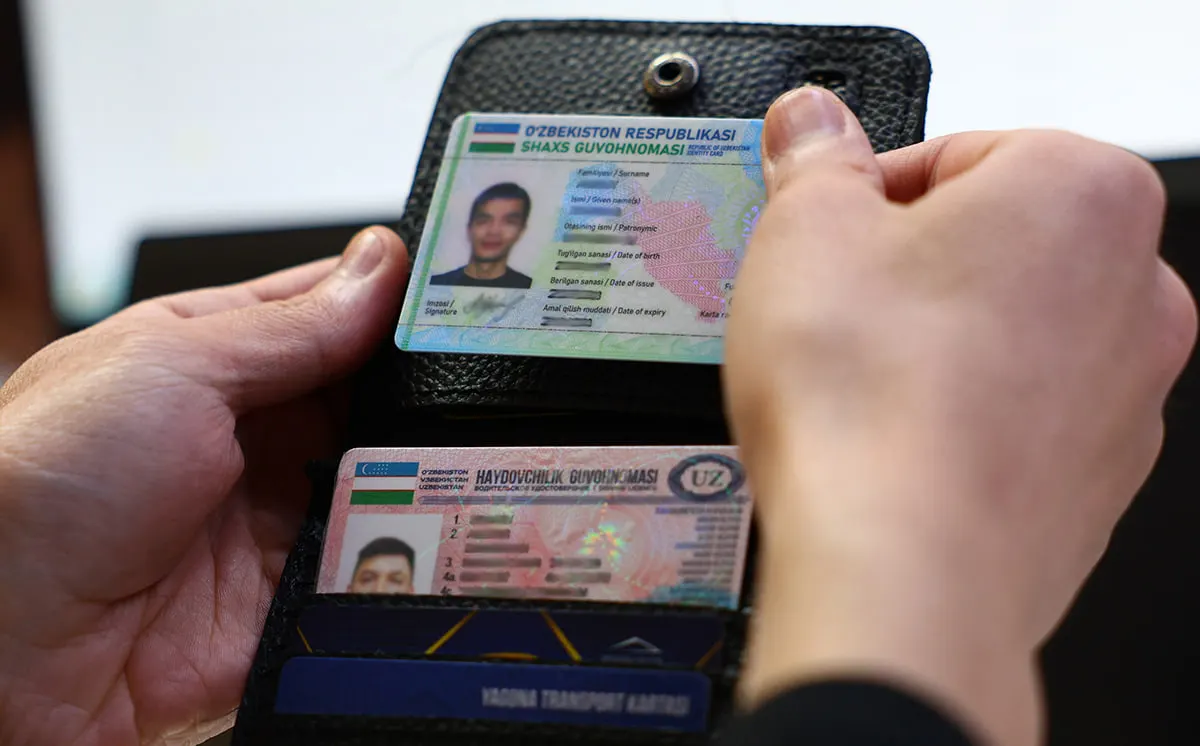
The draft specifies that once the law enters into force, newly issued documents will be formatted in the revised alphabet. These include ID cards for citizens, foreign nationals and stateless persons; biometric foreign-travel passports; driving licences; vehicle registration certificates; and cadastral documents. Blank document stock produced under the current alphabet may continue to be used until 1 January 2028. Service identity cards for state-body and enterprise employees will be switched to the new alphabet when they come up for scheduled renewal.
Legal continuity guaranteed
The draft contains an explicit protection clause: all documents issued under existing legislation — including those confirming personal and property rights — retain full legal force regardless of which version of the alphabet their letters reflect. Authorities and service providers would be prohibited from refusing to recognise a person’s identity, determine their rights and obligations, provide state services or accept documents on the grounds that a name is written in the old rather than the revised letter forms.
The decree remains a draft. Its provisions will take effect only if and when the Cabinet of Ministers formally adopts it.