


Listen to the article
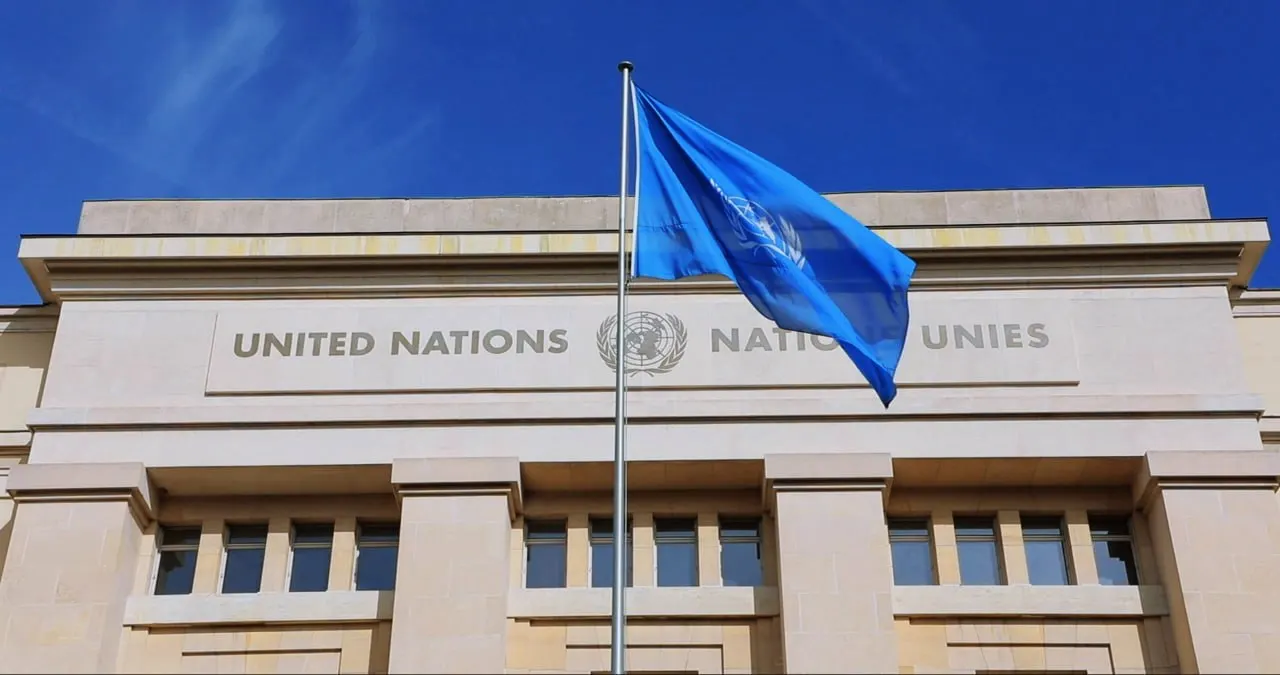
A conference on the intellectual and spiritual heritage of Mawarannahr was held at the Palais des Nations in Geneva, drawing diplomats, representatives of international organisations, scholars and cultural figures to examine the legacy of three of Central Asia’s most influential medieval thinkers.
The event, titled “Islamic Civilisation: The Great Spiritual and Scientific Heritage of Mawarannahr and the Horizons of Enlightenment,” was organised under an initiative put forward by President Shavkat Mirziyoyev at the 80th session of the UN General Assembly, which called for deeper study and wider international recognition of the work of Imam Bukhori, Imam Termiziy and Imam Moturidiy. It served as a continuation of an international dialogue that opened at UNESCO headquarters in Paris on 7 October of this year.
Exhibition and book donation
The programme opened with an exhibition titled “Civilisations, Personalities, Discoveries,” displaying rare books, illustrated scholarly publications and miniatures documenting the lives and findings of Central Asia’s major medieval thinkers. Organisers said the display was intended to demonstrate the region’s scientific traditions and the continuity of knowledge across generations. At the close of the event, all books shown in the exhibition were donated by the Islamic Civilisation Centre of Uzbekistan to the library of the UN’s Geneva office.
Tatyana Valovaya, Director-General of the UN Geneva office, offered a positive assessment of the Centre’s work. “The Islamic Civilisation Centre of Uzbekistan made a tremendous impression on me. It is a genuine source of inspiration for the twenty-first century, where a rich historical heritage is presented with the help of modern technologies. We have agreed to cooperate between our library and the Centre,” she said, according to the source text.
Archive access agreement
Firdavs Abduxoliqov, director of the Islamic Civilisation Centre of Uzbekistan and chairman of the WOSCU governing board, reported in his address that an agreement had been reached on access to UN library and archive holdings. He said the arrangement would open new possibilities for studying previously unknown sources relating to the history of Central Asia and Uzbekistan.
Three other speakers took the floor during the conference. Robert Blyum, president of the Geneva diplomatic circle, Kathleen Göbel, director of Cultur-Cooperation International in Berlin, and Craig Taylor, a representative of Latter-day Saint Charities, each said that the ideas of Central Asian thinkers held particular relevance for reinforcing peace and inter-ethnic harmony in today’s world, according to the source.
Films and reception
Three short documentary films on Uzbekistan’s history and the contemporary concept of the Islamic Civilisation Centre were screened during the proceedings. The conference was organised jointly by the Islamic Civilisation Centre, the Ministry of Foreign Affairs, the Permanent Mission to the UN, the Committee on Religious Affairs, international research centres, ACDF and WOSCU. The formal programme concluded with a reception featuring Uzbek national cuisine.
The Geneva event is the second major international platform this month at which Uzbekistan has presented the Mawarannahr heritage initiative, following the Paris session earlier in October.