



Listen to the article
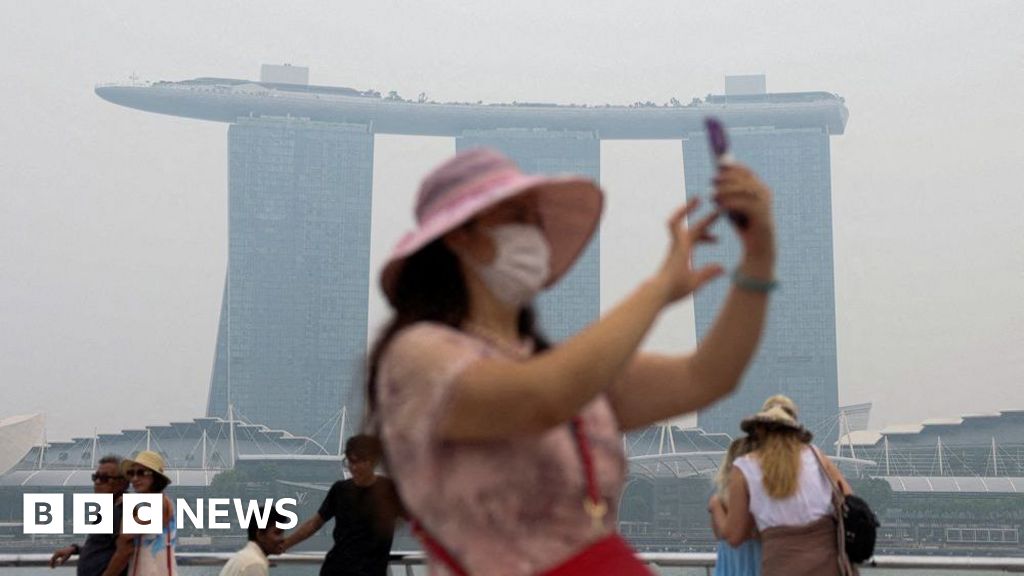
Smoke from wildfires burning across Indonesia’s Kalimantan, Papua and Sumatra regions has blanketed Singapore and Malaysia for weeks, triggering respiratory illness and a political crisis that is straining some of the region’s most consequential bilateral relationships.
Unlike previous haze episodes, which typically dissipated within days, this year’s smog has persisted far longer. Meteorologists attribute the severity to a strong El Niño that has deepened drought conditions in Indonesia’s forests and peatlands, making the fires harder to extinguish. The blazes are widely associated with industrial land-clearing for oil palm cultivation.
Citizens push back, governments hedge
In Malaysia, public frustration has spilled into consumer action. Lawmaker Syed Saddiq called for sanctions on companies linked to the fires and urged Malaysians to “treat them as an outcast in the region,” prompting a boycott of Indonesian products. Malaysia’s foreign minister Mohamad Hasan has nonetheless ruled out a formal diplomatic protest or legal action, warning that such steps “would mean we were prepared to sever relations.” Instead, Kuala Lumpur has agreed to explore a memorandum of understanding with Jakarta on wildfire prevention and says it will rely on existing mechanisms, including the Asean Agreement on Transboundary Haze Pollution.
That 2003 agreement commits Asean members to collaborate on tackling the haze but carries no power to punish agricultural companies or compel governments to do so. James Chin, professor of Asian studies at the University of Tasmania, describes it as “just not worth the paper it was signed on,” noting that political pressure evaporates as soon as the smoke clears. Asean countries set a target to eliminate haze by 2020; when that deadline passed quietly, they pushed the goal to 2030.
Malaysia’s muted official tone also reflects its own exposure: it is a major palm oil producer and has itself been accused of contributing to regional haze. In 2019, when Kuala Lumpur pointed to Indonesian peatland hotspots as the source of smog, Jakarta pointed back. Ei Sun Oh, principal adviser at the Pacific Research Centre of Malaysia, notes that Malaysia is unlikely to wield the same leverage over Indonesia as Singapore, which is Indonesia’s largest foreign investor and an offshore financial hub for many wealthy Indonesians. For now, he says, the government is “just wringing their hands till the wind blows [the problem] over.”
Singapore’s sharper tone draws a response
Singapore has been more direct. Hundreds of haze shelters have been opened across the island, masks are being distributed to children, the elderly and other vulnerable residents, and authorities say they are investigating ten Singapore-registered companies for potential links to the Indonesian fires. The government has also signalled it will strengthen existing haze legislation.
Eugene Tan, associate professor of law at Singapore Management University, says the prolonged episode has created domestic political pressure. “People are fed up, angry and anxious,” he told the BBC. “The governments have to respond to them, or else what is more an external issue has become an internal one with ample headroom for politicisation.” He added that there is a perception the government “dropped the ball” despite advance warning that El Niño would be severe this year.
Singapore’s foreign minister Vivian Balakrishnan travelled to Jakarta last week to meet Indonesian President Prabowo Subianto in what Balakrishnan described as “honest” and “sincere” conversations that produced “constructive approaches.” The two countries subsequently announced a joint task force on haze — a diplomatic reset after weeks of mounting tension.
The détente followed a sharp exchange. A senior Indonesian official had argued the wildfires were beyond human control and that oxygen enjoyed by Singapore and Malaysia “also comes from our forests.” Singapore’s senior minister K Shanmugam called the remark “disappointing” and “not right,” telling reporters: “The haze is affecting our health seriously, and it’s really unacceptable.” He argued that because the haze harms citizens on both sides of the border, there should be no “bilateral issues” in addressing it, and that Indonesia’s own public was suffering too.
Gas exports cut amid escalating rhetoric
Days after that exchange, Indonesia announced it would reduce gas exports to Singapore, citing domestic energy needs. Singapore said the reduction amounts to less than two percent of its total daily gas demand and would have little practical impact. But the timing was difficult to ignore: Indonesia’s energy minister had warned shortly before the announcement that exports could be halted to countries that do not “respect Indonesia,” and President Prabowo had made reference to “countries that like to insult Indonesia” in remarks about the wildfires.
Tan frames the dynamic in terms of a long-standing regional psychology. “It’s a tired playbook of using Singapore as the bogeyman, driven by the ‘abang-adik’ [big brother-little brother] syndrome,” he said, referring to the expectation — which Singapore’s leaders have long resisted — that the city-state should defer to its larger neighbours. “Singapore leaders expressing concerns about the haze and how it affects the people of both countries have been taken to mean that Singapore has been disrespectful to its neighbour.”
The structural problem, analysts say, will outlast any single haze season. As long as oil palm cultivation drives commercial land-clearing across the region, the fires will return. “As long as we place a lot of importance on oil palm planting, [the haze] is going to recur,” said Oh. The joint task force and the proposed Malaysian memorandum of understanding offer incremental steps, but neither addresses the economic incentives that make slash-and-burn practices persistent across the archipelago.