



Listen to the article
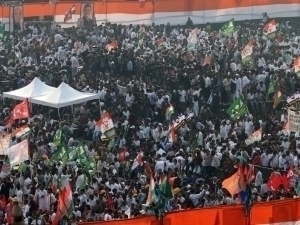
Tens of thousands of people marched through central New Delhi on Saturday, 1 November, demanding the resignation of Chief Election Commissioner Gyanesh Kumar after more than 130 million names were removed from India’s electoral rolls during a revision process — a figure that exceeds the entire population of Japan.
The protest was led by Rahul Gandhi, head of the opposition Indian National Congress party, and forms part of a broader wave of demonstrations against Prime Minister Narendra Modi’s government that has continued since late September. Opposition figures argue the deletions from the voter lists disproportionately benefit Modi’s Bharatiya Janata Party.
Security was visibly reinforced before the march began. Police officers and specialised crowd-control units surrounded Ramlila Maidan, the open ground in central Delhi where the rally converged, as demonstrators carrying Indian national flags and party banners made their way there from across the city.
Speaking from the stage, Gandhi said Kumar must leave his post as a first step toward putting the country “back on the right path.” He framed the deletions in stark terms: “Erasing people’s names from the voter rolls is stealing the vote of every citizen of India. It is depriving citizens of the right to express their opinion. This is a betrayal of the nation, a betrayal of the state.”
Among those at the rally was Rina Maho, a member of the Congress party’s student wing, who said four members of her family had been struck from the rolls after incorrect information was entered suggesting they had moved away. She said her family has lived in Jagdalpur, in the state of Chhattisgarh, for many years. “Suddenly they marked us as having left our own home,” she said. “Someone must be held accountable for this. That is exactly why we came.”
The Election Commission of India has defended the revision, saying its purpose was to remove duplicate entries and individuals who are not legally entitled to vote. The commission denied any partisan bias and said citizens incorrectly removed from the rolls could re-register.
Health Minister Jagat Prakash Nadda offered the government’s counter, dismissing the rally as a “carefully staged performance.”
Reuters, which first reported the demonstration, noted that the scale of the deletions — more than 130 million names — has given the opposition a potent rallying point ahead of future state and national elections. The Election Commission has not publicly explained the methodology behind individual deletions or offered a breakdown by state or demographic group.