


Listen to the article
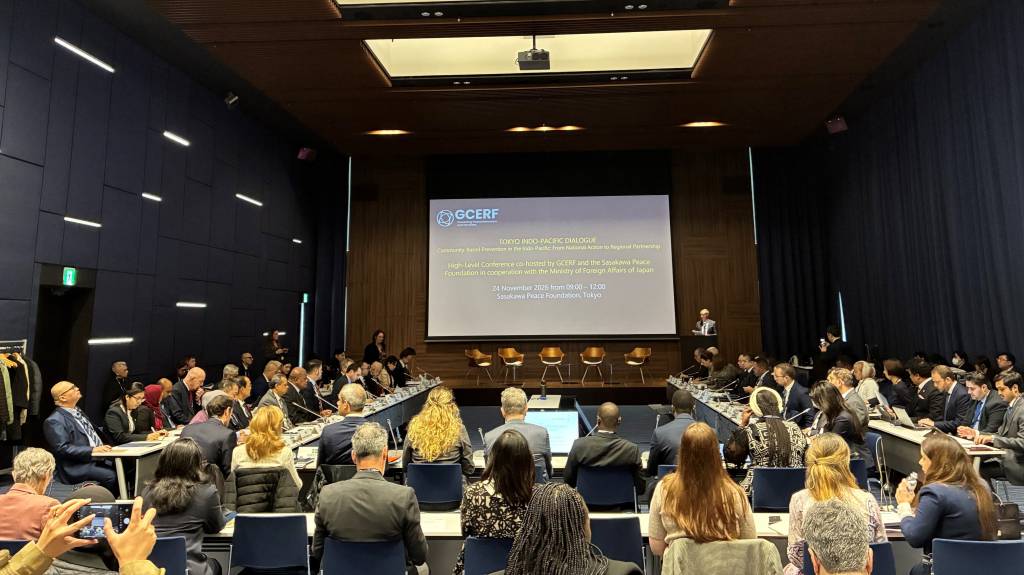
Uzbekistan’s approaches to preventing violent extremism were presented at a high-level dialogue held on the sidelines of the 25th meeting of the Governing Board of the Global Community Engagement and Resilience Fund (GCERF), organised jointly with the Sasakawa Peace Foundation and Japan’s Ministry of Foreign Affairs. The event brought together senior government officials, Board members, fund partners and civil society representatives to share national experiences and explore expanded partnerships across the Indo-Pacific region.
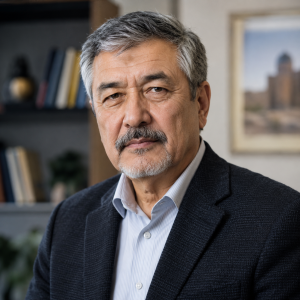
The Uzbek delegation was represented by the Director of the Institute for Strategic and Regional Studies (ISRS), Mr. Aripov, who argued that the transnational character and continuous evolution of extremist and terrorist threats demand more effective responses and closer international cooperation.
Repatriation and reintegration
Participants showed particular interest in Uzbekistan’s reintegration measures. Since 2019, more than 530 Uzbek citizens — predominantly women and children — have been repatriated from conflict zones through the “Mehr” humanitarian operations, Mr. Aripov told the gathering. He also highlighted efforts to strengthen interethnic and interfaith harmony and to advance education and public awareness, noting the role of research centres in promoting values of peace, tolerance and humanism.
A regional council and a proposed competence centre
On the multilateral front, Mr. Aripov presented the Regional Expert Council on Rehabilitation and Reintegration of Returnees from Conflict Zones, launched in 2024 at the initiative of President Shavkat Mirziyoyev with support from the United Nations Office of Counter-Terrorism (UNOCT). He briefed participants on a presidential proposal to transform the council into an International Competence Center designed to facilitate the exchange of experience and the dissemination of effective practices among member states.
GCERF partnership and digital resilience
Mr. Aripov outlined the institutional basis for Uzbekistan’s cooperation with GCERF, noting that cooperation mechanisms were developed following the signing of a memorandum between ISRS and the Fund in 2024. GCERF currently funds three projects implemented by Uzbek non-governmental organisations, covering the expansion of social services, the promotion of employment and entrepreneurship, and support for returnees, single mothers and migrant families.
Addressing the threat of online radicalisation, Mr. Aripov described a project to establish a media centre for digital resilience. The centre is intended to help develop critical thinking, media literacy and skills for creating positive online content among young people.