


Listen to the article
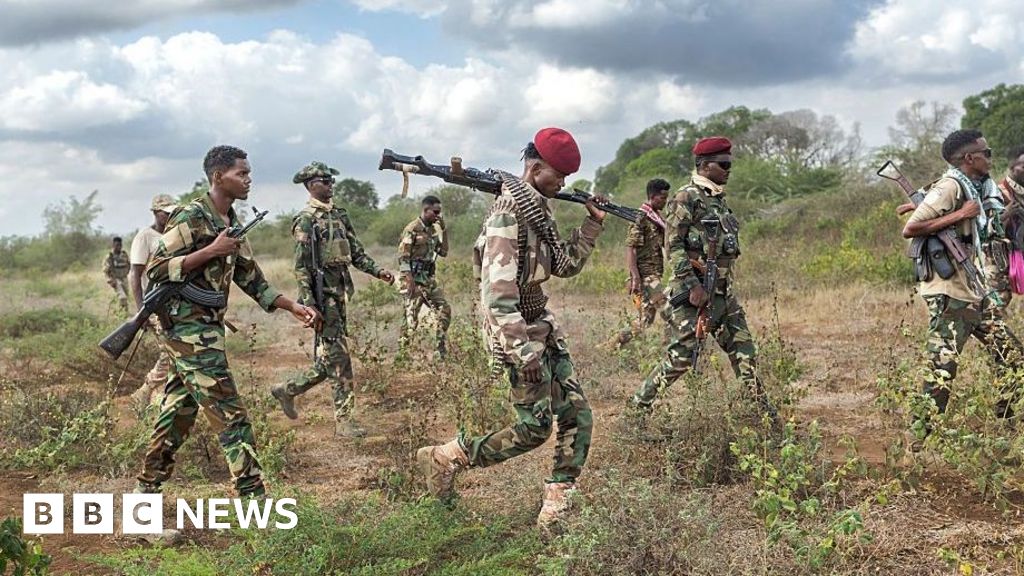
Somalia is confronting what analysts describe as its most precarious security moment in years: foreign troops are leaving, international funding is under pressure, and a constitutional crisis over elections has fractured the political class at the worst possible time.
Ugandan forces, the largest single contingent within the African Union mission, began withdrawing last month and are expected to complete their departure by next year. Ethiopia, which contributes more than 7,000 troops to the AU mission, is reportedly planning to pull back around 3,000 of them. Together, the two countries have formed the backbone of the roughly 12,000 AU troops that have helped the Somali government hold al-Shabab at bay since 2007.
The United States, which funds about a quarter of the $500 million annual budget of the UN Support Office in Somalia — money that sustains Somali security forces, AU missions and individual troop-contributing nations — had earlier announced cuts to that support. Washington has since said it will extend the funding for one year, but the episode underscored how exposed Somalia’s security architecture is to shifts in donor priorities.
A Taliban comparison that officials reject
Abdisalam Guleid, a former deputy director of Somalia’s National Security Agency, told the BBC the trajectory was alarming. “I don’t think Mogadishu will be able to defend itself. The Taliban style [takeover] — that’s the most likely scenario I can envision now,” he said, drawing a parallel to the rapid collapse of Afghan government forces in August 2021 after the withdrawal of US and NATO troops.
Guleid argued that years of international assistance have not translated into genuine military self-sufficiency, saying Somali authorities had grown so reliant on foreign protection that they neglected to adequately prepare their own forces. He also warned that the threat does not come from al-Shabab alone: clan-based militias are increasingly challenging the federal government, and some, he said, are now fighting alongside the militant group.
Somalia’s Information Minister Abdifatah Qasim Mohamud pushed back firmly. He told the BBC that Somali troops had already taken over positions vacated by Ugandan forces and were prepared to assume greater responsibility. “I believe there is no reason for concern over this issue. There will be no change in the country’s security situation or in the areas they have vacated,” he said. President Hassan Sheikh Mohamud, during a visit to Uganda on 23 November, joined President Yoweri Museveni in calling on the international community to sustain its support for Somalia.
An army still developing, fighting on multiple fronts
Omar Mahmood, an analyst at the International Crisis Group, offered a more measured but still cautious assessment. Somali forces are under considerable strain as they simultaneously fight al-Shabab and absorb positions previously held by foreign troops — a major undertaking for an army that is still developing, he said. The military is also under pressure in the Bay region of South-West state, where forces loyal to ousted regional President Abdiaziz Hassan Mohamed have been fighting the federal government. The withdrawal of Ugandan troops from the Lower Shabelle region could compound those challenges further.
The security picture was sharpened recently when al-Shabab claimed to have killed hundreds of elite Somali soldiers in a single attack. The government acknowledged the attack but did not disclose casualty figures.
Ugandan security analyst Freddie David Egesa took a less pessimistic view, arguing that years of international support have helped Somalia build the institutions it needs to take greater responsibility for its own defence. He said the staggered withdrawal would allow Somali forces to assume control gradually and would push rival political factions to cooperate.
A constitutional crisis deepens the risk
The military uncertainty is compounded by a political dispute that Mahmood describes as closely intertwined with the security crisis. Somalia has been attempting to move from an indirect electoral system — in which clan elders select lawmakers who then choose the president — to direct popular voting. The process has divided the government and opposition, and the dispute escalated this year after President Mohamud pushed through constitutional amendments extending the presidential term from four to five years, effectively delaying elections until 2027.
This month, the Supreme Court ruled against the extension, ordering political leaders to agree on an electoral roadmap within 30 days and to hold elections within three months. A day before the ruling, the president dismissed Chief Justice Baashe Yusuf Ahmed. The dismissed officials have since challenged their removal at the East African regional court in Tanzania.
Mahmood said the absence of political consensus makes it harder for the government to concentrate on fighting al-Shabab, while the approaching elections — which must themselves be secured — add another layer of operational demand on already stretched forces.
Finances as fragile as the front lines
Somalia’s dependence on external support extends well beyond the military. Finance ministry data show that donor grants of $878.8 million account for two-thirds of the country’s planned $1.36 billion budget for 2026. Yet in the first nine months of the current year, the government received only about $314 million in grants — 35 percent of the expected annual total.
Mahmood believes bilateral agreements and continued assistance from other partners could help bridge some of the gap left by withdrawing contributors. Guleid is sceptical, arguing that countries such as Turkey, Qatar and Egypt could not quickly replace the military and financial weight of Uganda and the United States.
Relations with some existing partners have also deteriorated. Somalia has accused the United Arab Emirates of funding armed groups and undermining its sovereignty. The UAE rejected the criticism and described President Mohamud as an “outgoing president” in a pointed reference to the mandate dispute. The two countries formally severed diplomatic ties earlier this year, removing what had been a significant security and economic partner from Somalia’s support network.
Whether the combination of a thinning foreign military presence, a funding shortfall, a constitutional standoff and an emboldened insurgency tips Somalia toward renewed instability — or whether its forces prove more capable than critics fear — is a question that may be answered in the months ahead.