



Listen to the article
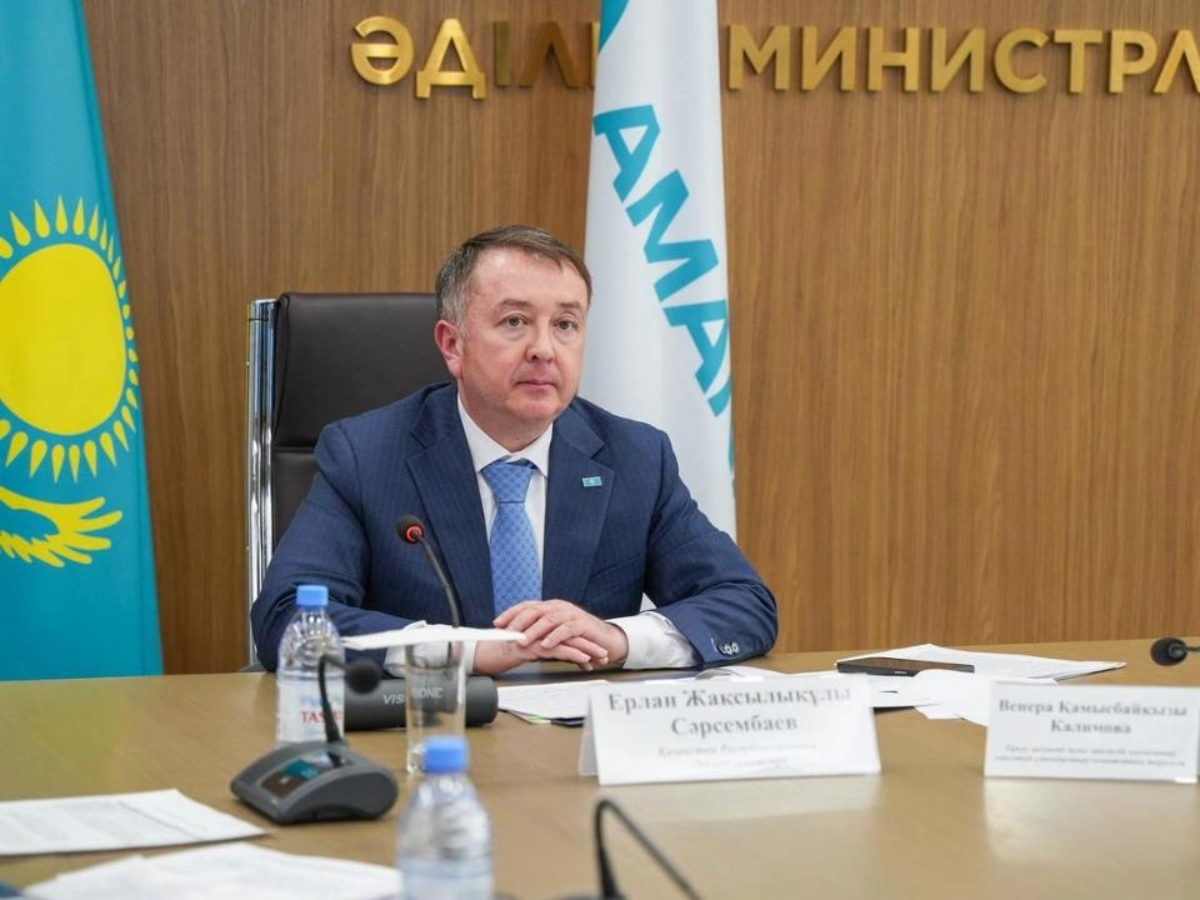
Kazakhstan’s government will not enforce a ruling issued by the Astana International Financial Centre’s court ordering Gazprom to satisfy a $1.4 billion arbitration award won by Ukraine’s state gas company Naftogaz, Justice Minister Yerlan Sarsembayev announced, in a move that directly contradicts the AIFC’s foundational premise as an independent, extraterritorial legal venue.
The AIFC was established as a special economic zone designed to attract foreign capital, with its own court operating under English Common Law and formally separate from Kazakhstan’s domestic justice system. In mid-May, that court upheld the outcome of an arbitration case originally decided by the Paris-based ICC International Court of Arbitration, in which Gazprom was ordered to pay Naftogaz over a gas transit dispute. Gazprom had ignored the ICC ruling and refused to participate in the AIFC’s subsequent judicial process.
Sarsembayev justified his intervention by arguing the AIFC lacked standing to hear the case in the first place. “The Republic of Kazakhstan will not serve as a transit venue for the enforcement of decisions that lack a legal nexus with the country,” he was quoted as saying by the Kazakh legal news outlet Zakon.kz. “Specifically, the Republic’s legal mechanisms do not provide for the adjudication of disputes unrelated to its jurisdiction.” The AIFC court, for its part, included a detailed explanation in its ruling of why it considered itself competent to hear the Naftogaz-Gazprom matter.
A court designed to stand apart — until it ruled against Russia
The intervention is significant precisely because Sarsembayev has no formal jurisdiction over the AIFC court. The centre’s entire value proposition to international investors rests on the guarantee that its legal proceedings are shielded from exactly this kind of executive override. By stepping in regardless, the minister has exposed that guarantee as conditional.
The episode places Astana in what observers have described as an unwinnable position. Russia retains substantial economic leverage over Kazakhstan, particularly over the oil export infrastructure that underpins a large share of government revenue. Enforcing a billion-dollar judgment against Gazprom — a company with deep ties to the Kremlin — carried obvious geopolitical costs. But declining to enforce it damages Kazakhstan’s credibility with the foreign investors the AIFC was built to attract.
The Russian-language broadcaster RTVi, described as Kremlin-friendly, acknowledged the dilemma while concluding that Kazakhstan had come off worst. “The AIFC’s greatest attraction — conceived primarily to appeal to investors from post-Soviet and Asian nations — was not even the preferential tax regime afforded to the Centre’s residents, but rather the opportunity, figuratively speaking, to access the ‘High Court of London,'” RTVi’s commentary stated. “The underlying concept was to create a safe haven where businesses from the post-Soviet space could operate without fear of political risks. It was a formula that had worked successfully until this very moment.”
Moscow’s reaction
Vladimir Vodolatsky, deputy chair of the Russian State Duma’s Foreign Affairs Committee, welcomed Astana’s decision, framing it within a broader argument that the existing international legal order has collapsed and that international law is therefore largely without meaning.
The episode is likely to reverberate well beyond the Naftogaz-Gazprom dispute. Investors who have chosen the AIFC as their preferred venue for resolving commercial disputes — particularly those involving state-connected counterparties — now have concrete evidence that a favourable ruling may not translate into enforcement if the losing party has sufficient political weight in Astana. Whether Kazakhstan can contain that reputational damage while managing its dependence on Russian transit and energy infrastructure remains an open question.