


Listen to the article
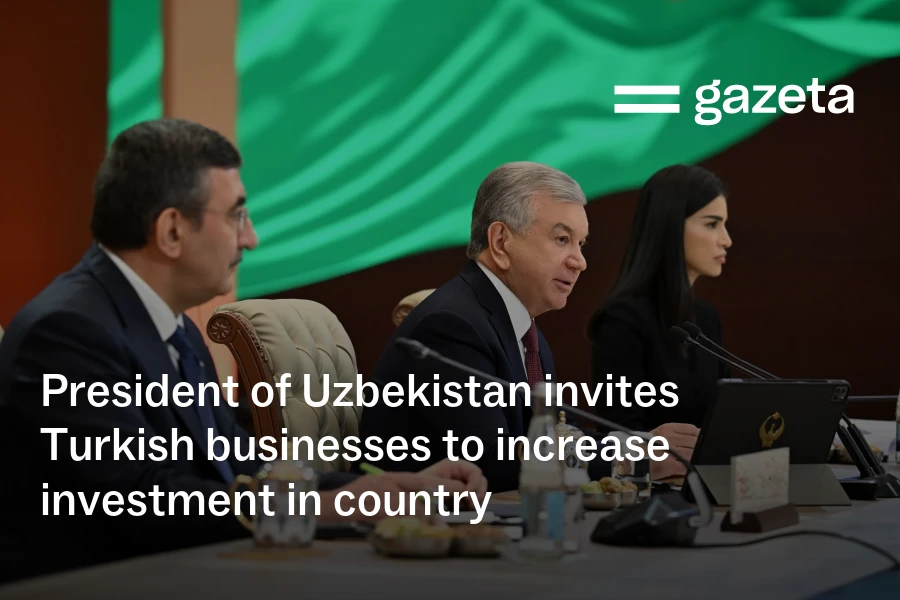
President Shavkat Mirziyoyev used the inaugural meeting of the Uzbekistan-Türkiye High-Level Business Support Council in Tashkent on Thursday to lay out an ambitious pitch to Turkish capital, inviting companies to take stakes in a privatisation programme worth $8.4 billion and to anchor themselves in sectors from green energy to pharmaceuticals.
Turkish Vice-President Cevdet Yılmaz led a large business delegation to the event, which marked the first formal session of a council the two countries’ presidents established during a meeting in Ankara in October. The gathering brought together the institutional framework and the commercial pitch in a single sitting.
A Threefold Economy and a $300 Billion Target
Mirziyoyev opened by sketching Uzbekistan’s economic trajectory. Since 2017, he said, the economy has grown threefold and has attracted more than $150 billion in foreign investment. The stated goal for 2030 is to push GDP to $300 billion, double industrial output, create two million high-paying jobs in manufacturing and raise the share of high-tech products to one-third of output — figures relayed by presidential press secretary Sherzod Asadov.
Against that backdrop, the president told Turkish companies that Uzbekistan plans to put state assets, real estate and land plots worth a combined $8.4 billion on the market in 2026 and 2027, and called on Turkish banks, investment funds and industrial companies to participate actively. He pointed to existing precedents: Turkish firms have already been involved in the privatisation of SamAuto, the Samarkand Automobile Plant; the modernisation of power grids in Samarkand region; and the construction of the new international airport in Bukhara.
New Tashkent, Pharma Parks and a Dedicated Industrial Zone
The president directed particular attention to New Tashkent, the large-scale urban development project, inviting Turkish companies to bid for contracts covering residential complexes, shopping centres, hotels, educational institutions and medical facilities. In transport, he highlighted toll roads, airports and logistics centres as priority areas for partnership.
On pharmaceuticals, Mirziyoyev proposed establishing a dedicated industrial zone for Turkish drug manufacturers, separate from the existing Tashkent Pharma Park, where investors are already offered incentives, infrastructure and production facilities. Digital technology and financial services — including the privatisation of Uzbekistan’s banks — were also identified as key areas, with Turkish IT companies pointed toward the tax and customs incentives available to residents of IT Park.
Special economic zones across the country offer tax and customs relief for periods of three to ten years depending on investment volume, and major investors can access ready-built production facilities, land plots and engineering infrastructure. The Uzbekistan-Türkiye joint industrial zone Ostim, a 100-hectare site in Tashkent region that has been operating since 2024, was cited as a model Mirziyoyev said he was ready to replicate in other regions.
Mirziyoyev closed with a commitment to press ahead with reforms.
“We will continue to consistently implement reforms aimed at improving the investment climate in our country and removing unnecessary bureaucratic barriers for entrepreneurs,”
he said. The breadth of the sectors on offer — from mining and mineral processing to green energy, electrical engineering, agriculture and banking — signals that Tashkent is treating the council less as a diplomatic formality and more as a structured channel for mobilising Turkish private capital ahead of its 2030 growth targets.