


Listen to the article
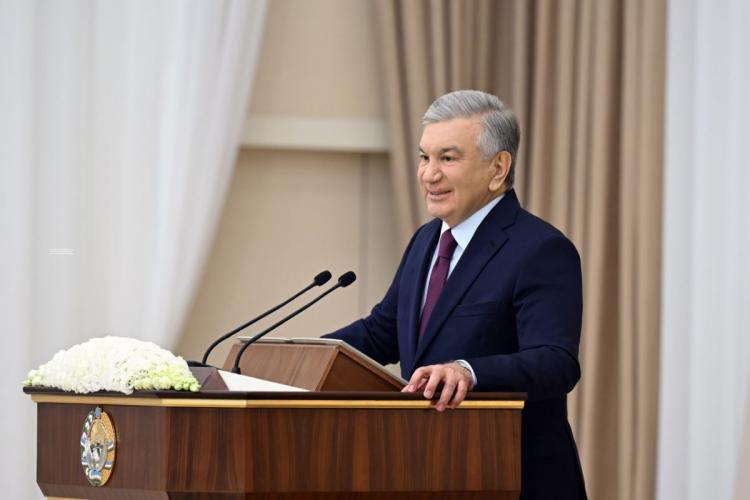
Three state-of-the-art laboratories for testing the quality of construction materials are to be established in Tashkent, Fergana and Samarkand, with responsible officials given one month to identify sites and a target of bringing all three into operation next year. President Shavkat Mirziyoyev issued the directive at a meeting with investors and entrepreneurs in the construction and tourism sectors, where he also ordered a sweeping overhaul of how the industry uses raw materials, controls costs and buys its supplies.
Cheap Imports, No Testing
The laboratories are a direct response to a gap that Mirziyoyev identified as a threat to public safety: domestic manufacturers are being undercut by cheap imported construction materials whose quality goes unchecked because the country lacks sufficient testing capacity. The three new facilities are intended to close that gap and give regulators the means to screen products before they reach building sites.
The same meeting produced a significant shift in public procurement policy. From next year, budget-funded construction projects will be required to prioritise domestically produced materials. A dedicated marketplace for local manufacturers will be created on the state procurement portal, giving them structured access to a market estimated at 15 to 20 trillion soums a year. Mirziyoyev ordered the same domestic-content requirement to be extended to strategic enterprises and projects backed by state guarantees, with strict monitoring of construction costs, the share of local products used and energy efficiency.
Waste at the Quarry, Gaps in the Accounts
Mirziyoyev also turned his attention to the decorative-stone sector, where 155 enterprises extract one million tonnes of raw material annually yet leave 35 to 40 percent of it as production waste. Stockpiles of granite and marble offcuts have accumulated around deposits at Nurata, Gazgan and Koshrobod. The president called for the broad adoption of a zero-waste principle modelled on practice in developed countries, noting that the discarded material could be processed into composite flooring, engineered stone slabs, marble powder and other products. Officials were instructed to attract entrepreneurs and launch projects worth at least $100 million near decorative-stone deposits within one month. Going forward, new deposits will be auctioned only on condition that operators commit to zero-waste working.
Cost disparities across regions drew sharp criticism. Analysis presented at the meeting showed that building one square metre of multi-apartment housing costs less than 3.5 million soums in Jizzakh, Navoiy and Khorezm regions, while the same work exceeds 5 million soums in Bukhara and Surkhandarya. Administrative building costs vary by a factor of 1.5 to 2 between regions. The differences were attributed to excessive intermediaries and repeated mid-project changes to designs and cost estimates.
A $200 Million Credit Line for New Tashkent
Developers active in the New Tashkent project received a specific measure: a $200 million concessional credit line to be opened within ten days to cover working-capital needs. The funds may be used exclusively to purchase locally produced construction materials, tying the financing directly to the domestic-procurement drive. Additional measures to support construction in New Tashkent and improve the competitiveness of domestic products were also outlined at the meeting, though details were not specified.