



Listen to the article
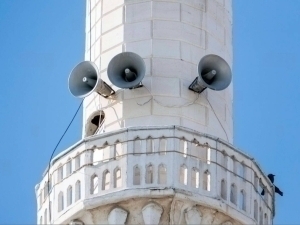
Uzbekistan’s Ministry of Emergency Situations has installed early-warning devices in 272 mosques across seven regions of the country, enabling authorities to broadcast emergency alerts to an estimated 6.5 million people through the buildings’ external loudspeaker systems, the ministry’s press service told Qalampir.uz.
The installations cover mosques in Jizzakh, Kashkadarya, Namangan, Samarkand, Sirdaryo, Tashkent and Fergana regions — areas the ministry identifies as carrying elevated natural-hazard risk. The work is being carried out under a joint project between the ministry and the United Nations Development Programme.
Reports and video clips circulating on social media had shown sirens being fitted to mosque buildings and tested in various parts of the country, prompting the ministry to explain the programme publicly. Officials said the devices allow the ministry’s rapid-alert messages to reach the wider public via the mosques’ existing outdoor amplification equipment.
The ministry offered two main reasons for choosing mosques as host sites. First, it described them as social institutions with strong influence among local communities, meaning alerts broadcast from them are likely to reach more residents than other fixed-point systems. Second, it noted that mosque construction standards require earthquake-resistant structures, making the buildings reliable platforms for equipment that must function precisely when disasters strike.
A particular advantage cited by the ministry is resilience during infrastructure failures: the system is designed to deliver warnings even if mobile communications or the electricity supply are disrupted — conditions that frequently accompany the earthquakes, floods and other emergencies the devices are meant to address. The ministry said the target audience includes women, men, children and vulnerable groups.
The ministry added that it is continuing work to establish a nationwide rapid public-warning network covering all regions of the country, of which the mosque-based installations form one component.