


Listen to the article
Tashkent property owners have been given an extra month to challenge or comment on the preliminary results of the city’s first mass real-estate valuation, with the public consultation period extended to 4 December. The deputy head of the National Centre for Mass Property Valuation, Feruz Sultanov, announced the extension, which adds 30 days to a process that was originally due to close on 3 November.
The consultation opened on 5 September. Notifications of assessed values were sent through the unified state services portal (EPGU) to 721,632 property owners; just over half — 380,525, or 52.7 per cent — opened them. A further 584,343 owners were subsequently reached by SMS.
Split Verdict From Those Who Responded
By 5 November, only 11,035 owners had formally registered a view — a fraction of those notified. Of those, 5,535 (50.15 per cent) accepted the valuation, while 5,500 filed complaints or suggestions. Among those objecting, 3,210 said their property had been overvalued and 1,753 said it had been undervalued relative to the market. A further 273 reported errors in cadastral records, and 264 submitted other proposals.
Sultanov stressed that participation is voluntary and that the preliminary results carry no immediate legal consequences. He added, however, that owners who do not submit comments will have their valuations left unchanged — a detail that gives the extension practical weight for anyone dissatisfied with their figure. Valuations can be checked through EPGU or on the property registry website davreestr.uz.
A Valuation Far Above Cadastral Benchmarks
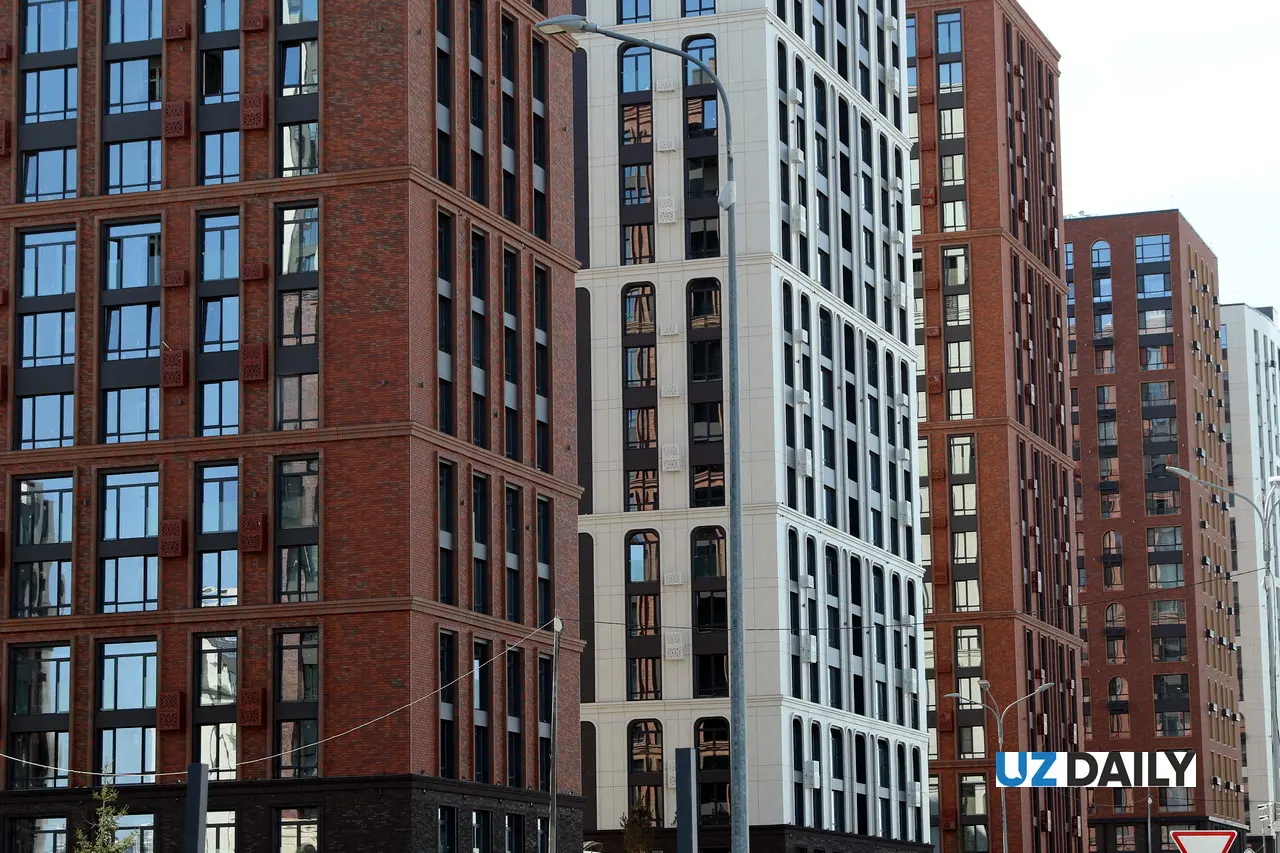
The scale of the exercise is considerable. More than 600,000 apartments and 215,000 private houses in Tashkent were assessed. According to the Ministry of Economy and Finance, the combined assessed value of apartments reached 426.7 trillion soums — roughly 7.4 times their current cadastral value. Private houses were valued at 587 trillion soums against a cadastral figure of 39 trillion soums, a gap of approximately fifteen-fold.
The ministry attributed the disparity largely to the fact that existing cadastral values do not adequately capture land prices. Under the mass-valuation methodology, a private house is treated as a single asset encompassing the plot, buildings and structures, with assessors factoring in location, plot and building size, construction year, number of storeys, building materials, and proximity to transport and social infrastructure. Market listings, estate-agent data and notarised transaction records were also analysed.
The gap between assessed and cadastral values has fuelled concern among owners that higher valuations will translate directly into higher property taxes. Both Sultanov and Deputy Finance Minister Akhadbek Khaydarov have sought to dispel that fear. Khaydarov said the ministry has prepared proposals to reduce tax rates by several times, so that the overall tax burden does not rise proportionally with the new valuations.
Mukhiddin Kholmurodov, director of the National Centre for Mass Property Valuation, has previously said the results are intended to serve as a reference point for owners, banks and investors in real-estate transactions, helping sellers avoid pricing property below its market worth. Whether the extended deadline produces a significantly larger response will be a test of how seriously Tashkent’s roughly one million notified owners are taking the process.