



Listen to the article
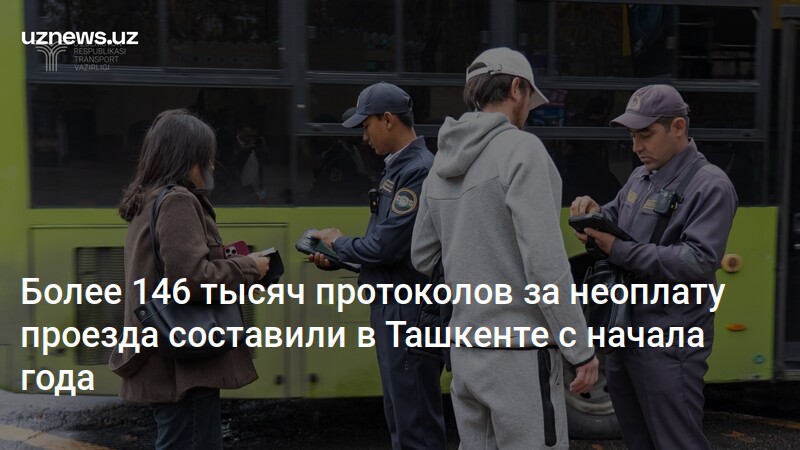
Tashkent’s transport authorities have issued 146,537 administrative protocols for unpaid public-transport fares between 1 January and 9 November 2026, according to figures released by the Ministry of Transport’s press service.
The cumulative total breaks down into 138,780 protocols recorded across the first ten months of the year, with a further 7,757 added in just the opening nine days of November — an average of 862 per day.
October was the single busiest month on record in the enforcement campaign, producing 25,596 protocols and accounting for 18.4 percent of the entire January–October figure. The monthly trend shows a sharp acceleration over the second half of the year: August generated 10,843 protocols, September 20,286, and October 25,596 — a near-tripling in three months.
The enforcement is carried out by inspectors of the state institution known as Monitoring and Control of Passenger Transport of the City of Tashkent. Controllers board buses, verify whether passengers have paid, and draw up administrative protocols on the spot for any violations found. Alongside issuing penalties, inspectors are also instructed to explain to passengers how the electronic payment system works and to stress the obligation to pay before or immediately upon boarding.
The Ministry of Transport described the intensified checks as aimed at reducing violations, raising a culture of fare payment and ensuring compliance with established rules on public transport. No breakdown by route, district or transport mode beyond buses was provided in the ministry’s statement.
The pace of enforcement has risen steeply enough that, if the November daily average of 862 protocols holds for the full month, November would add roughly 26,700 cases — broadly in line with October’s record and pushing the annual total well above 165,000 before the year ends.