



Listen to the article
A feasibility study for a trans-Caspian undersea power cable intended to carry Central Asian wind and solar electricity to Europe will not be completed until 2026, and the project itself is unlikely to become operational before 2030, according to the chief executive of one of its key developers.
Marco Arcelli, CEO of Saudi-based ACWA Power, was quoted by Uzbek outlet Spot News as saying the feasibility study would be ready next year. “Based on this document, we will be able to determine the precise timeframe for launching the project,” Arcelli said, adding that he believed it “can only be realized after 2030.”
The project involves laying a cable across the floor of the Caspian Sea to connect electricity grids in Kazakhstan and Uzbekistan with Azerbaijan, which would then serve as the transit corridor into European markets. A primary challenge at this stage, Arcelli said, is ensuring the “competitiveness of supplies from Central Asia to Europe.”
A joint venture already in place
Azerbaijan, Kazakhstan and Uzbekistan established a joint venture in 2024, headquartered in Baku, to manage construction of the cable. The three governments have framed the initiative as a means of monetising the substantial renewable energy potential of the Central Asian steppe, where wind resources in particular are considered among the most promising in the broader Eurasian region.
ACWA Power is among the most active foreign developers in that build-out. The company is constructing wind farms across Central Asia, including a project in Uzbekistan’s autonomous region of Karakalpakstan with a projected annual generation capacity of five gigawatts. That project carries an estimated price tag of $6.2 billion, and a portion of its output is earmarked for export.
Europe as the end market
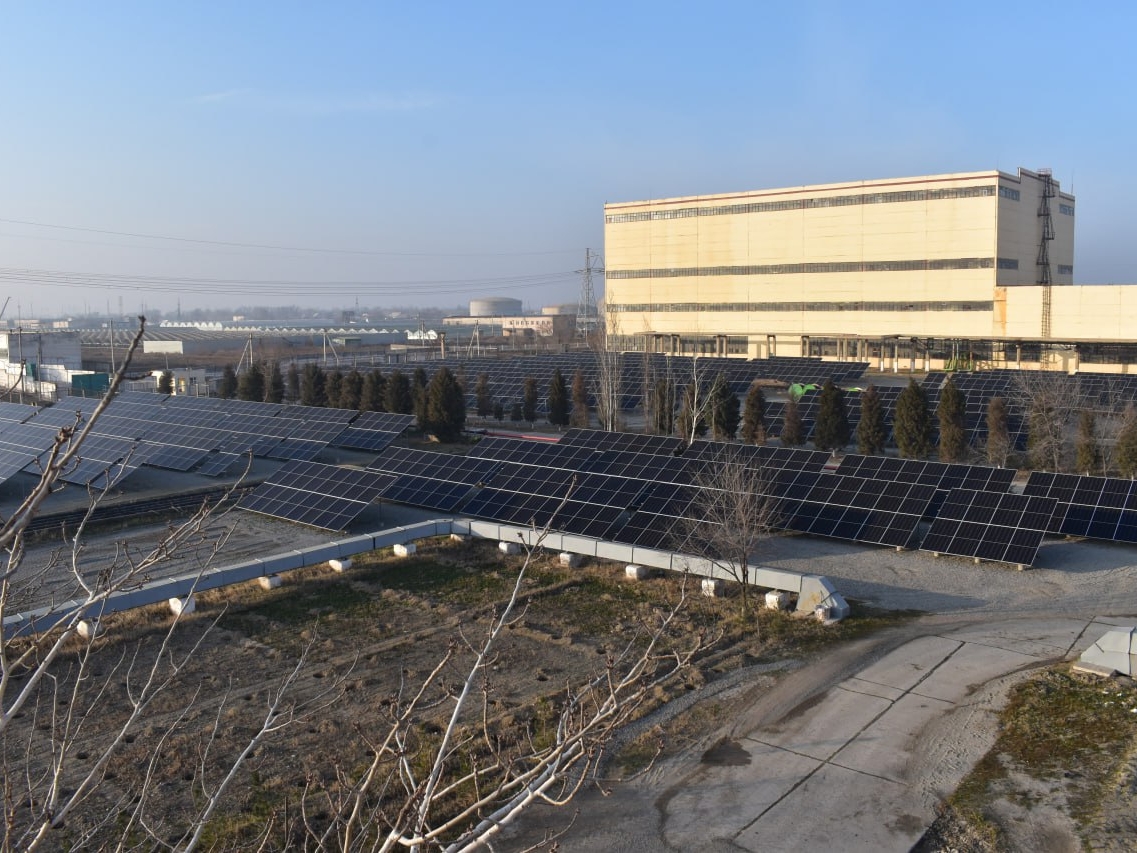
Uzbekistan has been expanding its renewable energy capacity in part with the explicit goal of eventually supplying green electricity westward. Solar panels are already being installed alongside existing fossil-fuel infrastructure in Syrdarya Province, reflecting the country’s dual-track approach of maintaining thermal generation while scaling up clean capacity.
The trans-Caspian route is seen as the only viable corridor for that electricity to reach European buyers, given the absence of direct overland connections between Central Asia and Europe that bypass Russia or Iran. Azerbaijan, which has its own ambitions as a green energy transit hub, has positioned itself as the western anchor of the cable.
With the feasibility study still a year away and technical design work to follow, the 2030-plus timeline Arcelli cited reflects the scale of engineering and regulatory coordination still required. No construction schedule or financing structure has been announced.