


Listen to the article
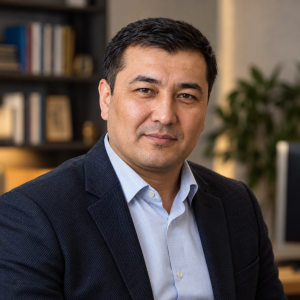
Uzbekistan’s Minister of Water Resources, Shavkat Khamrayev, has publicly rejected the economic logic of diverting Siberian river water to Central Asia, arguing that targeted investment in domestic water-saving technology delivers far greater returns at a fraction of the cost. He made the remarks at a press conference in Tashkent on 19 November devoted to the efficient use of water resources.
Russian scientists have proposed studying the feasibility of redirecting roughly five billion cubic metres of water annually from Siberia to Central Asia. Khamrayev put the preliminary price of that scheme at $100 billion — a figure he used as a benchmark against which to measure what Uzbekistan has already achieved on its own.
According to official data from the Ministry of Water Resources, Uzbekistan saved 10.69 billion cubic metres of water between January and October of this year through a combination of modern irrigation technologies, canal lining and other measures. The ministry expects that figure to reach 11 billion cubic metres by year-end — more than twice the annual volume the Siberian diversion would supply, at a cost the minister described as incomparably lower.
The savings break down into two main streams. The introduction of water-saving technologies and laser levelling of agricultural land accounted for roughly 4.9 billion cubic metres. Repair and concrete lining of irrigation canals contributed a further 3.1 billion cubic metres.
Khamrayev argued that an additional $5–10 billion invested in modernising irrigation infrastructure and expanding water-saving technologies could reduce the country’s water demand still further. He did not, however, dismiss the longer-term challenge entirely. The minister acknowledged that by the 2050s Uzbekistan may need to identify new water sources if climate change continues to shrink available supplies.
A Soviet-era idea revived
The concept of diverting Siberian rivers is not new. Soviet planners once drew up a scheme to channel around 27 billion cubic metres of water annually into Central Asia. That project was shelved in 1986. In 2025, Russian scientists revived a scaled-back version, proposing a study into partially redirecting the flow of the Ob river.
Khamrayev’s comments signal that Tashkent views the revived proposal as economically unviable given the progress already made domestically, even as it leaves the door open to reconsidering external sources in the more distant future.
Separately, the minister noted that Uzbekistan continues negotiations with Afghanistan over the future distribution of Amu Darya water. He said Afghanistan is not expected to begin drawing water at full capacity from the under-construction Qoshteppa canal before 2030.