


Listen to the article
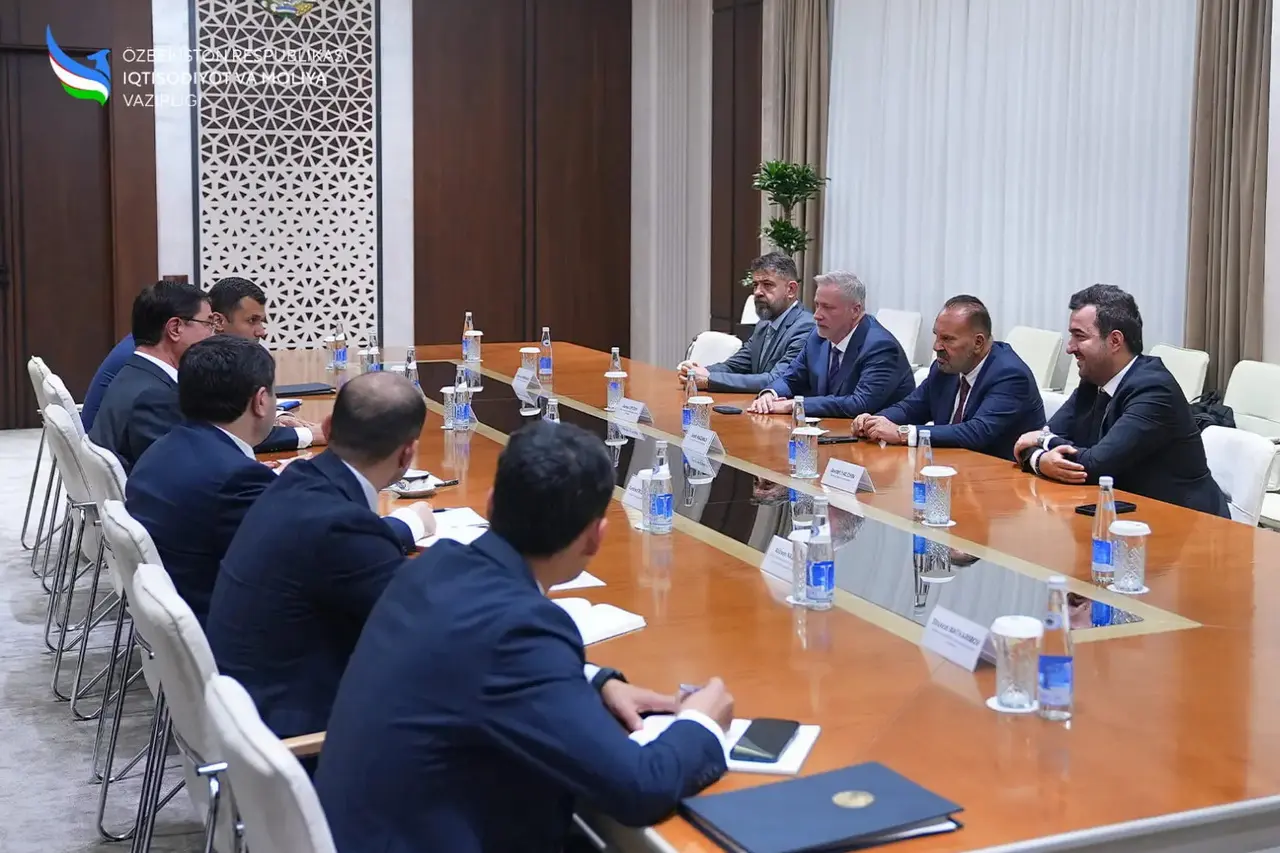
Uzbekistan’s Deputy Prime Minister and Finance Minister Jamshid Kuchkarov met with the leadership of Turkish conglomerate Kazanci Holding on 19 November to review the progress of joint energy projects and explore further cooperation, the Ministry of Economy and Finance said.
The talks took place on the sidelines of the Uzbekistan-Turkey High-Level Business Support Council and brought together Kazanci Holding’s chairman and chief executive Jamil Kazanci, deputy board chairman Jevdet Yalçın, chief financial officer Juneit Uygun, and Selçuk Şişman, who leads the holding’s Aksa Energy project in Tashkent.
The two sides reviewed the current state of projects being carried out with Uzbek partners and discussed avenues for expanding cooperation across the energy sector. A significant portion of the meeting was devoted to public-private partnership arrangements, with participants exchanging views on a proposal to transfer management of the electrical distribution networks in Samarkand region to the holding.
Samarkand is one of Uzbekistan’s most populous regions, and its distribution grid has long been cited by officials as requiring modernisation and more efficient commercial management. Handing operational control to a private operator under a PPP framework would mark a notable step in the government’s broader push to attract foreign capital into the country’s energy infrastructure.
Aksa Energy, the power generation arm of Kazanci Holding, already has an operational presence in Tashkent, making the group one of the more established Turkish investors in Uzbekistan’s electricity sector.
At the close of the meeting, both sides stated their readiness to strengthen mutually beneficial cooperation in energy and to maintain open, constructive dialogue to ensure the effective implementation of joint projects, according to the ministry’s account of the talks.