


Listen to the article
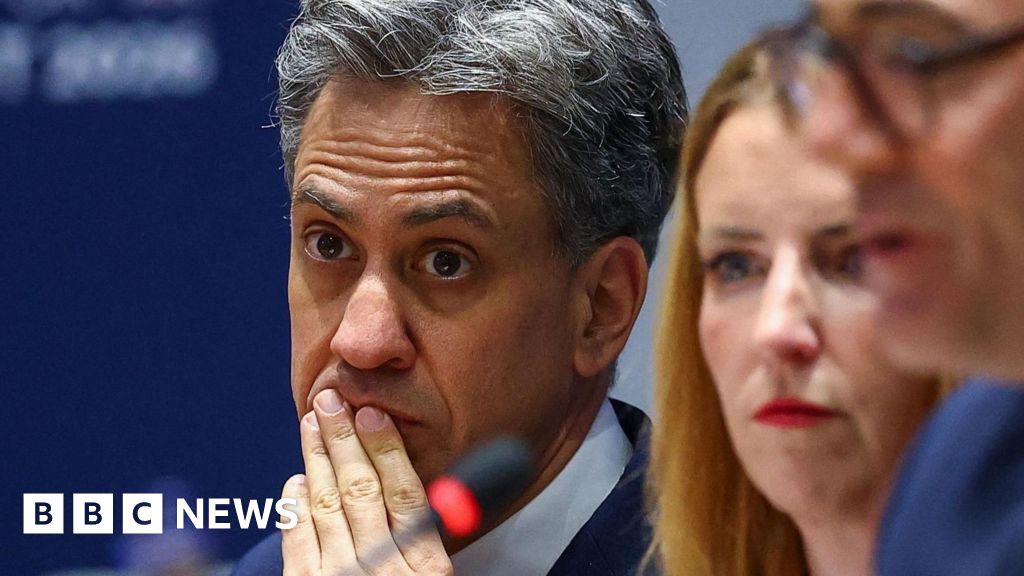
The sweeping cooperation agreement struck between Britain and the European Union on Friday will enter into force regardless of whether the two sides reach a separate deal on university tuition fees, Foreign Secretary Ed Miliband has said, pushing back against suggestions from Brussels that the bloc might withhold the wider package until the fees question was settled.
Speaking on the BBC’s Sunday with Laura Kuenssberg programme, Miliband said it was “absolutely clear” that the three core agreements — covering food exports, energy and a new youth mobility scheme — would apply. “The dates are set out in 2028 when these things are coming in, we’re introducing legislation in Parliament, so definitely,” he said, when asked whether the measures would definitively become law.
The deal agreed in Brussels includes scrapping most checks on British food exports in exchange for the UK aligning with certain EU regulations from 2028. A youth mobility scheme was also announced. What was not agreed was a proposal from the European Commission that EU students studying in Britain should pay the same fees as domestic students.
Miliband cited European Commission President Ursula von der Leyen’s own remarks at Friday’s press conference as confirmation of the sequencing. “She said there are those three agreements and then there’s a separate piece of paper and a separate issue, which is looking at the issue of tuition,” he said. Von der Leyen said she was “confident” a solution on fees would be found. Prime Minister Andy Burnham, standing alongside her, added: “Me too.”
Economic claims and political pushback
Burnham described the overall deal as a “win-win” that could lower the cost of living and reduce red tape, and said the Treasury believes it could boost the UK economy by up to £17 billion a year. Miliband added that there would be “no cost” to the UK taxpayer from anything agreed at the summit and no new contributions to the EU budget. He described previously announced agreements on EU schemes such as Erasmus+ as “a separate decision” unconnected to Friday’s summit.
Conservative leader Kemi Badenoch disputed the economic projections, claiming Burnham had “plucked” the £17 billion figure out of thin air and saying the only modelling she had seen put the economic benefit at “0.0%”. She also argued that UK farmers would be required to follow rules set in Brussels and that young EU arrivals under the mobility scheme would compete with British jobseekers. Reform UK leader Nigel Farage called Friday “a betrayal of the British people” and wrote on social media that Burnham was “a total fraud”. Liberal Democrat leader Sir Ed Davey said the youth mobility scheme was “a big step forward” but called for “a whole new deal that actually works for Britain”.
Tuition fees: a live and costly question
The unresolved fees issue drew a direct warning from academia. Professor Duncan Ivison, vice chancellor of the University of Manchester, told BBC Radio 4’s Today programme that closer UK-EU relations were welcome but that the tuition question carried real financial consequences. “The issue of tuition fees is something we do have to figure out because there is a cost,” he said, estimating that allowing EU students to pay domestic fees would “take £500m, we estimate, out of the higher education sector at a time where there’s a lot of pressure on the sector.” He also cautioned that even if fees were equalised, it was “not clear we’d be able to increase the number of places for EU students anyway.”
Environment Secretary Dame Angela Eagle said the Treasury and the Department for Education would work with universities to find a solution during ongoing negotiations, telling BBC Breakfast: “We want win-win deals.”
Rejoining the EU ‘on the table’
Miliband’s comments on the broader direction of UK-EU relations attracted attention beyond the immediate deal. Asked whether rejoining the EU could be considered, he said “all the options will be on the table” and that the government would “look at the benefits and the costs of all the different options.” He acknowledged the 2016 Brexit referendum result but added: “The world has changed massively. Europe is changing too, so we’ve got to look at what that means.” He was careful to add that the government was “respecting the red lines in this parliament” and that any such consideration was “not about this parliament.” Burnham had earlier said he would discuss ideas for even closer ties with the bloc in the coming months.