


Listen to the article
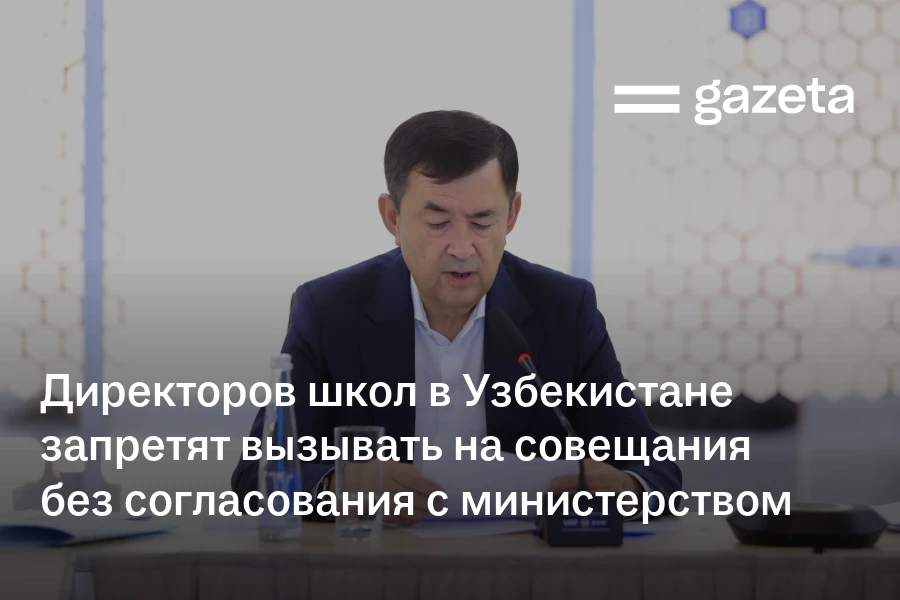
School principals across Uzbekistan may no longer be called to meetings — including those convened by regional administrations known as hokimiyats — without prior clearance from the Ministry of Education and Science. Erkinjohn Turdimov, First Deputy Prime Minister and Minister of Education and Science, announced the prohibition at a meeting with education-sector representatives in Samarkand.
“Summoning school principals to meetings, including to hokimiyats, is categorically forbidden,” Turdimov said. “Participation in any meeting is only possible after coordination with the ministry. Only then may a principal attend.” He argued that school heads should concentrate on their core responsibilities rather than lose working hours to a circuit of administrative gatherings. “A school must deal with education, a kindergarten with raising children. They should not be going to meetings. If someone needs to be invited to a meeting, there is a facilities manager for that. Why summon a school principal to the hokimiyat at all?”
A Personal Anecdote Underlines the Problem
Turdimov illustrated the directive with a story from his own time working in a hokimiyat. He said he had repeatedly told one education official not to attend meetings, yet the official kept appearing, citing instructions from other authorities. “I told him: ‘I’ll break your legs if you go to that meeting’ … and he still went,” the minister recounted. “I asked him: ‘Why did you come?’ He said: ‘I was told to.’ I told him: ‘Are my words medicine to you? Then take out your phone, turn on the recorder and write it all down. I’ll explain everything in detail.'” The anecdote, colourful language and all, was relayed by the Telegram channel Samarqand live and underscores the minister’s view that the problem is one of discipline rather than missing rules.
Licensing, Private Schools and Ministry Accountability
Turdimov used the same Samarkand session to question the rationale for requiring a separate ministry licence when opening a private school or kindergarten. If sanitary-epidemiological, construction, fire and other competent authorities have already inspected a facility and issued their permits, he asked, what additional check does a ministry licence represent? “In general, it is necessary to abolish ministry licensing for the opening of private kindergartens and schools,” he said, signalling an intent to reduce bureaucratic friction for private education providers.
The minister also heard proposals from entrepreneurs in the private education sector and criticised ministry officials who had failed to resolve outstanding problems facing private institutions, warning that staff who do not fulfil their duties risk losing their positions. Separately, the construction management department of Samarkand region came under criticism at the meeting; its head subsequently clarified that the region has 522 unresolved issues related to construction documentation, five of which concern private educational establishments.
Turdimov additionally announced plans to launch a dedicated electronic platform for receiving appeals from educational organisations, and said two large projects — one in higher education and one in pre-school education — are in preparation, though no further details were provided. He has previously stated that improving the system does not require new legislation, only stronger discipline and higher standards of accountability from existing staff.