



Listen to the article
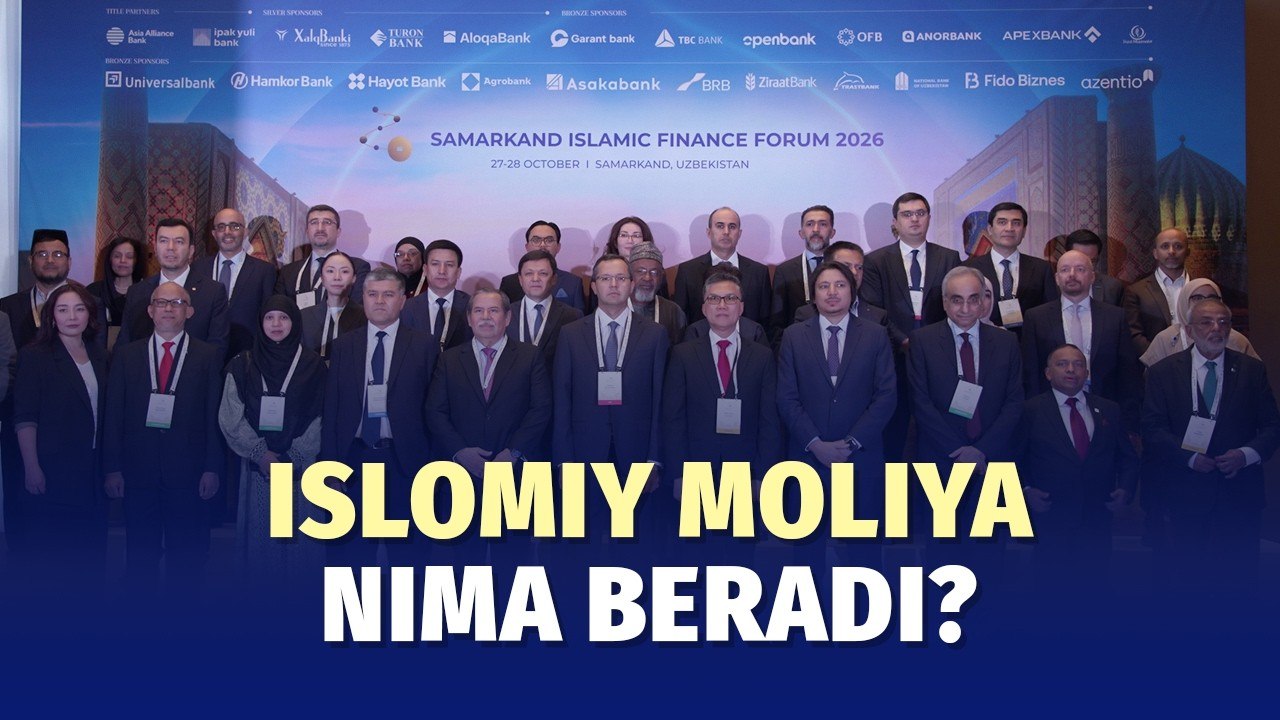
More than 400 delegates from 18 countries gathered in Samarkand on 27–28 October for the Samarkand Islamic Finance Forum (SIFF) 2026, where Uzbekistan’s Central Bank laid out the institutional architecture it intends to build as the country moves from policy commitments to operational Islamic finance services.
The forum’s first day focused on developing Islamic finance across Central Asia, integrating sharia-compliant products into conventional banks, and establishing supervisory frameworks for those services. The second day turned to capital markets — including the introduction of sukuk instruments — and the training of qualified specialists, with participants stressing the need to raise public financial literacy and communicate clearly about Islamic finance products to build broad trust.
Drawing Lessons From Neighbours
Adhamxon Haydarov, head of the working group at the Central Bank’s Islamic Finance Project Office, told the forum that Uzbekistan must study the experience of Kazakhstan, Kyrgyzstan and Tajikistan, all of which introduced Islamic finance several years ago but encountered identifiable shortcomings. The goal, he said, is to avoid repeating those mistakes while also drawing on best practice from Malaysia and the Middle East.
Haydarov argued that properly functioning Islamic finance services would bring into the formal financial system entrepreneurs and households who currently avoid conventional banking on religious grounds — people who object to interest-based lending and have therefore remained outside the credit economy altogether. Islamic finance replaces interest-bearing loans with structures based on trade, leasing and partnership arrangements.
A Two-Tier Governance Structure
On the regulatory side, Haydarov confirmed that a Sharia Supervisory Board has been established at the Central Bank. Under the planned framework, every organisation offering Islamic finance services will be required to maintain its own such board, and those boards will coordinate with one another. Financial institutions will also be obliged to publish transparent information about their operations and results, he said.
The forum’s discussions on legal foundations covered sharia compliance requirements and the design of internal control systems — practical questions that will determine whether Uzbekistan’s Islamic finance sector can function credibly once it moves beyond the pilot stage.