


Listen to the article
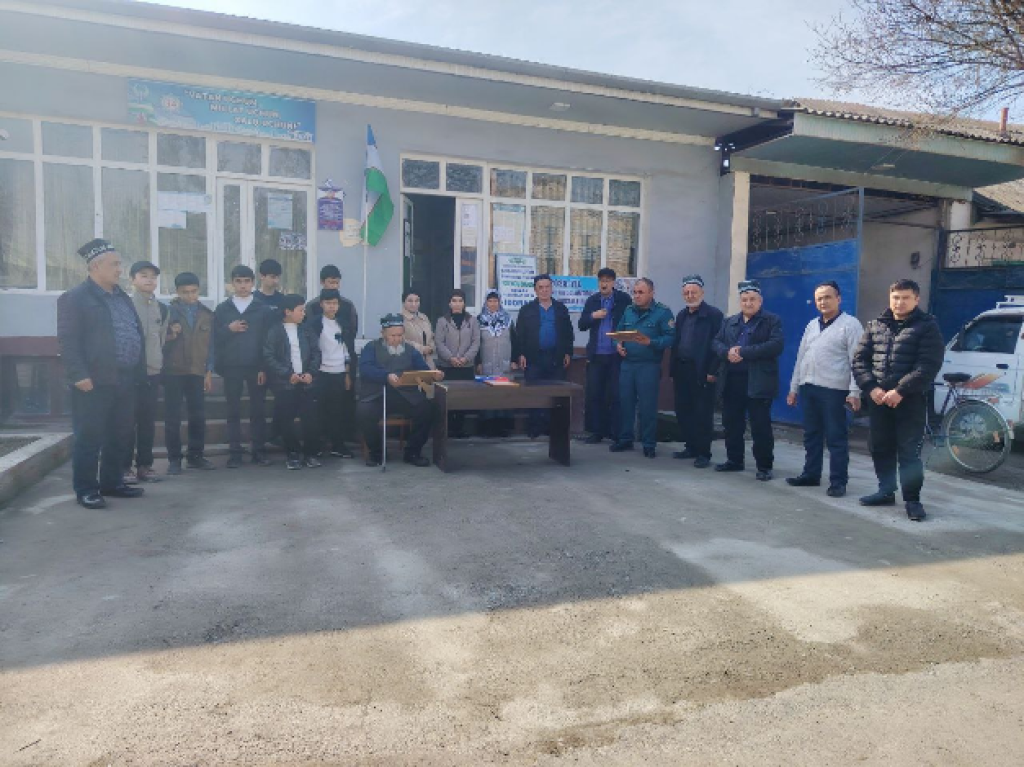
Dongqishlok mahalla, a settlement of 2,565 residents and 719 households, has become a case study in the kind of neighbourhood-level reform that Uzbekistan’s government has made a centrepiece of its 2026 policy agenda. Road works funded by the World Bank, a multi-billion-soum school renovation, expanded electricity infrastructure and a new state honour for a local doctoral student have all arrived within the past year, according to a report by the state news agency UzA.
The changes are being carried out under Presidential Decree No. PF-22, signed on 16 February 2026, which designated this year the Year of Mahalla Development and Social Advancement, and under the Uzbekistan-2030 state programme. Both documents list job creation, entrepreneurship support, infrastructure improvement and on-the-spot resolution of residents’ problems as priority tasks.
Roads and power lines
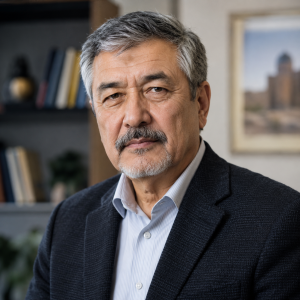
Dongqishlok has four internal streets — Anjirzon, Shodlik, Samoviy and Tegirmonboshi. Under a World Bank project, 1.9 kilometres of Anjirzon Street and 3.4 kilometres of Samoviy Street have been asphalted, bringing the total length of improved internal roads to 5.3 kilometres, according to mahalla chair Zubaydakhon Toirova.
The electricity network has also been upgraded. Workers installed 145 concrete poles and strung 5.5 kilometres of self-supporting insulated cable — known by the Russian abbreviation SIP — replacing older lines. The mahalla’s administration says stable power supply is especially important here because greenhouse farming, water pumps and other agricultural equipment depend on it. All households now have metered drinking-water connections, the report states.
The neighbourhood’s School No. 13 has undergone a full renovation funded by an allocation of 6 billion soums.
Credit and skills
Since the start of 2026, residents seeking to start or expand businesses have received a combined 800 million soums in credit, according to Bakhtiyor Rakhimov, the district governor’s representative for the mahalla. More than 20 residents have completed vocational training courses during the same period.
For the mahalla’s 655 young people aged between 14 and 30, the administration has focused on language certification and digital skills. Youth leader Elmurод Akbarov said the number of young residents obtaining foreign-language certificates is rising, giving them additional points when applying to higher-education institutions. Children from families listed in the social registry can attend a free information-technology centre in the district capital.
Champions on the table-tennis circuit
Dongqishlok has produced a notable cluster of competitive athletes. In table tennis, Malokhatoy Davronova, Qutbiddin Teshaboev, Elmurод Kholiqov, Gulnorakhon Akbarova, Umidjon Zokirov, Diloromkhon Arslonova and Odinakhon Arslonova have each won titles at national and international level, the report says.
In belt wrestling — belbogli kurash — Ilyosbek Yaqubjonov, Humayunmirzo Biloldinov, Boburmirzo Biloldinov and Muhammadyusuf Muhammadaliyev have reached the heights of the Uzbekistan championship and the world championship in their age groups.
First state medal from the mahalla
The date 30 June 2026 carries particular significance for Dongqishlok. On that day, Oybek Teshaboev — a doctoral student at Andijan State Technical Institute and a resident of the mahalla — was awarded the Mard O’g’lon (Brave Son) state decoration by presidential decree. He is the first person from Dongqishlok to receive that honour, according to UzA.
The award, the report argues, reflects not only individual achievement but also the broader environment being created for young people in the mahalla — access to education, encouragement of academic ambition and an expectation that residents can contribute to society at a national level.