


Listen to the article
Tashkent’s Yashnobod district inaugurated a new headquarters for its internal affairs coordination directorate on Saturday, replacing a building constructed in 1967 that officials said had long ceased to meet modern operational requirements.
Interior Minister Aziz Toshpўlatov attended the opening ceremony alongside district administration representatives, retired officers and community activists. He said the facility’s commissioning was of particular significance because it would serve a district population of nearly 300,000 residents as well as visitors to the capital.
The old building’s deficiencies were stark by the time it was decommissioned. Four or five officers routinely shared a single service room, and the structure could not accommodate the volume of citizens who arrive daily — described in official remarks as numbering in the hundreds each day — seeking administrative services ranging from migration and personalisation documents to general public inquiries.
What the new building contains
The replacement facility provides more than 100 individual service rooms, each equipped with computers and technical hardware. A gymnasium fitted with training and fitness equipment is intended to support officers’ physical and combat readiness. A 204-seat auditorium is designated for district-level public events.
All field units operating across the district will be coordinated from a single command point within the building. That system has been integrated into the Qalqon platform, with data exchange running in real-time online mode, according to the official account of the opening.
Toshpўlatov described the building not merely as an administrative office but as a component of a broader modern system capable of resolving citizens’ problems quickly. He said the directorate would now function as a digital command centre with contemporary technology and artificial intelligence incorporated into its operations.
Staff obligations underlined
The minister also addressed personnel directly, stating that officers working in the new conditions were expected to serve with honesty and dedication — qualities he framed as benchmarks set by the country’s leadership for what he called New Uzbekistan. The remarks were consistent with standard official language used at state infrastructure openings but were recorded as a formal part of the ceremony.
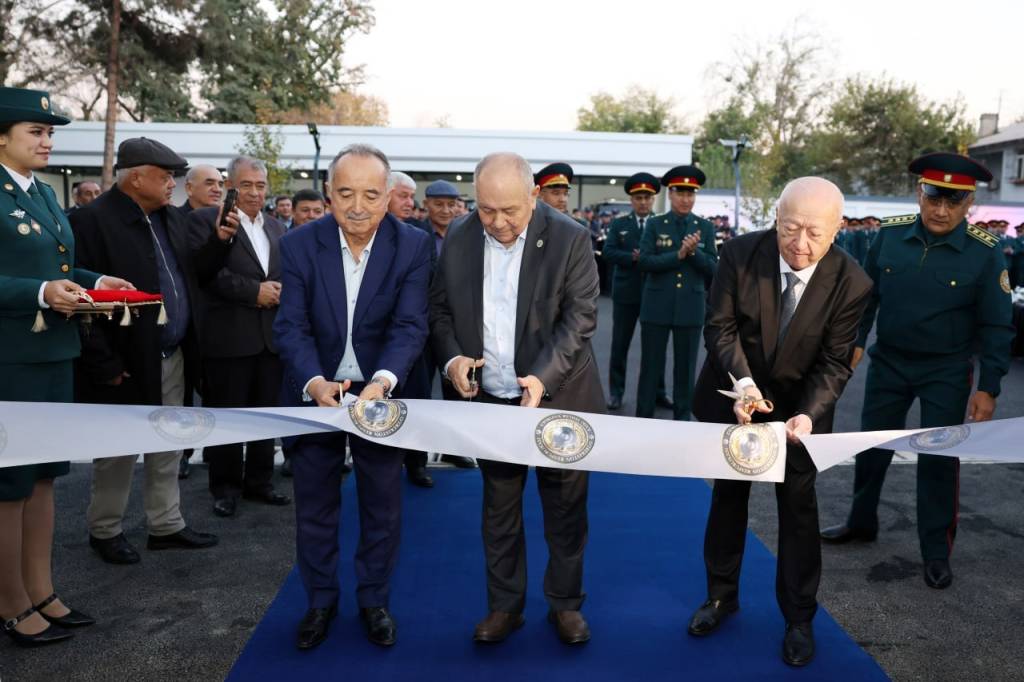
Guests were shown through the service rooms and the public-facing facilities before the traditional ribbon-cutting, which was performed by veterans of the service.