


Listen to the article
Senegal will make history on Saturday when the Olympic rings are raised on African soil for the first time, as Dakar opens the 2026 Youth Olympic Games — an event originally scheduled for 2022 before the Covid-19 pandemic forced a four-year delay.
Competition runs from 31 October to 13 November across three locations: the capital Dakar, the satellite city of Diamniadio to the south-east, and the Atlantic coastal resort of Saly. Approximately 2,700 athletes, predominantly aged 15 to 17, will contest 153 medal events across 25 sports, with a further 10 engagement sports held without medals.
The International Olympic Committee’s Christophe Dubi described the moment as “monumental” for the continent. “Africa has hosted many international competitions but this is the first time we have anything labelled with the Olympic rings,” he told BBC Sport Africa. Thierno Cisse, deputy chief operating officer of the Local Organising Committee, framed the responsibility in continental terms: “We know we are going to be ambassadors for Africa. It’s really important for us to proudly represent the whole continent and show that Africa has high standards.”
New sports and returning favourites
Nineteen of the 25 competition sports appeared on the programme at the Paris 2024 Olympics, including athletics and swimming. Three disciplines are making their Youth Olympics debut: Baseball5, an urban version of the traditional game requiring no equipment; skateboarding; and Wushu Taolu, a Chinese martial art performed through choreographed sequences and sparring. Beach handball, beach wrestling, futsal and coastal rowing — held on open sea rather than flat water — also feature.
Baseball5 kicks off competition on Friday, 30 October, a day before the formal opening ceremony. Golf, karate and surfing are among 10 engagement sports designed to encourage participation among local communities rather than award medals.
Organisers say the programme delivers gender equality across the Youth Olympics for the first time, with climbing, hockey, modern pentathlon, paddlesport, shooting, tennis and weightlifting among the events contributing to that balance.
Venues built on legacy, not spectacle
Rather than constructing a new cluster of facilities, organisers renovated and repurposed existing venues. Dakar’s historic Iba Mar Diop complex hosts athletics, rugby sevens and futsal. The waterfront Tour de l’Oeuf complex accommodates swimming, 3×3 basketball, breaking, skateboarding and Baseball5. Road cycling races run along the Corniche Ouest.
Diamniadio serves as the operational heart of the Games. The 50,000-capacity Abdoulaye Wade Stadium — which opened in 2022 at a reported cost of $270 million — will stage both the opening and closing ceremonies and the archery competition. Badminton is at the Dakar Arena; gymnastics, fencing, table tennis, judo and Wushu Taolu at the Dakar Expo Centre. Saly Plage Ouest on Senegal’s Atlantic coast provides the setting for sailing, triathlon, beach handball and coastal rowing.
Costs and legacy
Neither the Local Organising Committee nor the IOC provided a total cost figure when asked by the BBC. Senegal’s government committed to spend at least $60 million as part of the host contract, with loans for long-term sports infrastructure projects thought to have raised that figure to around $90 million. A post-Games impact report is expected to disclose the final tally.
Organisers point to employment and skills development as part of the Games’ rationale in a country where youth unemployment remains a pressing concern. More than 400 young Africans have already received training in event operations, logistics, technology, accreditation and venue management.
Olympic pedigree and cultural identity
The Youth Olympics, first held in Singapore in 2010, has a record of producing senior champions. South African swimmer Chad le Clos and British taekwondo athlete Jade Jones competed at the inaugural edition and became Olympic champions at London 2012. American sprinter Noah Lyles won 200m gold at the 2014 Nanjing edition before claiming 100m gold at Paris 2024.
Zimbabwe’s Kirsty Coventry, who last year became the first woman and first African elected president of the IOC, previously chaired the coordination commission for Dakar 2026. Ambassadors for the Games include Senegal football captain Kalidou Koulibaly, Kenyan marathon legend Eliud Kipchoge and social media personality Khaby Lame. Kipchoge has taken on a mentoring role for a refugee team — six athletes competing in athletics, judo and taekwondo — making its debut at a Youth Olympics.
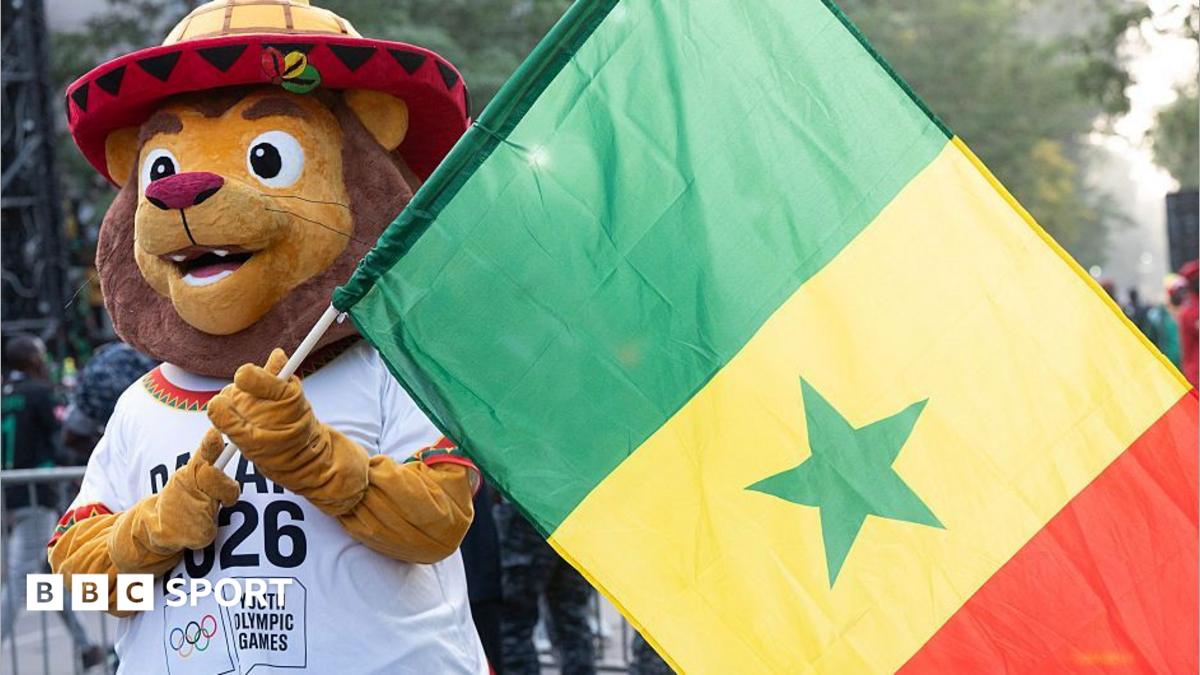
Cultural identity runs through the event’s design. The mascot Ayo, a young lion, was created by a student; the name comes from the Yoruba word for joy. Medals feature a lion on one side and a baobab tree on the other. The official song, titled Teranga — the Wolof word for hospitality — is performed by Senegalese artist Mamy Mbaye. The Olympic flame, lit in Athens on 10 September, reached Dakar two days later and has since travelled roughly 3,600 kilometres through all 14 regions of Senegal, carried by about 450 torchbearers over 30 stages. It arrives at Place de la Nation on 30 October before lighting the cauldron at the opening ceremony the following day.