


Listen to the article
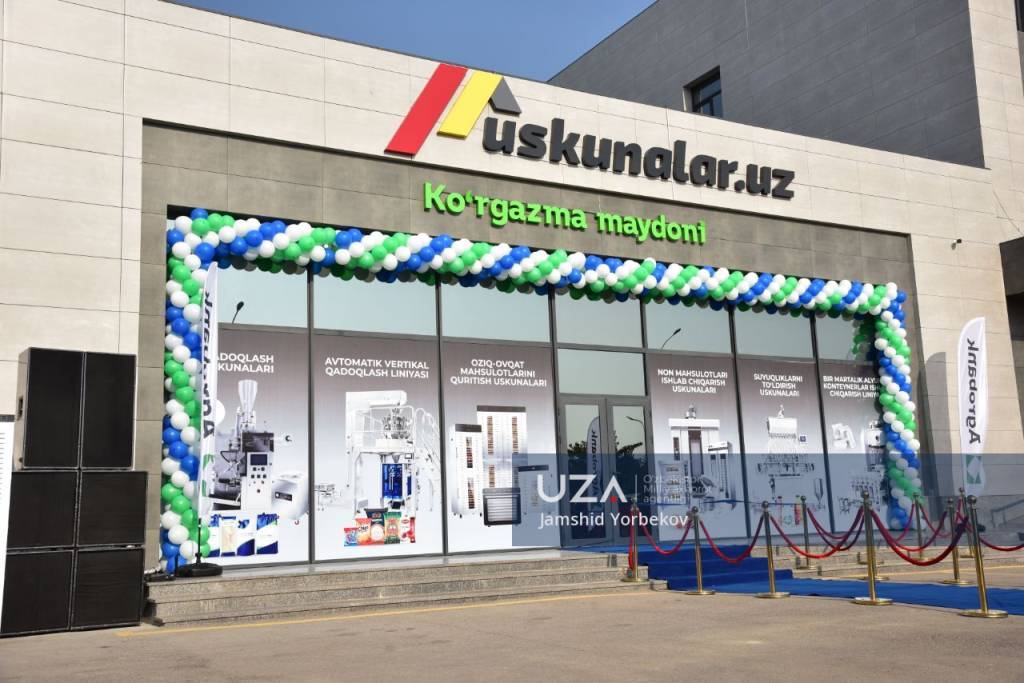
Agrobak has launched a network of industrial equipment showrooms in Jizzakh region, becoming the first province in Uzbekistan to host a facility where entrepreneurs can view machinery, arrange financing and convert a business idea into a formal project plan in a single visit. The initiative follows a 3 September 2026 presidential meeting at which state banks were assigned specific tasks on employment and support for entrepreneurial activity.
The bank’s staff began by conducting field visits to mahallas — neighbourhood-level communities — to identify what was actually blocking residents from starting or expanding small production businesses. Those conversations revealed three recurring obstacles: uncertainty about which equipment suited a given activity, a lack of technical knowledge and specialist support, and the difficulty of travelling to the capital to inspect machinery in person.
The showrooms are designed to remove all three barriers simultaneously. Displayed equipment spans packaging, food and confectionery production, refrigeration, plastics manufacturing, agricultural machinery, metalworking, glass processing, laser technology and printing. Prices range from two million soums to 100 million soums depending on capacity and function. Higher-cost specialised technology can be ordered through partnerships with manufacturers in China and Turkey.
Alongside the display floor, each showroom hosts a “projects factory” — a unit where specialists assess an entrepreneur’s idea and translate it into a workable business plan, evaluate whether the chosen technology fits the proposed activity, and examine financing options on that basis. Bank staff on site explain credit terms and available financial instruments, while equipment suppliers explain technical specifications. Once a purchase is made, delivery, installation, commissioning and operator safety training are all included, with ongoing technical support and servicing also planned.
Ozodbeк Saidiyev, deputy director of Agrobak’s Water and Social Projects Centre, said the initiative is aimed at generating additional value at the mahalla level. “In this showroom, entrepreneurs receive systematic support from equipment selection through to operation,” he said, according to the Uzbek state news agency UzA. He added that the collaboration between the bank and equipment suppliers is central to the model, because choosing a technology is not sufficient on its own — financial and organisational assistance is needed to purchase it and integrate it into production. The new system is intended to coordinate those processes.
The economic rationale, as described by UzA, is that organising small-scale neighbourhood production simultaneously raises household incomes, creates jobs, enables processing of local raw materials and makes better use of the local labour force. The initiative is described as particularly significant for families wishing to start home-based businesses.
Officials are explicit that the measure of success will not be the number of showrooms opened but the number of machines put into operation, production lines established and jobs created. Each completed project that broadens a mahalla’s income base is counted as a practical contribution to poverty reduction.
Jizzakh is the pilot. The next phase calls for replicating the model in Sirdaryo region, followed by a broader national rollout. The sequenced expansion is intended to allow an approach refined in one region to be applied at greater scale once its effectiveness has been demonstrated.