


Listen to the article
Rice, pasta, cooking oil and beans are not the usual currency of jihadist propaganda. Yet in August 2026, al-Shabab — al-Qaeda’s Somali branch — publicised what it called a charitable food distribution to hundreds of struggling families, promoting the effort through its social media accounts and radio station. “May God reward them,” said a local woman in one of the group’s videos. The scene was deliberate: al-Shabab, which controls large parts of rural southern and central Somalia, has spent much of 2026 presenting itself as a provider, not merely a fighting force.
The image is part of a broader shift visible across the jihadist landscape a quarter-century after the September 11 attacks and twelve years after Islamic State declared its so-called caliphate in Iraq and Syria. Where once the movement’s defining ambition was attacking the West or building a global Islamic state, several of its most powerful branches — particularly those linked to al-Qaeda — are now investing heavily in local politics, local alliances and local grievances. The question exercising analysts, and jihadists themselves, is whether this represents a genuine transformation or a tactical adjustment in pursuit of the same ultimate goal.
The Syrian template
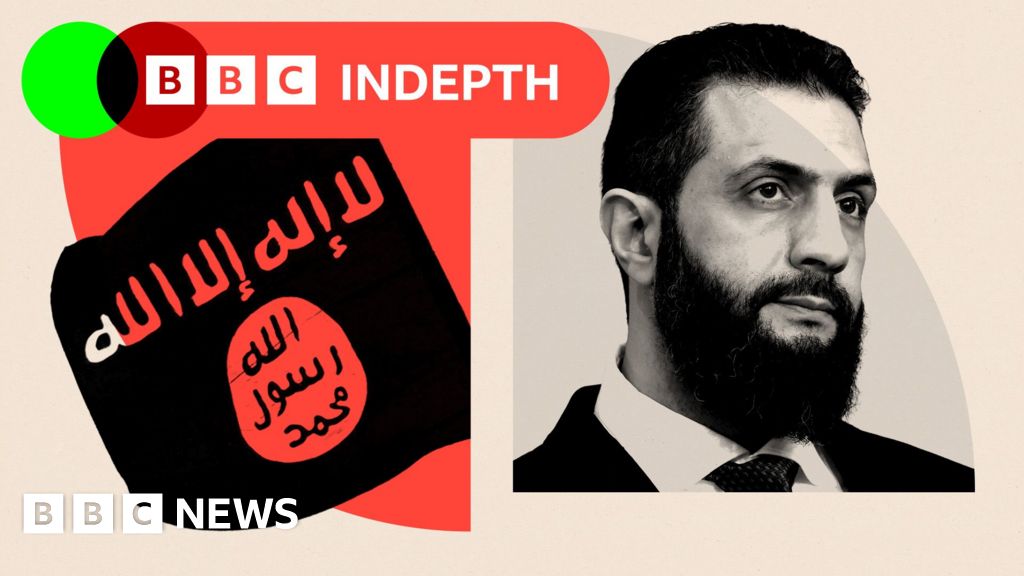
No figure looms larger over this debate than Ahmed al-Sharaa, Syria’s new president. Once known by his militant nom de guerre Abu Mohammed al-Jolani, al-Sharaa led the jihadist Nusra Front — initially linked to IS and then al-Qaeda — before founding Hayat Tahrir al-Sham (HTS). He gradually severed ties with both organisations, abandoned calls for global jihad and concentrated on building a local power base in north-western Idlib province. As HTS advanced on Damascus in late 2024, its leadership reached out even to Russia — a key backer of then-president Bashar al-Assad — to allay fears of an Islamist takeover. That pragmatism, combined with a weakened Russia and Iran, helped al-Sharaa take power in December 2024.
What followed was, by any measure, remarkable. During al-Sharaa’s visit to the White House in November 2025, US President Donald Trump praised him as a “very strong leader,” sprayed him with his own branded cologne and jokingly asked how many wives he had. For some jihadists, the reception was inspiring. For others, it was apostasy. IS has declared jihad against Syria’s new government, branding al-Sharaa and his officials “apostates” and carrying out attacks against government forces on that basis.
Mali’s rebranding
The al-Qaeda branch operating across the Sahel — known as JNIM, active in Mali, Burkina Faso and Niger — has drawn the most direct comparisons with al-Sharaa’s trajectory. In late April, JNIM joined forces with Tuareg separatist fighters, groups it had occasionally fought, to launch a major offensive threatening Mali’s military rulers. It referred to the Tuaregs as “brothers.” In April it appealed to “all sincere patriots” to help build a “new Mali,” promising security, justice and prosperity alongside Islamic law. It has even suggested it could have “balanced relations” with Russia, despite fighting Russian forces backing the Malian government — language that echoed HTS’s outreach to Moscow as it advanced on Damascus.
JNIM’s propaganda has also quietly dropped the familiar al-Qaeda branding that once featured prominently in its videos, shifting its messaging away from global Muslim causes toward local grievances, portraying itself as a defender of ordinary people against corrupt and abusive rulers and accusing Mali’s military government and its Russian allies of killing civilians.
Africa security specialist Aman Bezreh sees parallels with HTS but urges caution. “JNIM has indeed shown signs of pragmatism similar to HTS,” she says. “However, its rebranding has progressed more slowly because the group is simultaneously focused on expanding into new territories and recruiting from diverse pools.”
Wassim Nasr, a France 24 journalist and jihadism expert, says a debate is under way within JNIM’s own leadership. One camp favours the Taliban model — taking power through force with minimal concessions. The other, which Nasr says currently has the upper hand, favours an approach closer to HTS, making compromises and building wider alliances to gain power more quickly. Nasr believes JNIM may draw on both models, and that a formal break with al-Qaeda is eventually inevitable given the group’s political evolution.
Somalia’s opening
Al-Shabab is also showing flexibility. According to Abdullahi Guji, BBC Monitoring’s Somalia specialist, the group reached a truce in October with the Ma’awisley, a powerful Somali tribe whose fighters had been at the forefront of the fight against it. The tribe has since withdrawn from the front line, dealing a serious blow to the government’s counter-insurgency campaign. Guji believes al-Shabab may soon have an opportunity to test whether it can function as an alternative government across wider parts of the country. African Union forces are withdrawing from Somalia amid funding cuts and an approaching mandate deadline in December, while the Somali government faces political crises and internal rebellions.
A Trojan horse, or genuine change?
Neither al-Qaeda nor IS has achieved its foundational ambition: ruling a country according to its strict interpretation of Islamic law. IS lost its last territorial stronghold in 2019. Both organisations have suffered major defeats, lost senior leaders and endured years of sustained international pressure. Yet jihadism has not collapsed — it has migrated. Africa is now the primary battleground, with JNIM and al-Shabab fighting long-running insurgencies while IS maintains active branches in Nigeria, the Democratic Republic of Congo, the Sahel, Mozambique and Somalia.
Some analysts point to a historical precedent that tempers optimism about the pragmatists. After the 2011 Arab uprisings, al-Qaeda-affiliated groups in Yemen, Libya and Tunisia adopted the name Ansar al-Sharia to win local support without carrying the al-Qaeda brand. In Mali in 2012, al-Qaeda leaders advised jihadists who had seized the north alongside Tuareg separatists not to rush into imposing strict Islamic rules — to work with local allies, avoid alienating communities and play down their al-Qaeda links. The message was not to abandon their ambitions. It was strategic patience.
Colin Clarke, executive director of the Soufan Center, a non-profit security research group, wonders whether the current pragmatic turn could be a “Trojan horse strategy” — a means of gaining power without surrendering longer-term goals. “The big question is whether being in power actually moderates these groups, or whether they’re simply changing their tactics to survive and strengthen their position,” he says.
Clarke also notes that some jihadist groups appear to have concluded that avoiding direct confrontation with the United States helps them escape Western military action and “live to fight another day” — a calculation reinforced by the US withdrawal from Afghanistan in 2021 and al-Sharaa’s subsequent welcome in Washington. Meanwhile, al-Qaeda’s Yemen branch, AQAP, continues to call for attacks against the US and Israel and urges lone-wolf strikes against Western and Jewish targets, a reminder that the movement contains currents that have not moderated at all.
Whether groups like JNIM and al-Shabab follow the Taliban or the Syrian example — and whether any compromises they make are durable — remains an open question. The global jihadist dream of a unified Islamic state may have stalled. The movement pursuing it has not.