



Listen to the article
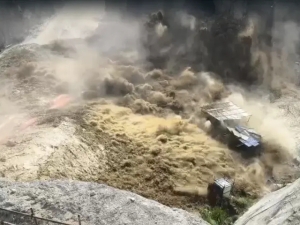
A protective barrier at Pakistan’s Tarbela Dam collapsed on 9 November, flooding a tunnel and power-station building under construction at the site, the country’s Water and Power Development Authority (WAPDA) announced. The incident triggered an emergency declaration and the immediate evacuation of all workers on site.
The failure occurred during excavation work being carried out as part of the dam’s fifth expansion project, known as T-5, located in Khyber Pakhtunkhwa province. WAPDA said a weak layer of rock gave way during the tunnelling process, allowing a large volume of water to pour into the underground workings.
Construction was halted immediately after the breach. WAPDA subsequently confirmed that the water had been fully drained and that inflow into the downstream construction areas had stopped. Pumping operations to clear water from the power-station building were also under way, the authority said.
Vasim Ahmad, deputy commissioner of Haripur district, said — citing project officials — that assessments were ongoing to determine whether the tunnel, the power-station structure or other installations had sustained damage. No injuries were reported.
Local authorities offered differing assessments of the risk to communities downstream of the dam. The deputy commissioner of Haripur said there was currently no flood threat to areas below Tarbela. However, the deputy commissioner of Swabi district, Nasrullah Khan, said additional water had been released from the dam as a result of the incident and warned that this could raise both the flow and the water level of the Indus River. He urged residents to avoid swimming, wading or boating in the river until conditions stabilised.
Tarbela, situated on the Indus roughly 50 kilometres north-west of Islamabad, is one of the largest earth-filled dams in the world and a critical source of hydroelectric power for Pakistan. The T-5 expansion project is designed to add further generating capacity to the facility.