


Listen to the article
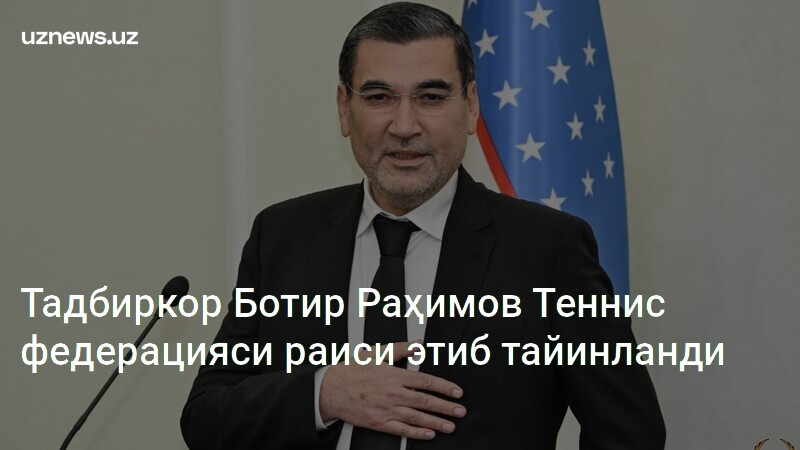
The Uzbekistan Tennis Federation acquired a new chairman on 17 February 2025 when an extraordinary electoral conference, convened at the National Olympic Committee, unanimously approved the candidacy of businessman and sports administrator Batyr Ikramjanovich Rakhimov. The appointment fills a vacancy created by the departure of the federation’s previous leader, Alisher Mirsоatov, who left to take up another position.
A Transition at the Top
The conference was described as an out-of-schedule session called specifically to address the leadership question. Rakhimov’s nomination was put to delegates and carried without a dissenting vote, according to the Uzbek-language report published by UzNews on the day of the meeting. The source does not detail how many delegates were present or the procedural rules governing the election, leaving the breadth of the mandate formally unquantified beyond the unanimous result recorded.
Mirsоatov, who had led the Tennis Federation while simultaneously serving as chairman of the management board of JSC Uzmilliybank, one of Uzbekistan’s state-linked commercial banks, moves to head the Association of Winter Sports. The overlap between a senior banking executive and a national sports federation chairmanship had itself been a notable feature of the previous governance arrangement; his successor comes from a different professional background.
Rakhimov’s Documented Background
The source identifies Rakhimov as a businessman and specialist who served for many years as president of Pakhtakor, Uzbekistan’s most prominent football club. That role placed him at the intersection of commercial sport and institutional governance in the country, though the source provides no detail on the duration of his Pakhtakor tenure, the circumstances of his departure from that post, or any current business interests he holds alongside the new federation role.
The Tennis Federation chairmanship is an unpaid voluntary position under Uzbekistan’s sports-federation model, but it carries meaningful institutional authority: the federation governs the development, funding allocation and competitive calendar of tennis nationally, and its chairman represents the sport within the National Olympic Committee structure.
Governance Questions Worth Watching
Rakhimov’s election raises standard accountability questions that the available record does not yet answer. Whether he retains active commercial interests that could intersect with federation procurement, sponsorship or facility decisions is not addressed in the source. The federation’s budget, its reliance on state or private sponsorship, and any existing contractual relationships with entities connected to Rakhimov’s business activities are not disclosed in the conference announcement.
Uzbekistan’s national sports federations have in recent years faced periodic scrutiny over the concentration of business and administrative power in the hands of individual chairmen, and over the transparency of electoral processes within bodies affiliated with the National Olympic Committee. The unanimous vote, while not inherently irregular, offers no public record of competing candidacies or deliberation.
No statement from Rakhimov himself, no response from the outgoing chairman, and no comment from the National Olympic Committee was included in the published report. The federation had not issued a separate announcement at the time of publication.