



Listen to the article
The facts of 23 June 2025, so far as they are publicly established through French and international reporting, are these.
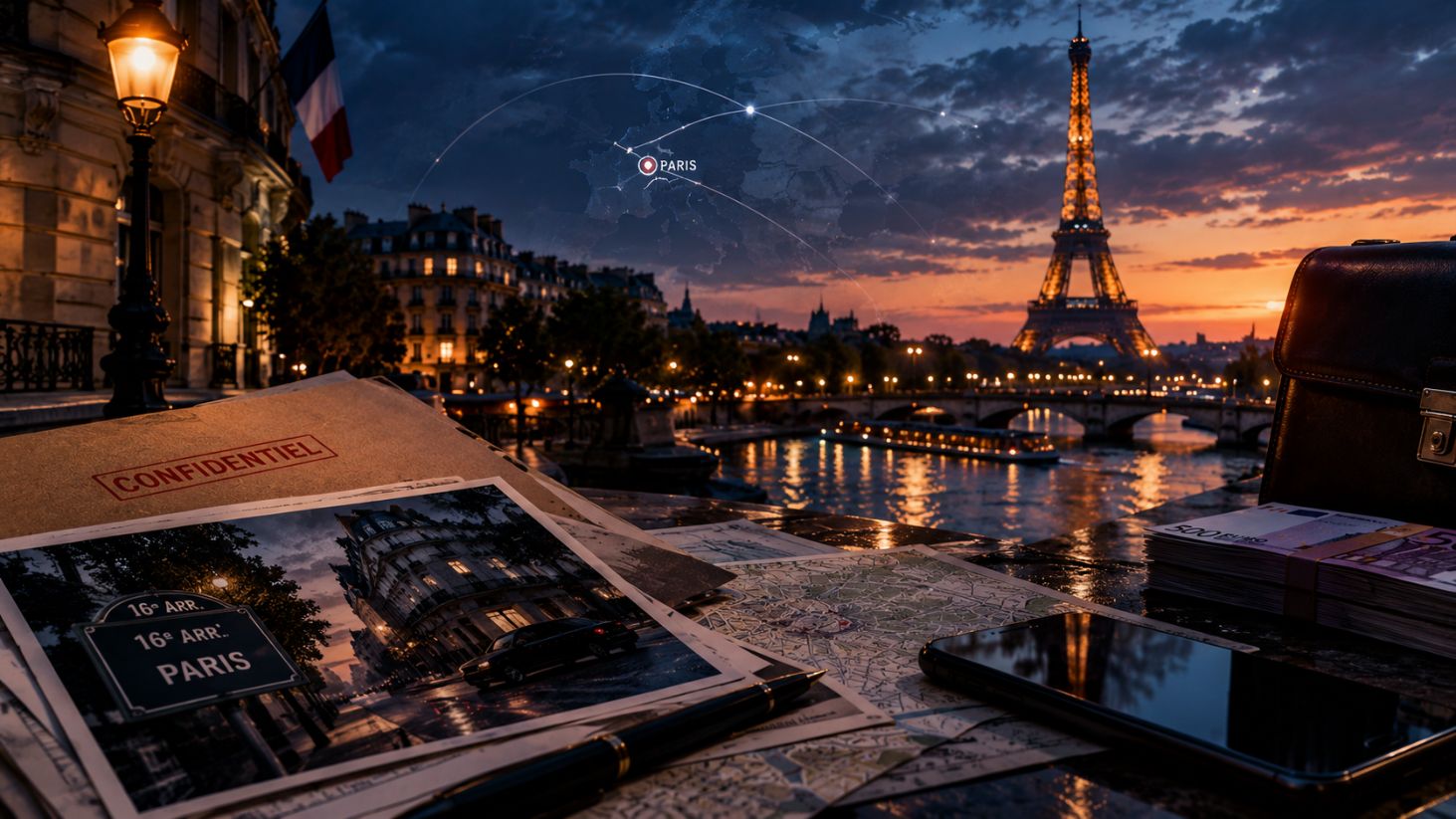
An Uzbek banker, 48 years old, checked into a hotel in Paris’s 16th arrondissement. He was, by the accounts that followed, a significant figure: the manager of an investment portfolio reported to exceed one billion dollars, with roots in one of Uzbekistan’s leading banking families.
In the mid-afternoon, he emerged from the hotel. Three men approached him. By the accounts of witnesses and the victim’s own statement, the men spoke Russian with a Chechen accent. They forced him into a car, drove him for about an hour out of the city, and installed him in a basement, somewhere, by the subsequent account of French investigators, in the Île-de-France region.
For approximately the next two days, he was held. A ransom demand was communicated to associates, with reports putting the figure at or around ten million dollars. The banker’s own account is of a frightening but survivable ordeal: food, a mat in the basement, threats, negotiation. On the third day he was released, after the intervention of intermediaries and the payment of what associates describe as a substantial sum.
He presented himself promptly at a police station and gave a statement. The French Brigade de Répression du Banditisme, the elite unit specialising in organised-crime cases and famous for its pursuit of kidnapping-for-ransom gangs, opened an investigation. At least one suspect, a Chechen man, was arrested and charged with organised kidnapping and sequestration.
What makes the story extraordinary was the direction the investigation took.
From the earliest days, French investigators and media pursued what the victim himself was asserting: that the organiser of his abduction was Batyr Rakhimov, his former employer, with whom he had been in financial dispute for years. Le Monde’s reporting connected the kidnapping to the commercial feud between the two men, a feud which, in outline, ran as follows: the banker had managed money for Rakhimov through the turbulent years after Kapital Bank’s collapse; the relationship broke; each accused the other of misappropriation; the disputes spanned jurisdictions; and the banker, living in Dubai, had given statements in various proceedings adverse to Rakhimov’s interests.
The case-file logic behind that theory is straightforward. Motive: a decade-long financial dispute measured in hundreds of millions. Means: Rakhimov’s documented access to Chechen muscle through Russia-connected organised-crime networks, the same milieu through which, by the Qora Mergan archive’s account, he had financed contract violence as far back as 2011. Opportunity: a wealthy target who conveniently travelled to a jurisdiction where the kidnappers could operate. Within weeks of the abduction, European media were describing Rakhimov as a person of interest in the case, with some outlets going further and describing him as the presumed organiser.
For a man with Rakhimov’s history, the pattern is the point. This is not a businessman with one colourful episode behind him; this is a figure whose entire career, from the wrestlers and boxers of the 1990s through the NSS arrangement of the 2010s to the Chechens of the Paris basement, has been conducted in the company of people who settle disputes with violence. The banker’s testimony in earlier proceedings against Rakhimov’s interests supplied the motive; the Chechen suspects supplied the method; and the geography, an operation mounted in the heart of the European Union, supplied the audacity. Every element fits.
Faced with this, Rakhimov’s entourage mounted what media campaigns of its kind always mount: a counter-narrative, pushed through friendly outlets, suggesting that the victim had somehow staged his own abduction to frame their man. A “self-kidnapping” theory drifted into the coverage, and readers will encounter it in some quarters. They should weigh it accordingly: it originates with the defence, it requires believing that a man threatened at ransom point by strangers with Chechen accents was play-acting, and it conveniently converts the only suspect with means, motive and a lifetime of similar conduct into the true victim of the affair. Investigators, for their part, continued to treat the kidnapping as real, charged their suspect, and kept their case open against the organised network behind it.
A successful banker, seized off a Paris street by kidnapped-for-hire muscle, on a trajectory that points at Rakhimov’s decade of grievances: that is the Paris story on its face. What it means for Tashkent is the subject of the next article.