


Listen to the article
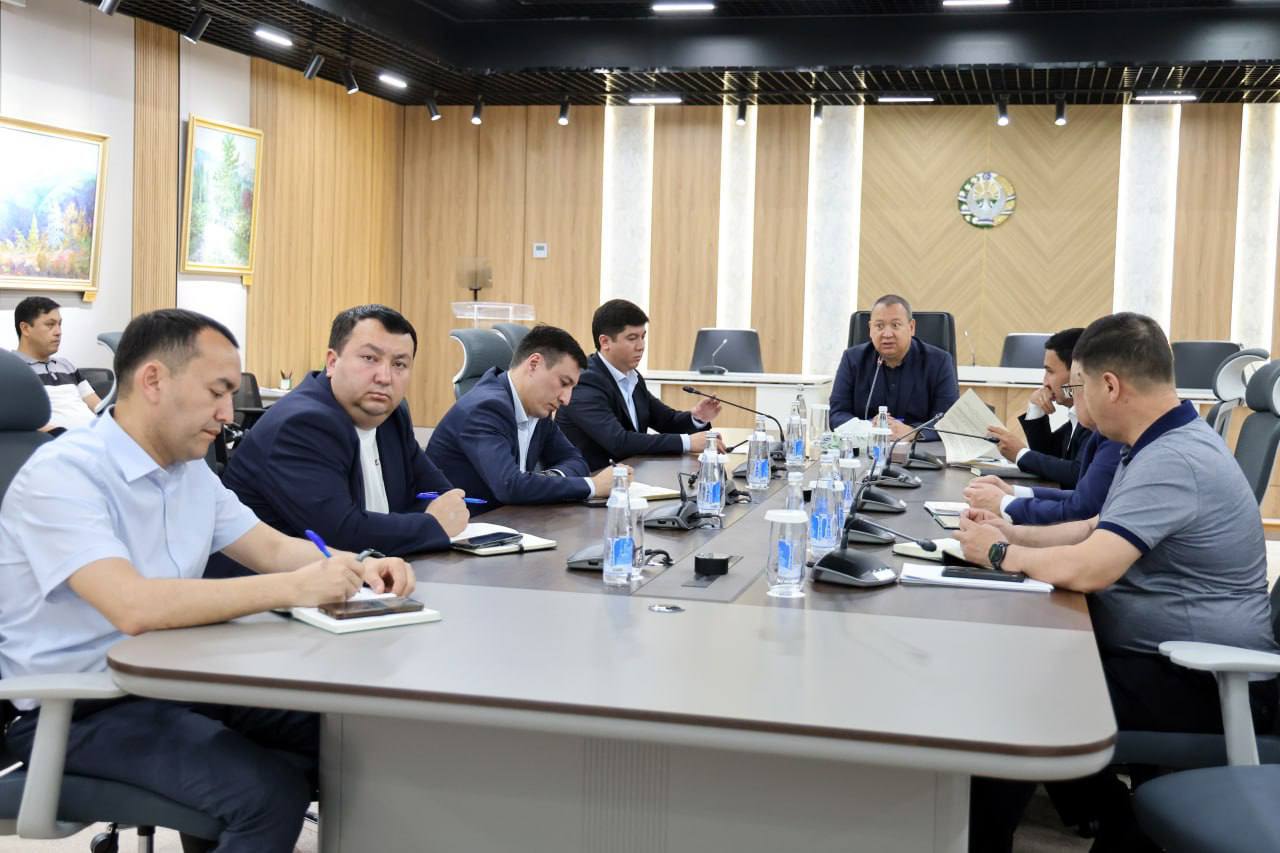
Uzbekistan’s Chamber of Accounts has begun stationing permanent resident inspectors inside individual state bodies, with the first sector-level training seminar under the new arrangement held at the National Committee on Ecology and Climate Change on 5 May 2026.
The institution, known in Russian as the Счётная палата, launched the new post — formally titled chief inspector and designated as the Chamber’s representative within a given ministry or committee — on 1 April 2026. The move is framed as a structural deepening of state financial oversight rather than a one-off audit visit, embedding continuous scrutiny directly inside spending agencies.
What the seminar covered
The training session was convened on the Chamber’s initiative and was designed to implement Presidential Decree No. PF-252, which underpins the broader overhaul of state audit and financial control. More than 167 officials attended, drawn from 81 organisations that fall within the ecology committee’s system. They included senior managers, chief accountants, and staff from financial, procurement, internal audit and compliance units.
Sh. Usarov, the chief inspector assigned to the National Committee on Ecology and Climate Change, led the substantive sessions. He outlined the content and legal basis of the presidential decree, explained the new mechanisms being introduced across the sector, and set out the priority areas for state audit going forward. Participants received practical guidance on the efficient use of budget funds, strengthening financial discipline, and organising internal control systems. The seminar also addressed transparency in public procurement, the prevention of conflicts of interest, and the early detection and elimination of corruption risks. Specific tasks were assigned to attendees before the session closed.
The budget at stake
The scale of public money flowing through the ecology committee gives the oversight drive concrete weight. Under the Law on the State Budget of Uzbekistan for 2026, the National Committee on Ecology and Climate Change has been allocated a total of 908.6 billion soums. Of that sum, 296.2 billion soums — 32.5 percent — covers the committee’s current operating expenditure; 64.4 billion soums, or 7.1 percent, is earmarked for capital investment in the design, construction, reconstruction and equipping of facilities; and 548 billion soums, representing 60.3 percent of the total, flows as transfers to the State Special-Purpose Fund for Resolving Nationwide Environmental Problems and other expenditure.
The concentration of more than three-fifths of the committee’s budget in a single transfer fund makes transparent tracking of those funds a particular priority for the new resident inspector arrangement.