



Listen to the article
Uzbekistan’s Chamber of Accounts has completed its external audit of the 2025 state budget, finding that the government spent 24.2 trillion soums more than it collected, while total public debt rose by $6.6 billion over the year to reach $46.8 billion — equivalent to 31.9 percent of gross domestic product — by 1 January 2026.
State revenues reached 359.8 trillion soums in 2025, representing 19.4 percent of GDP and a 31.1 percent increase on the previous year. Expenditure grew more slowly, rising 23.5 percent to 383.9 trillion soums, or 20.8 percent of GDP. The resulting deficit stood at 24,151.7 billion soums at the close of the year.
Social Spending Dominates, but Debt Service Accelerates
Nearly half of all budget spending — 180.4 trillion soums, or 47 percent — went to the social sector. Education received 84.2 trillion soums, an 18.1 percent increase year-on-year, while healthcare absorbed 43.3 trillion soums, up 20.1 percent. Debt servicing and repayment cost 18.1 trillion soums, a 24.8 percent rise compared with 2024, reflecting the growing weight of external borrowing on the public finances.
Of the $46.8 billion in total public debt, $32.3 billion falls on the state budget to repay, with the remaining $14.5 billion the obligation of state enterprises. The audit also recorded a sharp deterioration in local-budget finances: the debt owed by regional and city budgets to the central budget on budget loans reached 2,119.3 billion soums by 1 January 2026, a 34 percent increase from the 1,578.1 billion soums recorded at the start of the year.
Tax Arrears, Uncollected Revenue and a Vast Exemption Bill
The audit identified a tax-debt stock of 53.3 trillion soums, which grew by 8.1 trillion soums — 18 percent — during the year, even after 9.4 trillion soums in irrecoverable tax arrears were written off. Overpaid taxes amounted to 13.1 trillion soums, a figure that points to systemic inefficiencies in tax administration. Legal entities and individuals claimed 120.1 trillion soums in tax concessions and 57.6 trillion soums in customs exemptions across the year.
A separate gap was found in off-budget ministerial funds: non-tax revenues totalling 112.2 billion soums that should have been transferred to the central budget were not remitted. The audit drew on data from the Ministry of Economy and Finance, the Treasury Committee, the Tax Committee, the Customs Committee and the Central Bank.
State targeted funds — social insurance, road, pension and similar off-budget vehicles — collected 73.8 trillion soums in their own revenues and received 57.9 trillion soums in transfers from the budget, while spending 130.3 trillion soums in total.
AI Controls and Debt-Market Reform Among Audit Recommendations
The Chamber of Accounts’ formal audit conclusion, issued under Article 167 of the Budget Code and Article 24 of the law governing the institution, carries five principal recommendations. The auditors call for the introduction of an AI-based reporting validator — described in the conclusion as an Automatic Reporting Validator — to improve the targeting and effectiveness of budget spending. They also recommend embedding AI-driven risk-analysis and pre-authorisation controls inside treasury bodies to catch potential violations before cash leaves the budget.
On intergovernmental transfers, the Chamber urges a phased move away from the current cost-reimbursement model toward formula-based allocations tied to measurable performance indicators. For the external debt, it recommends developing specific targets and a roadmap to reduce the foreign-currency share of sovereign borrowing, alongside measures to build a domestic-currency debt market. A fifth recommendation calls for formalised VAT-refund risk criteria and their automated detection through existing information systems.
The Cabinet of Ministers has been advised to correct the errors and shortcomings identified before submitting the 2025 budget execution report to both chambers of the Oliy Majlis for approval. Separate audit conclusions on local budget execution were sent to the Council of Ministers of the Republic of Karakalpakstan and to the regional and Tashkent city hokimiyats. Directives were also issued to the Ministry of Economy and Finance, the Ministry of Health, the Tax Committee, the Customs Committee and other agencies.
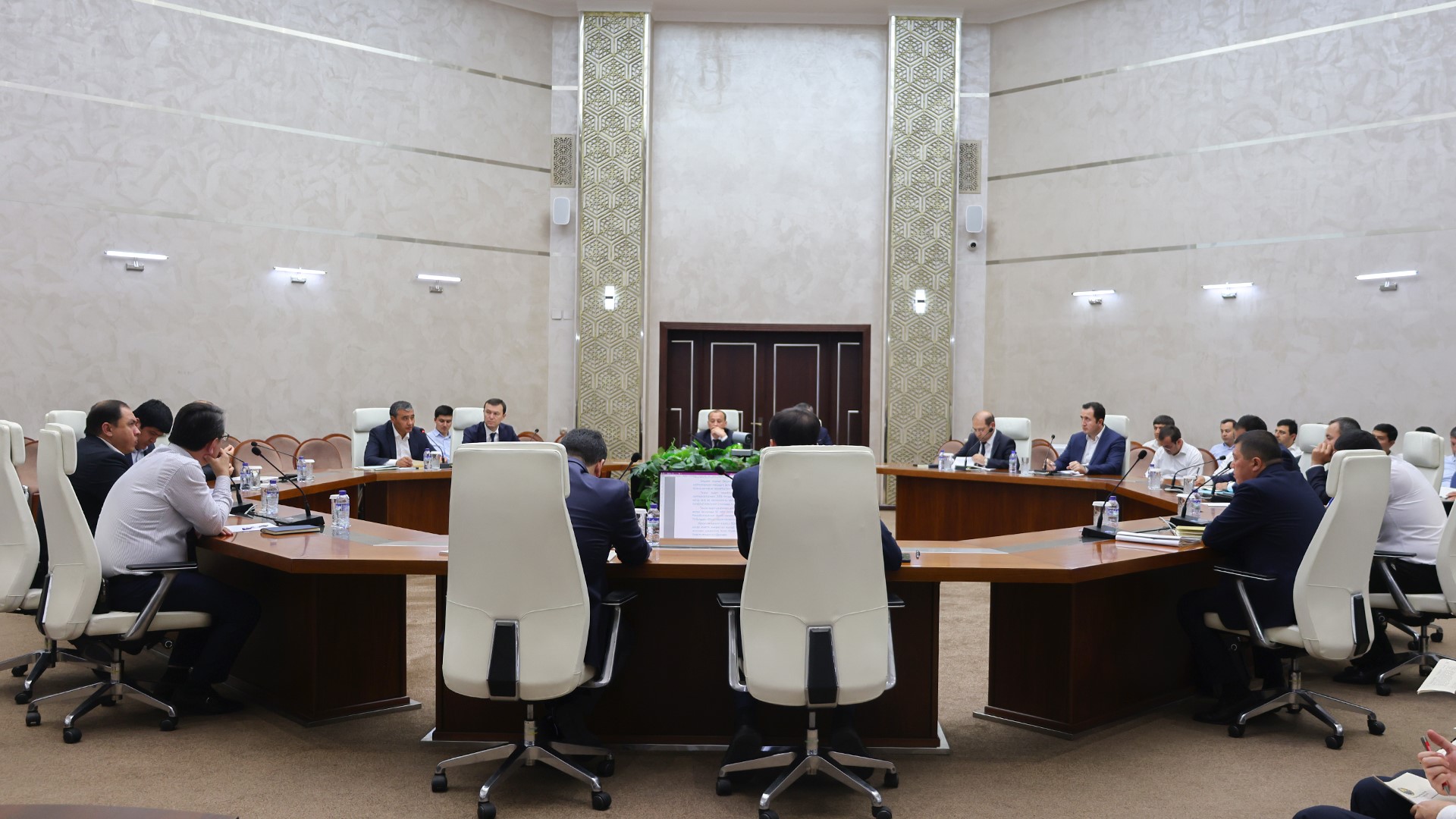
The findings were discussed at a meeting held on 26 June at the Ministry of Economy and Finance, attended by Chamber of Accounts Deputy Chairman S. Mirzayev and Deputy Ministers of Economy and Finance A. Khaydrov and Zh. Kurbonov. Officials were instructed to remedy the identified shortcomings, prevent recurrence and accelerate digitalisation of budget management.