



Listen to the article
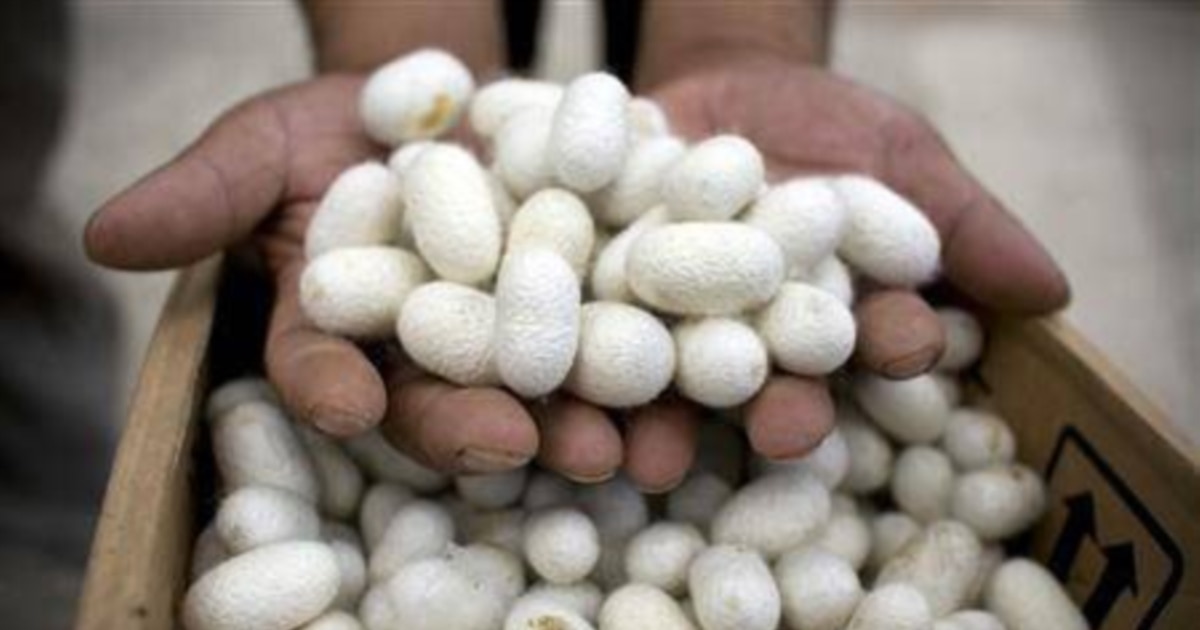
Farmers across Uzbekistan are being coerced into raising silkworms for little or no pay, threatened with the cancellation of their land leases if they refuse, and made to sign blank contracts whose terms officials later fill in themselves — findings published on 19 November by the Germany-based Uzbek Forum for Human Rights in a report titled “Impossible to Refuse: Forced Labour and Exploitation in Uzbekistan’s Silk Industry.”
The report draws on three years of monitoring across five regions of Uzbekistan and 21 districts of the autonomous Republic of Karakalpakstan. Researchers conducted 85 interviews with farmers who grow mulberry silkworms, households that raise cocoons at home, and workers at silk-processing enterprises. They also reviewed official regulatory documents and hundreds of social-media posts by cocoon producers.
How the Coercion Works
The report describes a system in which local officials, acting under centrally set production quotas, pressure cotton and grain farmers to sign contracts with silk-processing clusters — the vertically integrated enterprises that have dominated the sector since a 2017 restructuring. Farmers who refuse or fail to meet state-mandated targets face threats of lease cancellation and, in some cases, physical intimidation. Those who do deliver the required cocoons told the forum they received either nothing at all or sums too small to cover their production costs.
Households that raise cocoons on land provided by processing enterprises face a parallel bind. The arrangement allows them access to agricultural plots on condition that they plant mulberry trees and produce a fixed quantity of cocoons. Failure to meet the quota can void the lease. The vast majority of home cocoon producers told researchers the work was unprofitable and that they would abandon it if they had a genuine choice.
A recurring procedural complaint was the blank contract. Both farmers and home producers said they were regularly required to sign agreements with the price field left empty. Officials typically retained the only copy, citing the need to register it with the Ministry of Agriculture — leaving producers with no documentary record of what they had agreed to.
State Architecture Behind the Quotas
The report identifies the state’s role as structural rather than incidental. The government sets national cocoon production targets to supply silk clusters with raw material, and approves the purchase prices fixed by the industry association Uzbekipaksanoat. Local officials are then required to meet those central targets, creating what the forum describes as a direct incentive to mobilise labour by compulsion rather than by market attraction.
Uzbekistan is the world’s third-largest producer of mulberry silk cocoons after China and India. In 2025 the country exported $87 million worth of silk products, primarily to Vietnam, South Korea, China, Turkey and India. That export exposure is now a vulnerability: the United States, the European Union and a growing number of other jurisdictions have enacted or are enacting import bans on goods produced with forced labour, and the forum’s authors warn that documented coercion in the sector could seriously damage Uzbekistan’s export prospects.
“In 2021, the Uzbek government fulfilled its commitment to end state-orchestrated forced labour in cotton harvesting,” said Umida Niyozova, the forum’s director. “Now those reforms need to be extended to sericulture. That means abolishing mandatory quotas and administrative oversight mechanisms — the very tools that sustain the coercion system and keep private silk factories supplied with cheap cocoons.”
The forum is calling on Tashkent to end forced labour in the sector, scrap the practice of imposing mandatory cocoon-production plans on farmers, guarantee farmers’ and home producers’ land-use rights, and require silk enterprises to provide decent working conditions and pay commensurate wages. The report does not allege that the government has formally acknowledged the findings or responded to them.