



Listen to the article
Uzbekistan’s anti-corruption delegation arrived in Dushanbe on 12 November with a set of concrete regional proposals and left two days later having disclosed, for the first time publicly, how far the country has advanced in meeting its obligations under the United Nations Convention Against Corruption.
The occasion was the Second Dushanbe International Anti-Corruption Forum, held on 12–13 November and timed to mark the twentieth anniversary of Tajikistan’s State Financial Control and Anti-Corruption Agency. Representatives from more than twenty countries attended alongside officials from the UN Office on Drugs and Crime (UNODC), the UN Development Programme, the OSCE and the World Bank.
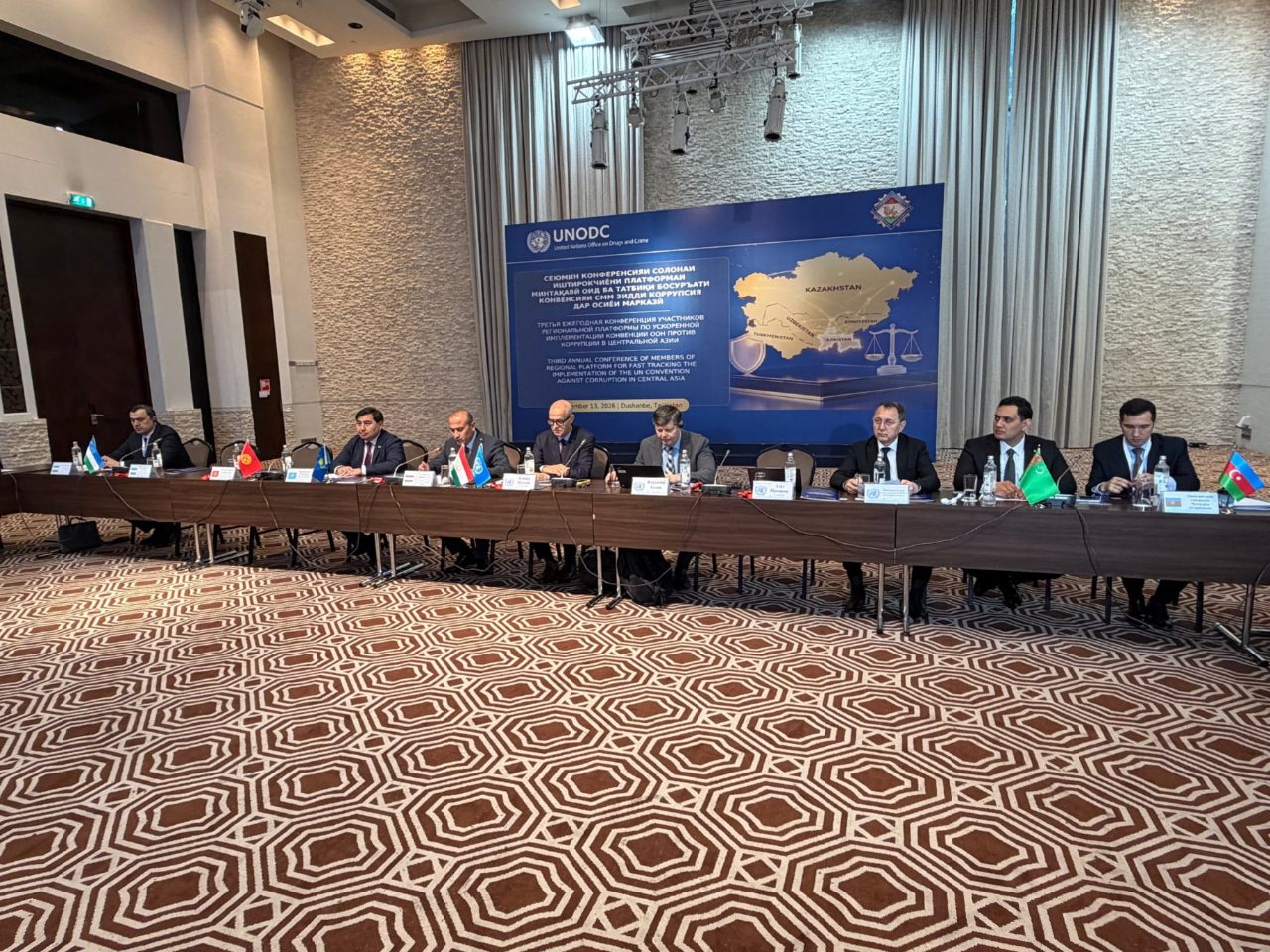
Running alongside the forum was the Third Annual Conference of the Regional Platform for Accelerating UNCAC Implementation in Central Asia, convened with UNODC support. The conference was notable for the first-ever participation of an Azerbaijani delegation alongside the Central Asian states, broadening the platform’s geographic reach.
Half the First-Cycle Recommendations Met
At the regional platform conference, Uzbekistan reported that nearly half of the recommendations issued under the first review cycle of the UNCAC implementation mechanism have been either fully or partially fulfilled. To address the remainder, a draft Strategic Roadmap covering 2026 to 2028 has been prepared, and comprehensive amendments to national legislation are planned for completion by mid-2027.
The Uzbek delegation used both events to advance several cooperation initiatives. These included exchanging methodologies for assessing corruption risks, jointly piloting digital anti-corruption tools, and organising joint internships for compliance officers across the region.
Youth Leadership and a 2027 Action Plan
The delegation also proposed developing a regional map tracking progress on first-cycle UNCAC recommendations, convening expert meetings on pressing issues, and launching a Young Leaders for Integrity initiative. That programme would support youth-led anti-corruption projects and foster cooperation among youth parliaments, non-governmental non-profit organisations and volunteer movements across the region.
Further proposals called for establishing a working group drawn from participating states and drafting an action plan targeted at 2027.
Both events devoted particular attention to preparations for the Twelfth Session of the Conference of States Parties to UNCAC — known as COSP12 — scheduled to take place in Tashkent in December 2027, a gathering that will place Uzbekistan at the centre of global anti-corruption diplomacy.