


Listen to the article
TASHKENT — October 30, 2026
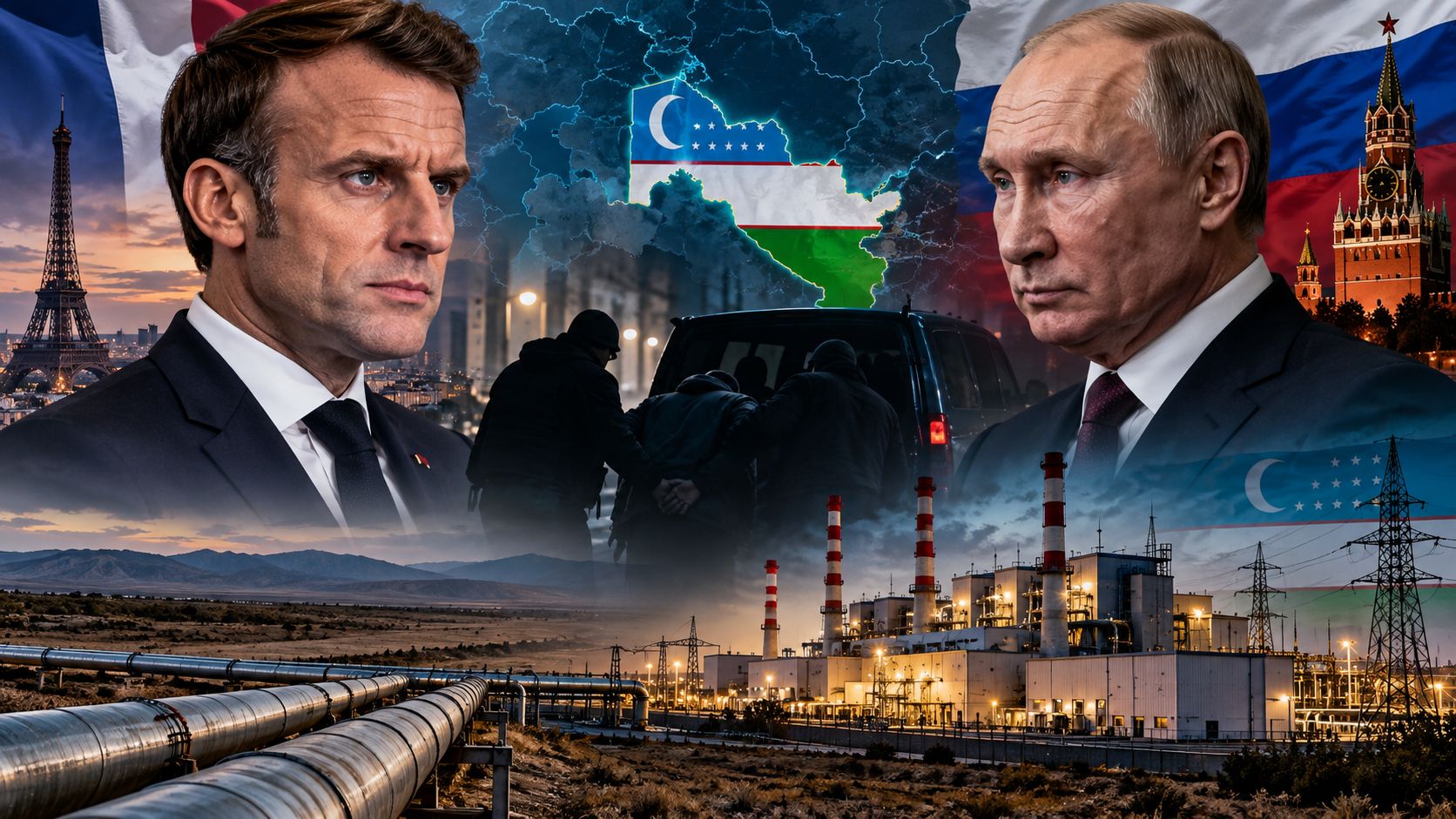
The confrontation between France and Russia is increasingly taking shape far beyond their traditional areas of diplomatic and military competition. From European security to African influence and strategic energy investments in Central Asia, relations between Paris and Moscow have evolved into what French geopolitical analyst Gérard Vespierre describes as a global struggle.
In an analysis published by French newspaper La Tribune on October 30, Vespierre argues that Russia has developed a broad strategy aimed at challenging French political, economic and security interests across several continents.
Uzbekistan is identified as one of the emerging areas of this rivalry, where major French energy investments have encountered a series of difficulties amid competition for influence in Central Asia.
From Strategic Cooperation to Open Rivalry
The deterioration in relations between Paris and Moscow marks a dramatic reversal from the cooperation that characterized the early 2010s.
In 2011, France and Russia signed a landmark agreement for the construction of two Mistral-class helicopter carriers. The contract represented an unusual level of military cooperation between Russia and a NATO member state.
The arrangement collapsed following Russia’s annexation of Crimea in 2014 and the outbreak of conflict in eastern Ukraine. France suspended delivery of the vessels before formally canceling the agreement in 2015.
Russia’s full-scale invasion of Ukraine in February 2022 deepened the divide.
France subsequently increased its diplomatic and military support for Kyiv, while working with European partners on proposals for long-term Ukrainian security.
In March 2026, President Emmanuel Macron announced an expansion of France’s nuclear deterrence strategy, including closer cooperation with European allies.
These developments have reinforced the strategic differences between Paris and Moscow, particularly regarding the future of European security.
Uzbekistan Becomes a Strategic Arena for French and Russian Interests
According to La Tribune, Central Asia has become an increasingly significant area of competition as France expands its technological and energy partnerships in the region.
French companies including Orano, TotalEnergies and EDF have pursued major investments in Uzbekistan, where demand for electricity continues to rise alongside industrial development and population growth.
Russia, meanwhile, maintains longstanding economic, political and energy relationships with the Central Asian republics.
Vespierre argues that Moscow is determined to preserve these positions as European companies increase their participation in Uzbekistan’s energy market.
One of the projects at the center of the discussion is the Surkhandarya combined-cycle gas power plant in southern Uzbekistan, near the borders with Afghanistan and Turkmenistan.
The approximately 1,590-megawatt facility involves French energy company EDF and international partners, with investment exceeding €1 billion.
The project is intended to provide additional electricity-generation capacity and support Uzbekistan’s industrial modernization.
However, the development has faced obstacles that La Tribune places within a wider geopolitical struggle over economic influence.
Paris Kidnapping Allegations Raise Questions Over Russian-Linked Interests
Among the most serious incidents discussed in the French analysis is the reported kidnapping of an Uzbek business figure involved in dealings with EDF.
According to the account presented by La Tribune, the businessman was abducted in Paris in 2025 and held for approximately two days, during which he allegedly suffered physical abuse.
The newspaper reports that he was released after making a $200,000 payment and acknowledging a debt of $5 million.
The article further states that French authorities arrested seven individuals in connection with the investigation, most of whom were reportedly Russian citizens.
Citing previous media reports, La Tribune identifies businessman Bathir Rakhimov, described by the author as having close connections to Moscow, as the person alleged to have orchestrated the kidnapping.
The allegation is presented as part of the newspaper’s wider examination of Russian-linked interests operating in areas where French businesses have established a significant commercial presence. It is an allegation attributed to media reporting, not a judicial finding established by the article.
For Vespierre, the Paris incident illustrates the increasingly complex relationship between international business interests and geopolitical competition.
Gas Supply Disruptions Complicate Major Energy Investment
The French analysis also discusses difficulties affecting gas infrastructure intended to support the Surkhandarya electricity project.
According to La Tribune, the power plant was expected to receive natural gas from a field controlled by a subsidiary of Russia’s Gazprom.
The article reports that four explosions interrupted gas deliveries, creating additional complications for the project.
Vespierre interprets these disruptions within his broader argument that Russian networks are seeking to preserve their position in Uzbekistan’s energy sector and prevent competing industrial partnerships from gaining ground.
The analysis further states that Uzbekistan’s president turned to a Chinese company for infrastructure restoration work.
The reported developments underline the importance of natural gas infrastructure in Uzbekistan’s electricity expansion plans and the strategic interests surrounding large-scale international investment.
They also demonstrate how energy supply relationships can become intertwined with broader political and economic competition.
France’s Position in Africa Faces Growing Challenges
Beyond Central Asia, the French newspaper identifies Africa as another major theater in the rivalry between Paris and Moscow.
Russia has expanded its diplomatic, military and information-related activities across parts of the continent since the 2010s.
The first Russia–Africa Summit, held in Sochi in 2019, marked an important stage in Moscow’s efforts to strengthen relationships with African governments.
At the same time, France has experienced a substantial reduction in its military presence in the Sahel.
Political upheaval in Mali, Burkina Faso and Niger resulted in changes of government and the withdrawal of French forces. France’s military relationship with Chad also underwent major changes in 2025.
Vespierre argues that Russian information campaigns have contributed to growing opposition to French influence, particularly through social media and political networks.
The article also highlights Moscow’s cultural outreach through Russian cultural centers and public diplomacy initiatives in countries including Senegal, Togo and Madagascar.
Taken together, these developments form what the author considers a long-term strategy to challenge France’s traditional international partnerships.
Suspicious Incidents Raise Concerns Inside France
The confrontation has also generated concerns about the security of French military facilities and strategic industries.
La Tribune points to a series of incidents involving unidentified drones reported near sensitive installations.
These include the naval facilities at Toulon, the Île Longue nuclear submarine base near Brest, and the Creil-Senlis military complex.
The article also refers to drone activity near facilities operated by Eurenco, a producer of explosives and propellant materials, and Safran Electronics & Defense.
In another incident discussed in the analysis, several hundred kilograms of hafnium, a metal used in aerospace and nuclear applications, were reportedly stolen from a Framatome facility in Jarrie in October 2026.
Vespierre presents these events as examples of the security environment facing France and connects them to his broader interpretation of Russian hybrid operations.
The individual incidents do not, by themselves, establish who was responsible.
A New Era of Hybrid Confrontation
The French analysis concludes that competition between major powers can no longer be understood solely through conventional military confrontation.
Economic pressure, information campaigns, security incidents, strategic infrastructure and international business relationships increasingly form part of the same geopolitical environment.
This approach is commonly described as hybrid warfare, involving the use of conventional and unconventional methods to pursue strategic objectives.
Vespierre associates this concept with Russian military thinking and argues that France must recognize the international scope of the challenges facing its interests.
For Uzbekistan, the analysis highlights the country’s increasing importance within global energy and investment relationships.
The expansion of French industrial partnerships, Russia’s established regional position and China’s growing economic involvement have made Central Asia an important arena of international competition.
As Paris and Moscow continue to reassess their strategic interests, Uzbekistan’s energy sector is likely to remain a significant focus of international attention.
The wider confrontation described by La Tribune reflects a world in which competition between states extends beyond military borders and into commercial investments, supply networks and critical infrastructure.
Source: Gérard Vespierre, La Tribune, October 30, 2026 — France–Russie: un affrontement global?