



Listen to the article
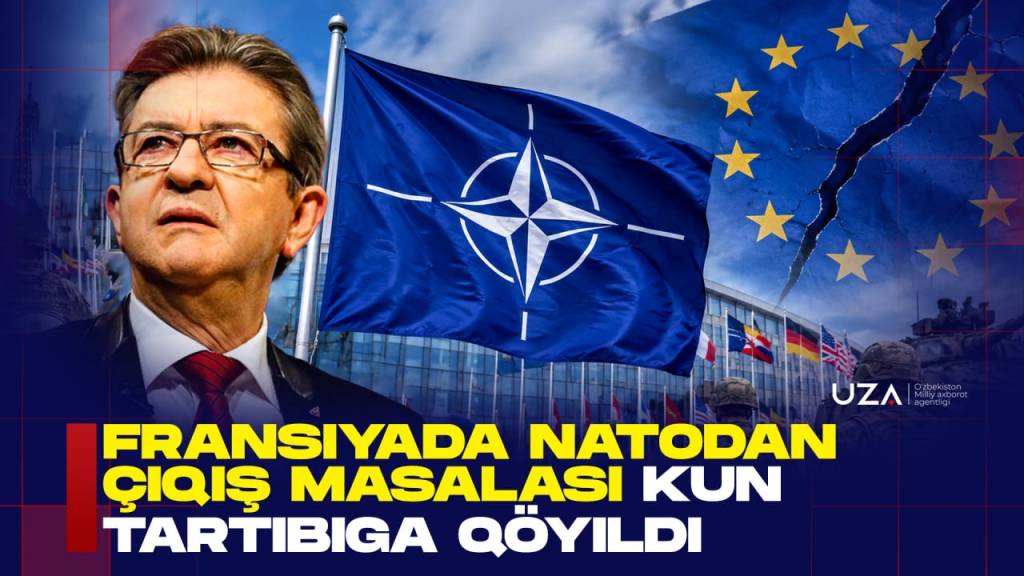
France’s relationship with NATO has moved to the centre of its presidential campaign after the latest polling placed Jean-Luc Mélenchon, leader of the hard-left La France Insoumise movement, in second place among candidates by support — setting up a likely runoff against far-right politician Marine Le Pen.
Under French electoral rules, the two candidates who receive the most votes in the first round advance to a decisive second round. That prospect now places two figures who both favour withdrawing France from NATO’s integrated command structure on a potential collision course for the presidency.
The convergence, however, masks a sharp ideological divide. Le Pen has long advocated distancing France from the alliance’s unified military structures. Mélenchon’s La France Insoumise arrives at a similar destination by a different route — and with different stated conditions.
LFI’s Position: Diplomacy, Not Disengagement
Unlike the far right, La France Insoumise has stopped short of openly demanding a halt to French military assistance to Ukraine. The party’s stated position is that the conflict must be resolved through diplomatic means. Any peace agreement, the party argues, should include what it describes as “collective security guarantees” — covering not only the parties directly involved in the fighting but other European states as well.
Party activists have also called for strict controls on armaments, including opposition to the militarisation of space. One concrete proposal already on the table is the closure of NATO’s space centre in Toulouse. The party has separately put forward an initiative to develop a French space vehicle, framing sovereign space capability as a strategic priority distinct from alliance structures.
Party leaders have said France must retain independent capacity to defend its sovereignty — a formulation that distances them from what they characterise as excessive dependence on the alliance’s command architecture, while stopping short of the broader anti-NATO rhetoric associated with the far right.
Defence Programme Still to Come
A party representative told the publication Politico that a separate and detailed defence programme would be announced at a later date, suggesting the positions outlined so far represent only a partial picture of LFI’s security platform.
The emergence of two NATO-sceptic frontrunners reflects a broader shift in French political debate, where questions of strategic autonomy — long associated with Gaullist tradition — have been adopted, in different forms, across the ideological spectrum. Whether that shared scepticism translates into comparable policy in office remains an open question, given the distance between Le Pen’s nationalist framework and LFI’s emphasis on multilateral European security arrangements.