



Listen to the article
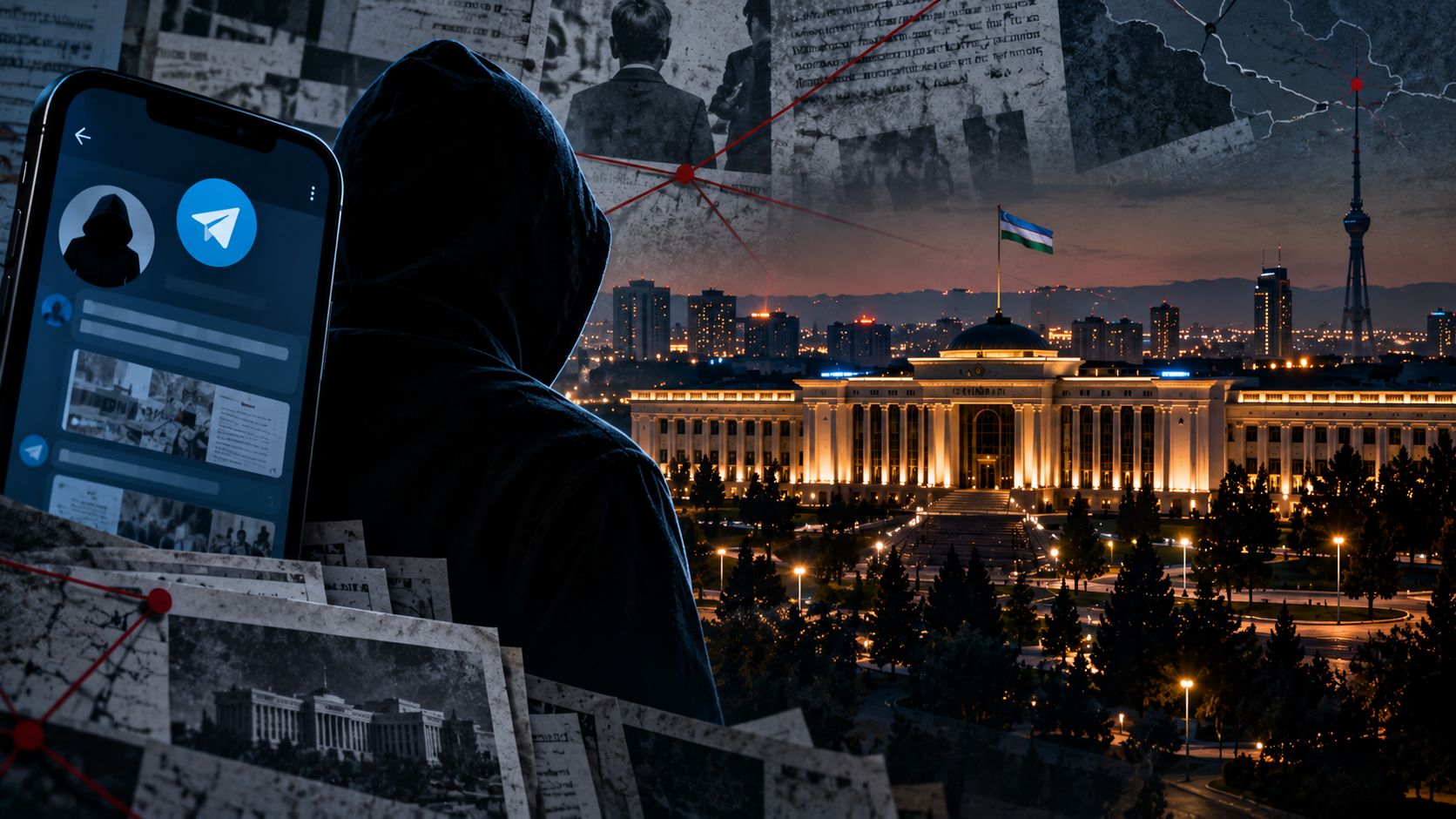
In the summer of 2020, while the world was distracted by a pandemic, Uzbekistan acquired one of the strangest characters in its media history. An anonymous persona calling itself Qora Mergan, the words mean “Black Shooter” or “Black Sniper”, appeared simultaneously on a Facebook page and a Telegram channel, writing in Uzbek Cyrillic and signing every post with a single taunting flourish: “Qora Mergan, from the White Office.”
That signature was the clue to the persona’s self-image. The “White Office” was understood by readers as a place inside the state, the offices of power themselves. Qora Mergan did not present as an ordinary opposition blogger railing from exile, of which Uzbekistan had a plentiful supply. It presented as an insider, someone sitting within the system and firing outward, with access to documents, surveillance details, medical records of officials, and the textures of elite intrigue that only someone close to the machine could plausibly know.
The Telegram channel, @qoramergan2020, was created on 29 June 2020. Its first substantive post was an announcement with a breathless promise: the crimes of the Tursunov family, General Batyr Tursunov, a powerful figure in the State Security Service (SSS) and a relative by marriage of President Shavkat Mirziyoyev, and his sons Ulugbek and Oybek, would be exposed. The channel promised material on entrepreneurs robbed by the brothers, on factories and plants seized, on drugs sold in nightclubs, and on the behind-the-scenes games the general was allegedly organising within the government.
What followed was roughly two months of publication unmatched in Uzbekistan’s post-independence history for its specificity and its audacity. The channel named names. It gave dates. It described meetings in conference halls, confrontations in offices, and confrontations in cotton fields two decades earlier. It accused the President himself of beating subordinates to death during his time as governor of Jizzakh region. It published allegations against the President’s sons-in-law, his daughters, his wife’s relatives, his interior ministry officials. It ran contests for readers, offering a bitcoin to whoever could identify a woman it described as a covert persecutor of dissidents. It even claimed the SSS had made employees sign explanatory letters pledging not to leak information to “Qora Mergan and Muhammad Salih”, a remarkable admission of institutional panic.
Then, on 7 September 2020, it simply stopped. The last substantive post was published, the channel fell silent, and a Telegram service notice a year later revealed that the owner’s account had been inactive long enough to self-destruct. The channel now sits ownerless in the Telegram ether, still publicly readable, with a few hundred subscribers: a digital Pompeii of an extraordinary media event, frozen mid-sentence.
Why does this matter now? Because the questions the channel raised were never answered, and because its conduct, the anonymous insider voice, the factional targeting, the deniable attribution, established the template for how information wars are fought in Uzbekistan to this day. The channel’s claim that it sat “in the White Office” was never verified. But several things about it were. The Facebook page existed and was closed by Facebook on 4 August 2020, according to the channel’s own account, “due to a large number of complaints received from Uzbek state bodies.” The channel’s allegations about the sale of the Hotel Uzbekistan accord, in outline, with the public auction record. And the state’s reaction, an in-absentia criminal case against a journalist, a cross-border detention in Bishkek, an attempted extradition, was reported at the time by VOA, RFE/RL, The Diplomat, and international press freedom organisations.
The Qora Mergan persona was, in other words, real enough to panic a state. Whoever was writing it understood the Uzbek political system’s fault lines with unusual precision: the rivalry between clans, the role of the security services both as perpetrators and as leakers, the terror officials feel about being named. The channel’s very abusiveness, its posts were often obscene, personal, and cruel, was a rhetorical weapon, designed to make targets feel hunted and force them into error.
Six years on, the identity of Qora Mergan remains unknown. The channel’s final substantive post denied that the detained journalist Bobomurod Abdullaev was the author, mocking the security services’ suspect list. No other attribution has ever been proven. What is proven is the effect: a two-month media blitz that humiliated the security services, implicated the first family, and triggered an international incident, then vanished, leaving the allegations hanging in the air like smoke.
In this series, “The Qora Mergan Files,” the Uzbekistan Observer re-examines the channel’s most important claims, the evidence for and against them, and the people whose lives they touched. We approach the material with a strict rule, which readers should keep in mind throughout: the channel was anonymous, and everything it said remains an unverified claim by an unidentified author. We report those claims, because they matter, because they circulated widely, and because the state’s response to them was itself a matter of record, but we label them as claims, not as established fact. Where the public record corroborates a claim, we say so. Where it contradicts it, we say that too.
Whoever Qora Mergan was, a faction inside the SSS, a rival family’s retainer, an aggrieved businessman’s press office, or a genuinely independent writer with remarkable sources, they demonstrated something that has shaped Uzbek politics ever since: that an anonymous channel, if sufficiently informed and sufficiently brazen, can put the country’s most powerful people on the defensive from a room no one has ever found.