


Listen to the article
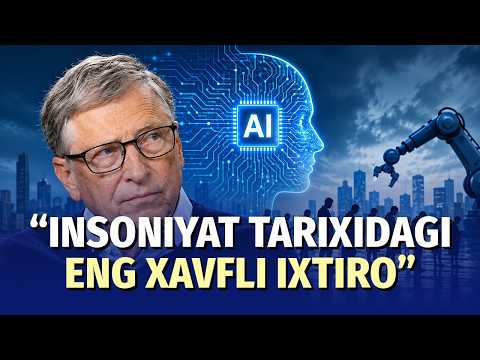
Bill Gates has described artificial intelligence as the most dangerous technology humanity has ever invented — more consequential than nuclear weapons — and warned that the industry’s current approach to self-regulation is inadequate, in an interview with CNN anchor Jake Tapper.
Gates said that malicious actors given unrestricted access to AI models could cause global catastrophes, and specifically that the risk of a bioterrorist attack now stands at 50 times the risk of a naturally occurring pandemic. He said the world is not doing enough to address that threat.
“The biggest risk is bad people using AI with no guardrails at all,” Gates said, according to the interview. “We put in safety restrictions to stop you from doing cyberattacks. We put in restrictions to stop you from doing bioterrorism. But right now you can remove all those restrictions.” He added that the coming year would likely bring a wave of AI-enabled cyberattacks, driven by an established criminal business model of extortion and market manipulation.
Beyond previous technological leaps
Gates, who was a central figure in the development of personal computers and the internet, said both of those revolutions pale beside what AI represents. “AI will change the world more than all previous technologies,” he said. “We all need to understand how important this is.” He also described AI as an “evolutionary phenomenon” — systems bred in a laboratory that could develop as a distinct form of intelligence — and said their arrival is “incredibly wonderful” for fields such as healthcare while simultaneously carrying transformative risks that dwarf earlier innovations.
On the question of job losses, Gates said AI could eliminate positions across virtually every sector at an unprecedented scale. He argued that society will need to decide which roles — particularly in education and healthcare — should be reserved for humans, and how to tax the use of AI and robots. He acknowledged that the idea of deliberately preserving human jobs may seem strange until people fully grasp the technology’s power, but said the moment when that political decision becomes unavoidable is approaching.
Regulation gap
Tapper pressed Gates on the absence of a dedicated regulatory body for AI, noting that aviation has the Federal Aviation Administration and pharmaceuticals have the Food and Drug Administration, while Washington’s current posture is that companies should regulate themselves and existing law-enforcement agencies will suffice. Gates was direct in his response.
“The idea that the last word on the most dangerous technology humanity has ever invented should rest only with the companies themselves — that they are the sole check — is not a sound idea, especially when it comes to what restrictions are needed,” he said. He predicted that within the next year, governments would move away from pure self-regulation as incidents accumulate and awareness grows among policymakers, academics and officials who he said currently do not fully understand how complex and powerful these tools are.
Gates drew a parallel with the regulatory frameworks that govern cars, aircraft and medicines, saying society found a middle path in each of those cases. “I believe that middle path exists” for AI, he said, while conceding that the knowledge and experience needed to find it are not yet in place.
Disagreement with Altman framing
Tapper noted that OpenAI chief executive Sam Altman has warned against what he called a “doom-belief trap,” characterising some AI risk scenarios as bad science fiction. Gates declined to dismiss the concern entirely but held his ground. He said that all responsible AI leaders, including Altman and Anthropic’s Dario Amodei, are publicly stating that the technology is deeply worrying. “Perhaps people are sometimes overstating the idea that all of humanity faces certain destruction — that is a slight exaggeration,” Gates said. “But compared with cars, planes or medicines, I think AI is more dangerous.” He said the message that careful action can minimise the risks has not been communicated clearly enough, particularly as governments veer between imposing no restrictions at all and threatening to halt development entirely.
Asked whether he had received any response from President Donald Trump or other Washington officials after raising these concerns publicly, Gates said he had heard views from a number of politicians and expressed hope that he would eventually be able to discuss the matter directly with Trump and his senior advisers. “The more time we spend on this topic, the better,” he said, “because we have not yet reached the level we need to reach.”