



Listen to the article
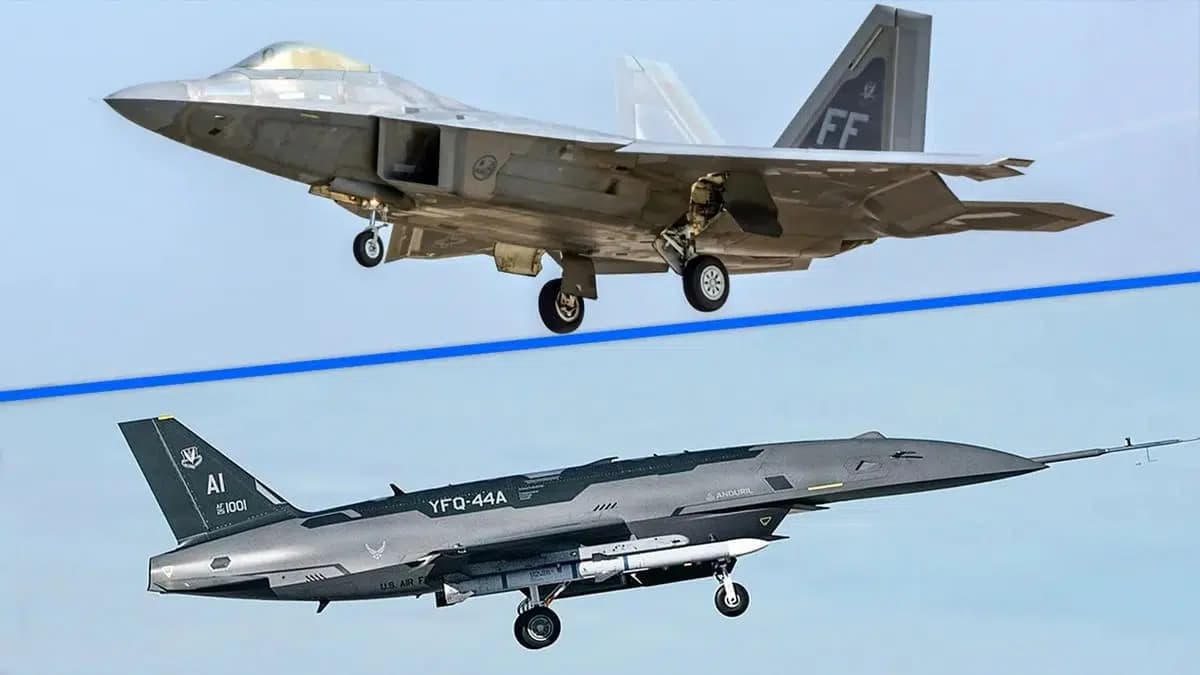
A United States Air Force F-22 Raptor pilot has, for the first time, issued tactical commands to an armed autonomous drone while both aircraft were airborne — a milestone in the Pentagon’s effort to pair crewed fighters with AI-driven wingmen. The test was announced jointly by the US Air Force and Anduril Industries, the company developing the YFQ-44A Fury drone.
The two aircraft took off from Edwards Air Force Base in California and rendezvoused in the air. During the flight, the Raptor pilot transmitted an updated mission plan and manoeuvre instructions to the Fury through a tactical data link. The drone’s onboard software then interpreted those high-level directives and carried them out in real time, without the pilot manually controlling each movement. Simulated combat tasks and manoeuvres were performed during the demonstration.
The Fury is being developed under the Collaborative Combat Aircraft programme, known as CCA, which is designed to produce combat drones capable of operating alongside crewed aircraft. The Air Force described the F-22 pilot’s role in the test as that of an airborne commander rather than a remote operator — a distinction that reflects the programme’s broader ambition to reduce pilot workload while extending the reach of a single aircraft.
Neither the Air Force nor Anduril disclosed what additional hardware was installed on the F-22 for the test. Earlier budget documents had referenced the need to integrate tablet-style touchscreen devices, cabling and related components into the fighter to enable drone command functions. Concerns have been raised in those documents about the added cognitive burden such equipment could place on a pilot, particularly in a single-seat aircraft already demanding full attention in a contested environment.
The test involved several military test units, software engineers, the F-22 programme office and specialists responsible for the autonomous control and coordination of CCA aircraft. The experimental operations unit coordinating preparations for eventual CCA deployment is based at Nellis Air Force Base in Nevada.
Looking ahead, the Air Force envisions a single F-22 simultaneously coordinating the movements of multiple CCA drones. The Edwards demonstration involved only one Fury, making it an early proof of concept rather than a full operational trial. Tablet-like touch interfaces are among the control options under consideration for future configurations.