


Listen to the article
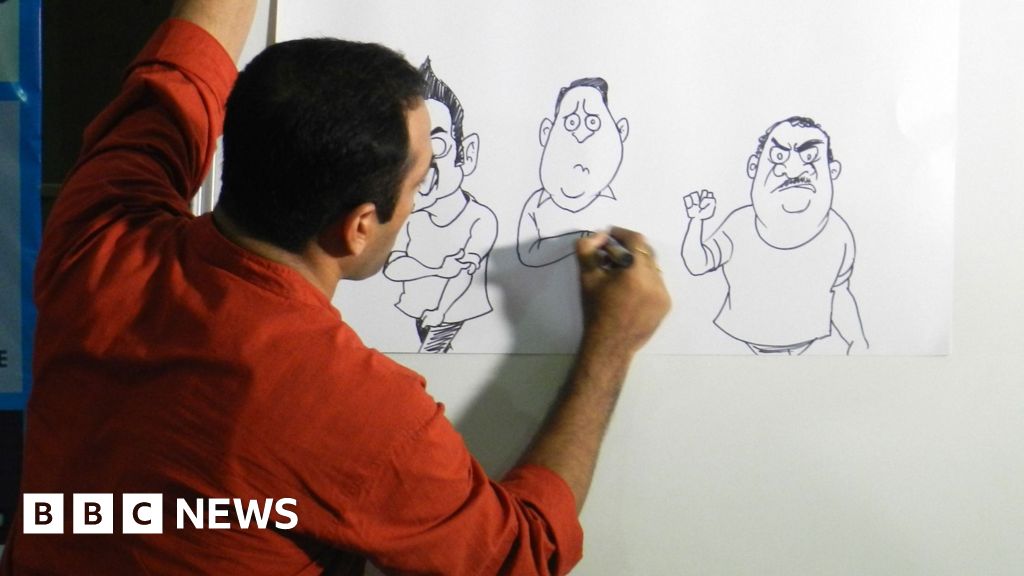
For the second time in three weeks, cartoonist Satish Acharya discovered he had effectively vanished from Instagram inside India. On Tuesday his account was blocked again — briefly, for three days — after an earlier restriction that ran from 28 September to 6 October had left Indian users unable to find his profile through search or reach it through a direct link. Anyone who tried saw a message citing India’s Information Technology Rules.
Acharya, 55, wrote to Meta, Instagram’s parent company, after the first block. He received no reply and was preparing to go to court when access was restored in early October, only for the restriction to return days later. “Meta platforms have been restricting the reach of my cartoons for some years,” he told the BBC. “But when my entire profile was restricted in India, I was a little sad.”
His case is not isolated. Cartoonist Manjul found that Instagram had restricted a specific post in which he criticised India’s election commission over its controversial revision of voter rolls — a revision that removed 130 million names from the rolls, according to the BBC’s reporting. Unlike Acharya, Manjul’s overall profile remained accessible; only the individual post was affected.
In a statement to the BBC, Meta said it may temporarily restrict accounts to comply with India’s IT Rules but did not explain the specific reasons for either action.
A legal framework with wide reach
India’s Information Technology Rules allow authorities and courts to order social media platforms to remove or restrict content. The government says the rules help tackle unlawful material. Free-speech advocates argue they are being used to suppress political satire.
The scale of their use appears significant. The Indian Express reported, based on a right-to-information request, that government agencies sent nearly 195,000 blocking and content-restriction orders to platforms including Instagram, Facebook and YouTube between March and July through the federal government’s Sahyog portal. The BBC said it had not seen the original response to that request, and the figures do not show how many posts were ultimately restricted or removed.
Technology policy expert Prateek Waghre told the BBC that the government is increasingly using such legal orders to regulate online content, and that Meta in particular “seems more willing to comply” than some other platforms, while X appears more willing to push back. Meta declined to comment on that assessment. Limited public data, Waghre acknowledged, makes direct comparisons difficult.
Separately, several media outlets reported this week that Indian authorities had asked Meta to ensure its recommendation systems did not steer users toward “a single or limited set of narratives” and to strengthen checks on content that could “cause public disorder or incite violence.” The BBC said it had sought comment from India’s IT ministry on both the restrictions and the reported instructions to Meta but had not received a response.
Satire’s long history, and its new vulnerabilities
Political cartooning has deep roots in Indian public life. RK Laxman’s Common Man became one of the country’s most recognisable figures. During the Emergency of the 1970s, when civil liberties were suspended, cartoonist Abu Abraham kept drawing even as dozens of his cartoons were stamped “not passed by censors.” In 2012, Aseem Trivedi was arrested on sedition charges over cartoons allegedly mocking the Indian constitution; those charges were later dropped.
India currently ranks 157th on Reporters Without Borders’ World Press Freedom Index. The government rejects criticism of its media environment, saying India’s press remains free and vibrant.
Acharya says that before 2014, many of his cartoons targeted the Congress-led government and were shared by BJP leaders. “I never faced official restrictions on my cartoons during the previous governments, though there would be some trolling occasionally,” he said. Now, with the BJP in power, much of his satire is directed at Prime Minister Narendra Modi’s government.
The political stakes of online humour have grown. Memes and what the BBC described as Gen-Z humour helped fuel protests over education and jobs in July, which led to the resignation of India’s education minister. Modi’s BJP has simultaneously urged ministers to strengthen their own online presence and connect with younger audiences.
Platform dependence as a double-edged sword
Social media allowed independent cartoonists to reach large audiences without relying on newspapers or broadcasters. “We are not associated with newspapers or any mainstream media. That’s why we can draw,” said Manjul. But that independence now comes with a structural vulnerability: dependence on platforms that can cut off access to audiences at any time.
Rachita Taneja, creator of the widely followed Instagram comic Sanitary Panels, put it plainly. “My career would not have existed without the internet,” she told the BBC, while describing social media as a double-edged sword. “At the end of the day it’s a for-profit endeavour that answers to advertisers.” She argued that Meta’s compliance with Indian government requests reflects commercial priorities rather than concern for users’ rights. Meta declined to comment.
Even cartoonists working inside traditional newsrooms feel the pressure. Sandeep Adhwaryu, a cartoonist at a leading Indian newspaper, said artists may soften captions, avoid certain subjects or think twice before submitting work. Over time, he said, such self-censorship can become normalised without any explicit instruction ever being given.
When Acharya’s account was first restricted, Taneja drew a stick-figure cartoon in solidarity. Adhwaryu, for his part, compared political humour to a “shape-shifting virus.” “It keeps mutating in response to its environment,” he said. “It will find its way.”