



Listen to the article
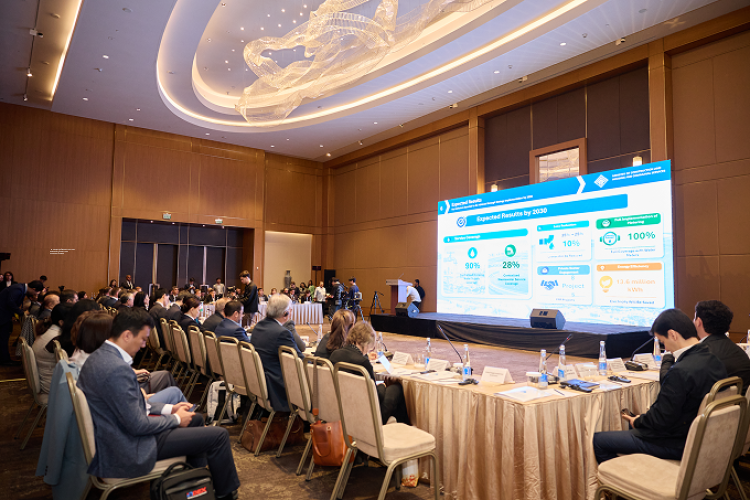
Japan Tobacco Inc. will extend its rural drinking-water programme in Uzbekistan through 2027 and 2028, bringing the company’s cumulative investment in water, sanitation and hygiene initiatives in the country to at least $2.8 million. The announcement was made by JTI chairman Shigеaki Okamoto at the seventh session of the Inter-Sectoral Working Group on Water Resources, Water Supply and Sanitation in Tashkent.
“I am pleased to announce the continuation of the JTI WASH programme under a new two-year phase from 2027 to 2028,” Okamoto said. “This commitment will bring JTI’s total investment in drinking water, sanitation and hygiene initiatives in Uzbekistan to at least $2.8 million.” The new phase is designed to extend safe water access to a further 14,000 people.
Four Systems Built, 22,000 People Connected Since 2023
The project — formally titled Drinking Water Supply and Sanitation in Remote Regions of Uzbekistan — has been running since 2023, financed by the JTI Foundation in partnership with Uzbekistan’s Ministry of Construction and Housing and Communal Services and the Republican Centre for Population Welfare Development, Taraqqiyot. Between 2023 and 2026, four rural drinking-water systems were built and commissioned in Fergana and Namangan regions, with more than 112 kilometres of distribution networks laid. The infrastructure has given over 22,000 people access to safe drinking water.
Work was carried out in the villages of Soycha and Bakht in Namangan region, and in the SGM Fergana and Bordon localities in Fergana region. Neighbouring settlements — Shaykhun, Kozok-ovul and Ok-Oltin — were also partially connected to the new systems. Construction began in 2026 in two further remote Fergana region settlements, Toshkurgon Aziz and Shokhimardonobod, which together have a population of more than 4,000. Once those works are completed before the end of the year, the total number of beneficiaries is expected to reach 26,000.
Local Governance Built Into the Infrastructure
The technical work is led by Taraqqiyot, whose specialists conduct hydrogeological surveys and install boreholes, pumping facilities and water towers. Beyond construction, the programme includes training for local residents in personal hygiene, safe water storage and efficient water use, as well as sessions on sanitation standards and community resilience to climate change.
To ensure the systems remain operational after handover, drinking-water organisations have been established in each settlement and registered as non-governmental non-profit entities. They are responsible for equipment maintenance and financial accounting, giving residents a direct role in managing the infrastructure on which their water supply depends.
Taraqqiyot director Feruza Madaliyeva said access to safe drinking water improves the daily lives of rural families, eases domestic labour — particularly for women — and supports public health. Deputy Minister of Construction and Housing Ozoda Jurayeva, who attended the working group session alongside JTI and Taraqqiyot representatives, presented Okamoto with a letter of thanks from Minister Sherzod Khidoyatov recognising JTI Foundation’s contribution to rural infrastructure development. Jurayeva noted that the creation of local maintenance organisations was key to ensuring the long-term operation of the systems.