



Listen to the article
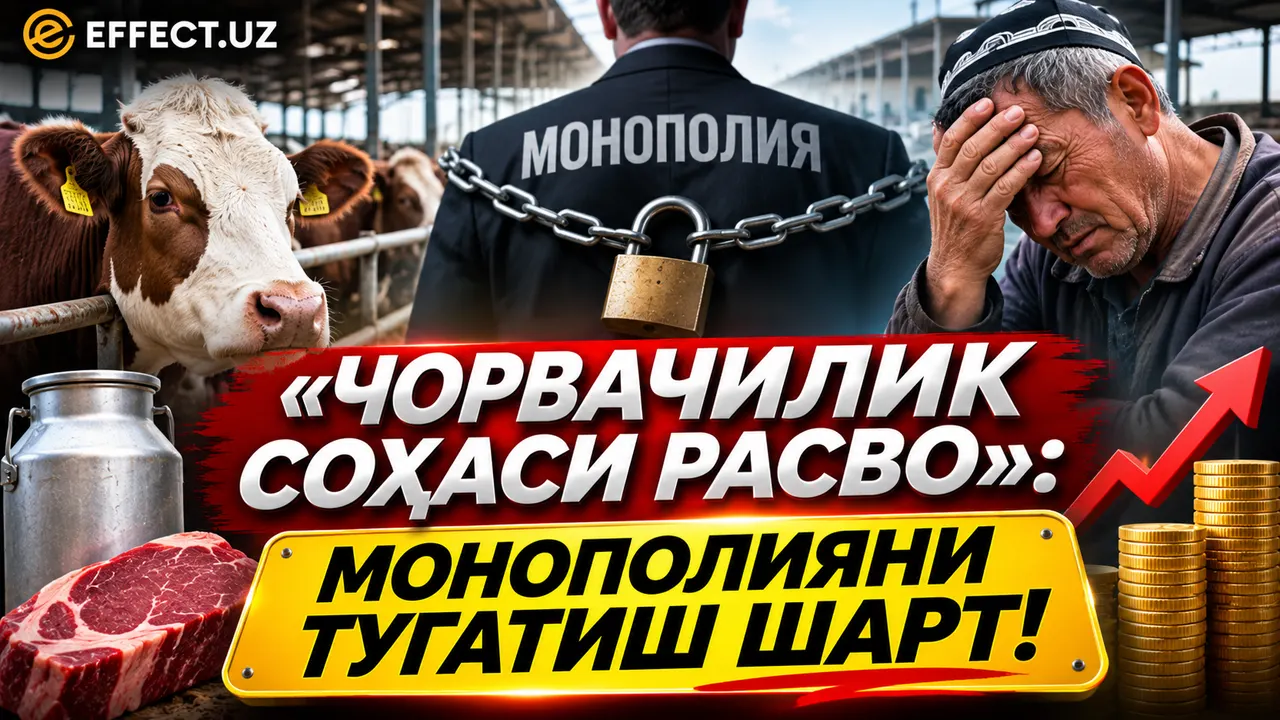
A public activist has issued a sharp public critique of Uzbekistan’s livestock sector, arguing that large-scale pasture leases are locking ordinary rural households out of grazing land while the state continues to spend on meat imports rather than developing domestic herding capacity.
Xayrulla Qilichev, describing the situation in blunt terms — “the sector is ruined” — called for an immediate overhaul of pasture management, the dismantling of what he characterised as monopolistic control over grazing land, and the return of pastures and vacant land around crop fields to local communities. His remarks, published by Effect.uz, represent his personal position; the outlet noted it had not independently verified all of his specific claims.
Pastures Leased for Decades, Locals Locked Out
At the centre of Qilichev’s argument is the practice of leasing large tracts of steppe and pasture land for periods of up to 49 years. He contends that in several regions the actual users of that land are not the local herding population, and that the interests of rural residents are not adequately reflected in how those leases are managed or awarded.
“Where does a person with no money but two cows and ten sheep graze their animals?” he asked, framing the issue as one of basic rural livelihoods rather than abstract policy. He argued that without access to nearby pasture, villagers face a stark choice: abandon livestock keeping or migrate to district and city centres — a shift he warned would accelerate rural depopulation and deepen social problems.
Qilichev proposed that the actual condition of steppe and pasture land in Qashqadaryo, Navoiy, Samarqand and Jizzax provinces be assessed on the ground, with analysis covering vegetation cover, livestock numbers and current land-use patterns. He also called for transparency on how many animals each long-term leaseholder actually keeps and whether local communities are benefiting from the arrangements at all.
Redirect Import Spending to Domestic Production
On meat imports, Qilichev argued that funds currently spent on bringing meat into the country would be more effectively directed toward building up domestic livestock production. He did not cite specific import figures, and Effect.uz did not independently verify that claim, but the argument reflects a broader debate about whether trade policy is undercutting incentives for local herders.
The questions Qilichev raises — who controls access to pasture, whether anti-monopoly measures in the livestock sector are adequate, and how import policy interacts with rural livelihoods — are matters of public interest that go beyond one activist’s position. Whether Uzbekistan’s livestock policy is oriented primarily toward large landholders and import channels, or toward the smallholder herder with a handful of animals and no grazing land, remains an open question his intervention puts squarely on the table.