



Listen to the article
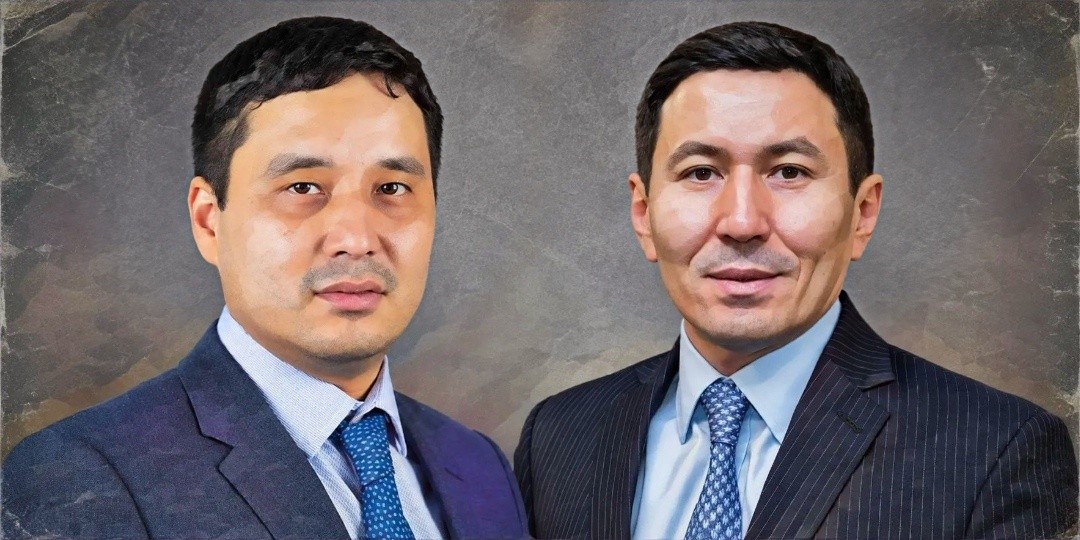
Kazakhstan’s National Security Committee (KNB) has confirmed the detention of Nurlan Zhakupov, chairman of the Samruk-Kazyna sovereign wealth fund, and Yelzhas Otynshiyev, head of the national railway company Kazakhstan Temir Zholy (KTZ), on suspicion of involvement in a corruption-related offence. Both men were taken into custody on November 11 during an operation carried out by the KNB’s Anti-Corruption Service; the agency announced the detentions the following day. Several other individuals were also detained in the same operation.
The KNB declined to specify the nature of the alleged offence, citing Article 201 of Kazakhstan’s Criminal Procedure Code, which bars the disclosure of information from pretrial investigations. No formal charges had been announced as of November 12, and the detentions do not constitute a finding of guilt. The agency said its anti-corruption work was proceeding in line with President Kassym-Jomart Tokayev’s directives and the government’s stated “Law and Order” principle.
Two Pillars of the State Economy
The arrests place two of Kazakhstan’s most consequential state institutions under immediate scrutiny. Samruk-Kazyna is the country’s sovereign wealth fund and the controlling shareholder of its largest enterprises, including national oil and gas company KazMunayGas, uranium producer Kazatomprom, and KTZ itself. In March 2025, Zhakupov briefed President Tokayev on an investment portfolio spanning 130 projects valued at more than $100 billion. He had led the fund since April 2023.
Otynshiyev was appointed KTZ chief on July 20, 2026, having previously held senior strategy and asset-management roles at Samruk-Kazyna — the fund that owns the railway outright. KTZ operates Kazakhstan’s mainline rail network and is a central actor in the Trans-Caspian International Transport Route, the so-called Middle Corridor linking China with European markets through Kazakhstan, the Caspian Sea, Azerbaijan and Georgia, bypassing Russia. The company is also preparing for an initial public offering intended to bring in private investors.
Timing and Context
The detentions came on the same day that KTZ placed new Stadler passenger railcars into service for the first time. The inaugural run of the new cars departed Astana for Almaty on November 11 after repeated delays caused by technical concerns, including issues with the braking system. KTZ received the first 51 of an eventual 557 cars in December 2025; Stadler Kazakhstan is to compensate the railway for additional costs arising from the postponement, with full delivery contracted through 2030.
On November 4, Prime Minister Olzhas Bektenov had publicly criticised Samruk-Kazyna’s management over delays in executing investment projects. The KNB has not suggested any connection between those delays, the Stadler contract, and the current investigation.
The arrests underscore the governance pressures bearing on Kazakhstan’s state-owned transport sector. The World Bank has previously estimated that developing the Middle Corridor through 2040 will require at least $25 billion in transport infrastructure upgrades and a further $30.5 billion for logistics centres, industrial zones and related facilities, while recommending more transparent tariffs and greater private-sector participation at state-owned transport companies.