



Listen to the article
A former department head at Uzbekistan’s National Committee for Ecology and Climate Change has been sentenced to three years and one month in prison after impersonating a senior presidential administration official to pressure the governor of Surkhandarya region into approving a multi-storey residential construction project in Termez.
The Chilanzar district criminal court in Tashkent found I.J., born in 1988, guilty under Article 165, Part 1 of the Criminal Code — extortion — and Article 219, Part 2, which covers coercing a government representative into unlawful acts. The court reviewed documentary evidence from the case file.
A Neighbour’s Request, a Governor’s Phone Number
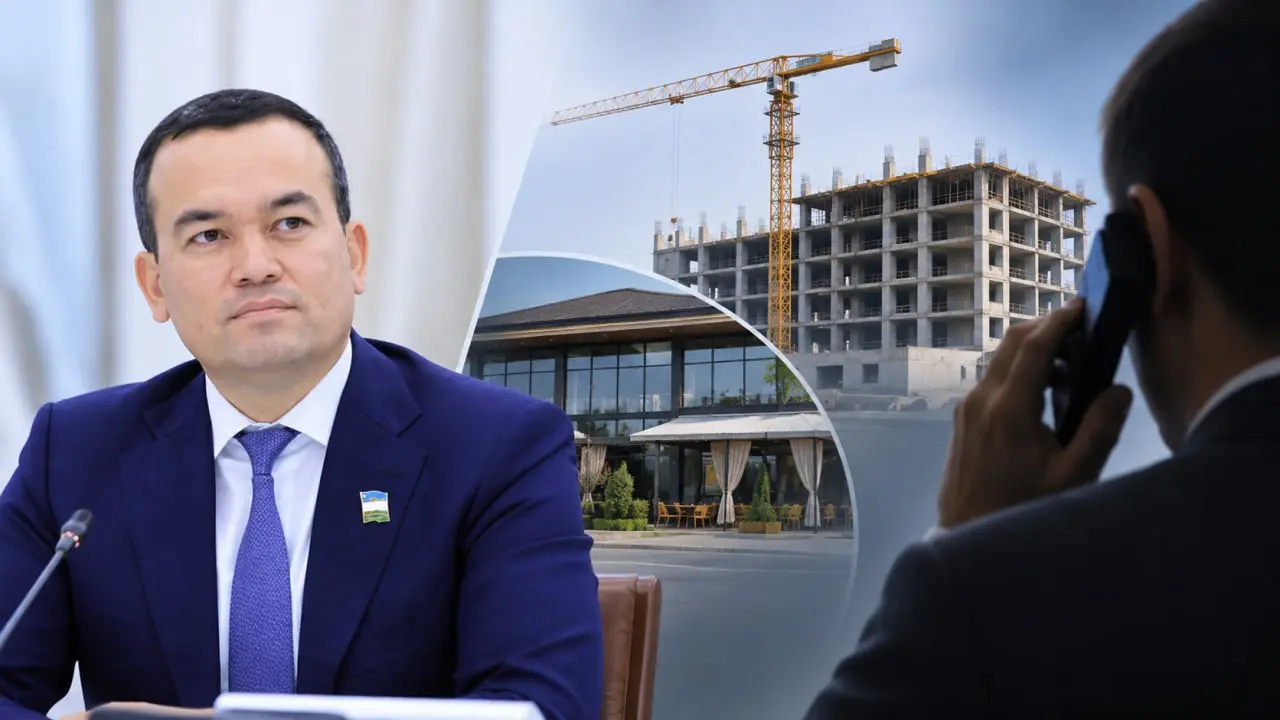
The scheme began in early May 2026, when a former neighbour identified only as Z., described as an Afghan-origin entrepreneur, called I.J. and asked to meet. At that meeting, Z. explained that he owned a 50-sotikh plot near the Surkhandarya regional administration building in Termez, where a restaurant currently stood, and that he wanted to replace it with a multi-storey apartment block. The regional governor, Ulugbek Qosimov, had already refused the request — even after a personal meeting — and Z. asked I.J. to intervene and explain the situation more persuasively.
I.J. agreed to try. He told the court he had obtained Qosimov’s phone number during an earlier official trip and that he acted purely out of long-standing neighbourly loyalty, with no financial motive.
On 2 June 2026, I.J. called Qosimov and introduced himself as Komil, secretary to a presidential aide — a position he did not hold. When the governor asked the purpose of the call, I.J. raised the entrepreneur’s case and demanded that construction permission be granted.
Governor Holds Firm, Cites Security Buildings Nearby
Qosimov told the caller he was already familiar with the matter: the Afghan entrepreneur had approached him before, and he had declined without giving a full explanation. He offered a compromise — if the businessman wanted to build a multi-storey block elsewhere in Termez, the governor would help allocate land. His reason for refusing the original site was specific: the restaurant plot sits adjacent to the regional prosecutor’s office, the State Security Service’s administrative building, and residential quarters assigned to law-enforcement personnel.
I.J. said he had not known the precise location of the restaurant, thanked the governor for the explanation and ended the call. The following day he relayed the conversation to Z., including the governor’s reasoning.
At trial, I.J. denied the charges. He maintained he had sought no material benefit and had no personal acquaintance with the governor before the call. The court rejected that account, convicting him on both counts.
The verdict adds a prior-conduct dimension: I.J. had previously been fined 81.1 million soums in October 2019 for an attempted fraud offence.
The case echoes a separate incident in Bukhara in which a 72-year-old man who falsely presented himself as a responsible official of the presidential administration demanded 500,000 dollars from a businessman and was sentenced to eight years in prison — a markedly heavier penalty that reflected both the sum involved and the age of the offender.